

 Loading tweets...


Victorian Budget targets families, cost of living
Families and people struggling with the cost of living are among the biggest winners in this year’s Victorian budget.
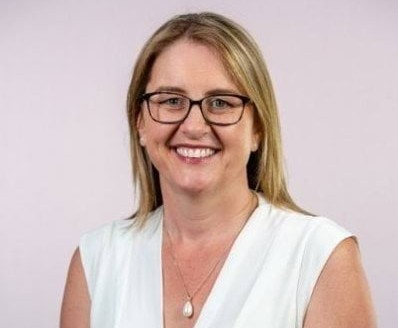
The budget has been described as “responsible” by the treasurer Jaclyn Symes and promises a $600 million surplus for the first time since the pandemic.
Health is a major focus of the budget with an extra $ 11.1 billion in spending.
But the Victorian Government is still grappling with rising debt and plans to axe at least 1200 public service jobs and possibly, as many as 3000.
While the list of winners looks long, except for health, much of the new spending is to expand existing programs or for relatively small initiatives.
The treasurer has used a GST windfall and $3.3 billion in cost savings to fund a 2025-26 budget pitched very much at families in her first budget.
As well as the health spending, there is $2 billion in early childhood education, $1.5 billion for new and upgraded schools and $2.3 billion in cost-of-living measures, including the already-announced $320 million plan to provide free public transport for under-18s.
Funding for multicultural communities remains stable, with more than $1 million the Multicultural Festivals and Events Program (MFE) and Regional Multicultural Festivals and Events Fund (RMFEF). This funding supports multicultural and multifaith groups in holding festivals and events between July 1, 2025, and December 31, 2025. Grants of up to $50,000 are available through the MFE and RMFEF, fostering community cohesion and celebrating cultural diversity.
The treasurer said the government could afford the spending commitments and was “firmly on track” to repair the state’s finances post-pandemic, citing a $600 million surplus as well as reduction of net debt as proportion of the Victorian economy.
“We can deliver these investments because of our responsible approach to financial management,” she said in her budget speech.
The budget includes cost savings and efficiency measures of $3.3 billion over four years across the public sector, including reducing duplication and back-office costs across departments and winding back “non-priority” programs.
About 1,200 public sector roles would be affected, Symes told reporters, admitting that “this will impact individuals”.
She refused to outline which departments would be affected but said the cuts would not include frontline services.
The budget includes cost-cutting across seven of the ten government departments in the next financial year, with only the departments of health, education and government services left intact.
But major changes to the public service – and further job losses – will not be known until June 30, when a final report into the sector is handed to government.
“That will identify additional savings,” Symes said. “There will be further job reductions, we flagged up to 3,000”.
The treasurer suggested a swathe of government bodies could be abolished.
“Victoria has over 500 entities and 3,400 public boards and committees – you can’t tell me that there’s not some fat in there,” Ms Symes said.
The budget shows Victoria’s debt will grow across the forward estimates, from $167.6 billion this financial year to $194 billion in 2028-29.
Highlights
Families and with school kids
From under-18 Victorians will be able to use public transport for free. The measure is worth $318m over four years, saving parents $755 per child in annual transport costs. There’s also free public transport on the weekend for seniors.
The budget also includes $400 for eligible kids to help pay for camps, sports and excursion, an increase from the previous $154 for primary school kids, and $256 for high school students.
There is also an extra $1.5 billion to expand existing schools and build new ones.
And lower income Victorian households will also get $100 towards off their energy bills.
Health
The government has committed an extra $11.1 billion to health, including $9.3bn boost for hospital funding. There’s $634 million to open and “operationalise” nine new or upgraded hospitals across Victoria, including opening the Footscray hospital and community hospitals for Craigieburn, Cranbourne and Phillip Island.
Included in the total additional funding, is $84 million for paramedics and $58 million to help emergency departments see patients sooner.
A trial plan allowing pharmacists to offer a wider range of service – such as the resupply of contraceptive pills and treatment of urinary tract infections without the need for a doctor’s script – will be made permanent and expanded.
Pharmacists will now be able to prescribe medicines for other ailments, including allergies and high blood pressure.
Commuters
The budget includes $5 billion for public transport, including $727million to open Melbourne’s Metro Tunnel, due at the end of the year.
The budget also includes $98.7 million to boost service frequency across seven metropolitan and regional train lines.
Another major transport spend is $4.1 billion to begin major works at Sunshine station, which will eventually be part of the Melbourne airport rail link.
There’s also nearly $1 billion in a “better road blitz” to fix potholes and surfaces over the next year.
Businesses
There are no new taxes on businesses, who have complained that they have funded the bulk of budget repair in previous years.
The budget is distinctly more corporate-friendly, with funding for new enterprises and to attract investment.
It includes a $150 million Victorian Investment Fund, a third of which will go to the regions, and $4 million to help boost entrepreneurialism.
The budget also includes $240 million to fund the government’s economic growth statement, which includes measures to cut red tape and ease the regulatory burdens.
Housing
The budget includes an extra $249 million, in partnership with the commonwealth, to pay for infrastructure, such as roads, sewerage and water, which will be needed to build an extra 4,000 homes over four years.
The stamp duty concession for off-the-plan homes will be extended to October 2026, and eligibility will be expanded beyond first home buyers and owner occupiers in a bid to increase the construction of new homes.