





 Loading tweets...


Forced human displacement at record levels – UN report
At least 123.2 million people, or one in 67 individuals worldwide, are now forcibly displaced, according to the UN’s refugee agency UNHCR.
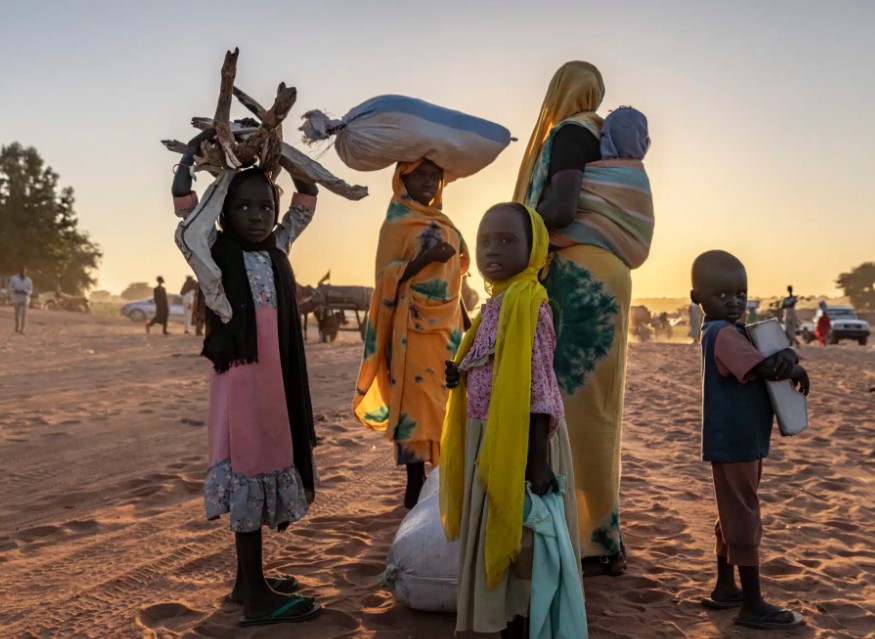
The ‘Global Trends’ report says the number of displaced people has increased by seven million people, or 6 percent, compared with the end of 2023, continuing a 13-year trend which has seen a year-on-year increase in the number of displaced people globally.
The main drivers of displacement remain large conflicts such as in Sudan, Myanmar and Ukraine, and the continued failure to stop the fighting, the report says.
Forcibly displaced people include people displaced within their own country by conflict, which grew sharply by 6.3 million to 73.5 million at the end of 2024, and refugees fleeing their countries by 42.7 million people.
Sudan became the world’s largest forced displacement situation with 14.3 million refugees and internally displaced people (IDPs), replacing Syria (13.5 million), and followed by Afghanistan (10.3 million) and Ukraine (8.8 million).
The report found that, despite media reporting wealthier regions, 67 per cent of refugees stay in neighbouring countries, with low and middle-income countries hosting 73 per cent of the world’s refugees.
And 60 per cent of people forced to flee never leave their own country.
While the number of forcibly displaced people has almost doubled in the last decade, funding for UNHCR now stands at roughly the same level as in 2015 amid brutal and ongoing cuts to humanitarian aid, particularly by the Trump Administration.
“This situation is untenable, leaving refugees and others fleeing danger even more vulnerable,” the report said.
The UN High Commissioner for Refugees Filippo Grandi said: “We are living in a time of intense volatility in international relations, with modern warfare creating a fragile, harrowing landscape marked by acute human suffering.”
“We must redouble our efforts to search for peace and find long-lasting solutions for refugees and others forced to flee their homes,” he said.
“Even amid the devastating cuts, we have seen some rays of hope over the last six months. Nearly two million Syrians have been able to return home after over a decade uprooted. The country remains fragile, and people need our help to rebuild their lives again,” Mr Grandi said.
In total, 9.8 million forcibly displaced people returned home in 2024, including 1.6 million refugees – the most for more than two decades – and 8.2 million IDPs – the second highest ever).
Many of these returns, however, happened in an adverse political or security climate.
“For example, a large number of Afghans were forced to return to Afghanistan in 2024, arriving home in desperate conditions. In countries like the Democratic Republic of the Congo, Myanmar, and South Sudan, there were significant new forced displacements at the same time as the return of refugees and IDPs,” the report said.
It called for continued funding of UNHCR programs that save lives, assist refugees and IDPs returning home, and reinforce basic infrastructure and social services in host communities. Read the full report here: https://www.unhcr.org/global-trends-report-2024

