


 Loading tweets...


Escape from Gaza
By Kien-Ling Liem
Palestinian refugee Khalil Shatat talks about the day he was almost killed by an Israeli air strike.
Speaking matter-of-factly and roughly sketching the incident on the back of a teabag box, Khalil recounts the dramatic moments the world exploded in front of his eyes. 
“We were in a taxi driving out of Gaza on the road to Rafah, when we saw lots of surveillance drones low overhead,” Khalil says.
“At the time, we felt like something is not correct. We had to run. So, we jumped from the taxi; we ran to the left, but after that, exactly [when] we crossed the road, this entire area was destroyed… So, it was a near miss.”
“We were super lucky at the time,” Khalil says.
The incident seems emblematic of Khalil’s survival and his journey to safety and the prospect of a new life.
He says that he considers himself lucky in that he has lost no immediate family members in the conflict in Gaza.
“I lost a friend, I lost my niece, her husband, and her, I believe, two-year-old baby,” Khalil says.
“So, I’m still lucky, you know, I lost three people; some people have lost 10, 15, an entire family.”
Khalil’s third stroke of luck came when he and his family managed to get out of Gaza and into Egypt while thousands of others failed.
One week after they left Gaza, Egypt closed their borders going in and out.
To enter Egypt normally, only the regular modes of public transportation are required, but Khalil and his family had to pay up to $US5,000 per person to enter the country.
“I describe it as a bribe; they describe it as fees,” Khalil says.
He says that while he and his brother have been able come to Australia, his mother and four siblings are still in Egypt. 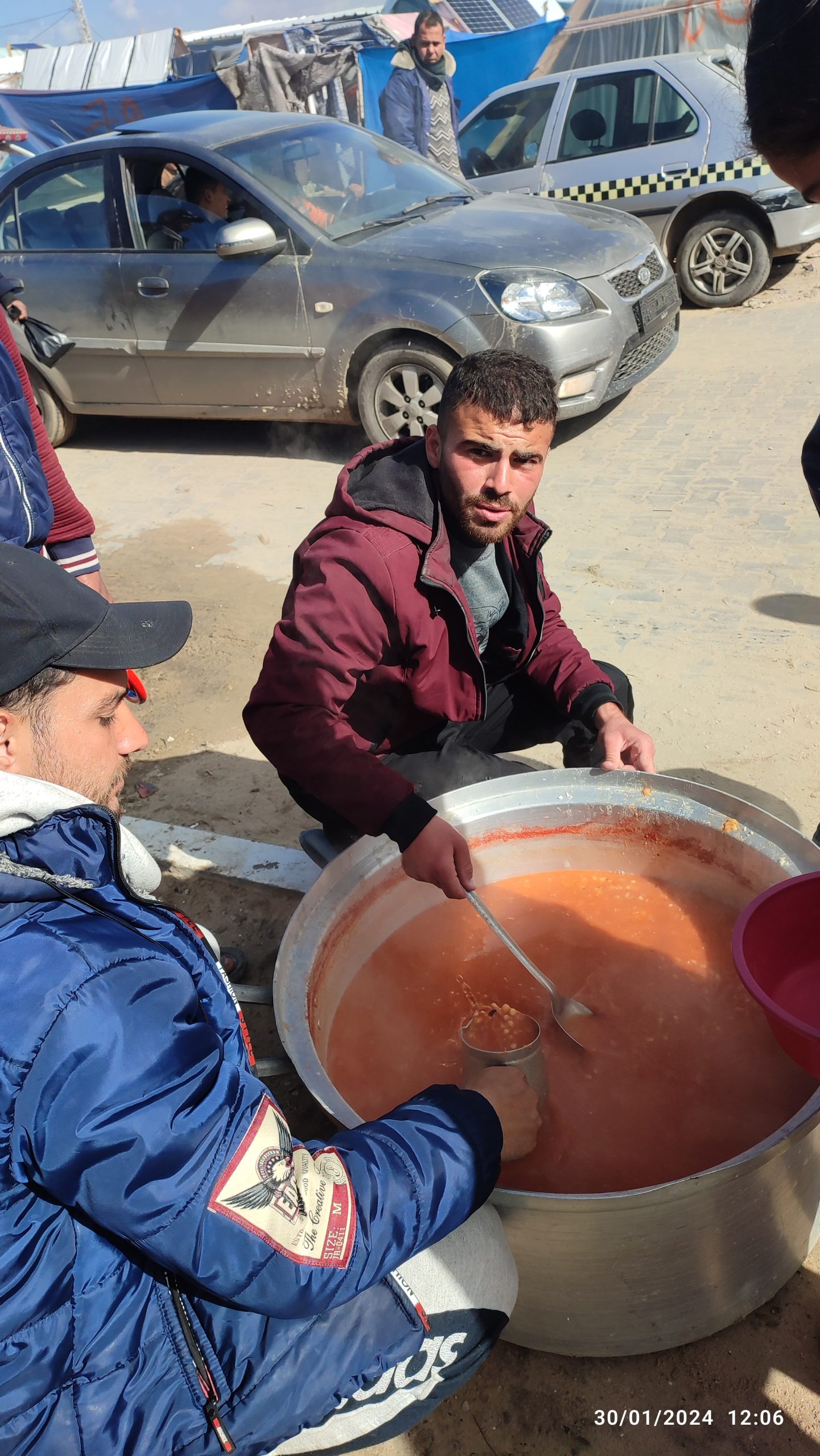
“One of my brothers moved to Australia in 2014 and he applied for visas for us, but only two of us were granted them,” he says.
“And we have seven family members, our siblings and their wives and children still in Gaza. We are able to talk to them every three or four days, but obviously we worry about them.”
Khalil and his brother Abdul Karim arrived in Australia in mid-2024.
“Abdul Karim was in Egypt just week before he came to Australia and I followed two months later. We could not afford two air fares, so my brother came first. He found work and paid for my ticket,” Khalil says.
He says he struggles to describe the six months he spent in Gaza.
“What you see on the news is nothing, it weas much worse,” he says.
“I remember spending every day from sunrise to sunset trying to find flour and food. And every family is doing this.”
But he says the people of Gaza are resilient.
“Despite everything, people really trying to survive. There is a saying that if you have a ceiling over your head to keep you out of the rain, you can live,” Khalil says.
He says he hopes to see the end of conflict soon but that when that happens there will still be huge challenges.
“Even if the conflict ends, Gaza will be unliveable. It needs to be rebuilt.
“My nephew is supposed to be studying at university, but if the war stops, what is he going to do? There is nothing left. The universities, and everything else, have been destroyed.”
Asked what he would say to Bejamin Netanyahu and Hamas, says: “Stop the war, people are dying for nothing”.
After initially working at Melbourne Airport as an aircraft cleaner with his brother, Khalil now works as a packing operator for a leading Melbourne skincare company.
“I like what I do. I like the environment there. I like the people. And I feel proud whenever anyone asks me what I do,” he says.
“I want to work my way in in the organisation because it has a good culture. It is supportive and welcoming.”
After finishing high school, Khalil moved to Bangladesh in 2016 to study mechanical engineering and returned to Gaza in 2021 during the COVID-19 pandemic.
While in Gaza, he volunteered in mechanical maintenance at Nasser Medical Complex, and as a maintenance engineer at the local Khan Younis council.
“Eventually I got a job working in a workshop that does roadworthy certificates.” 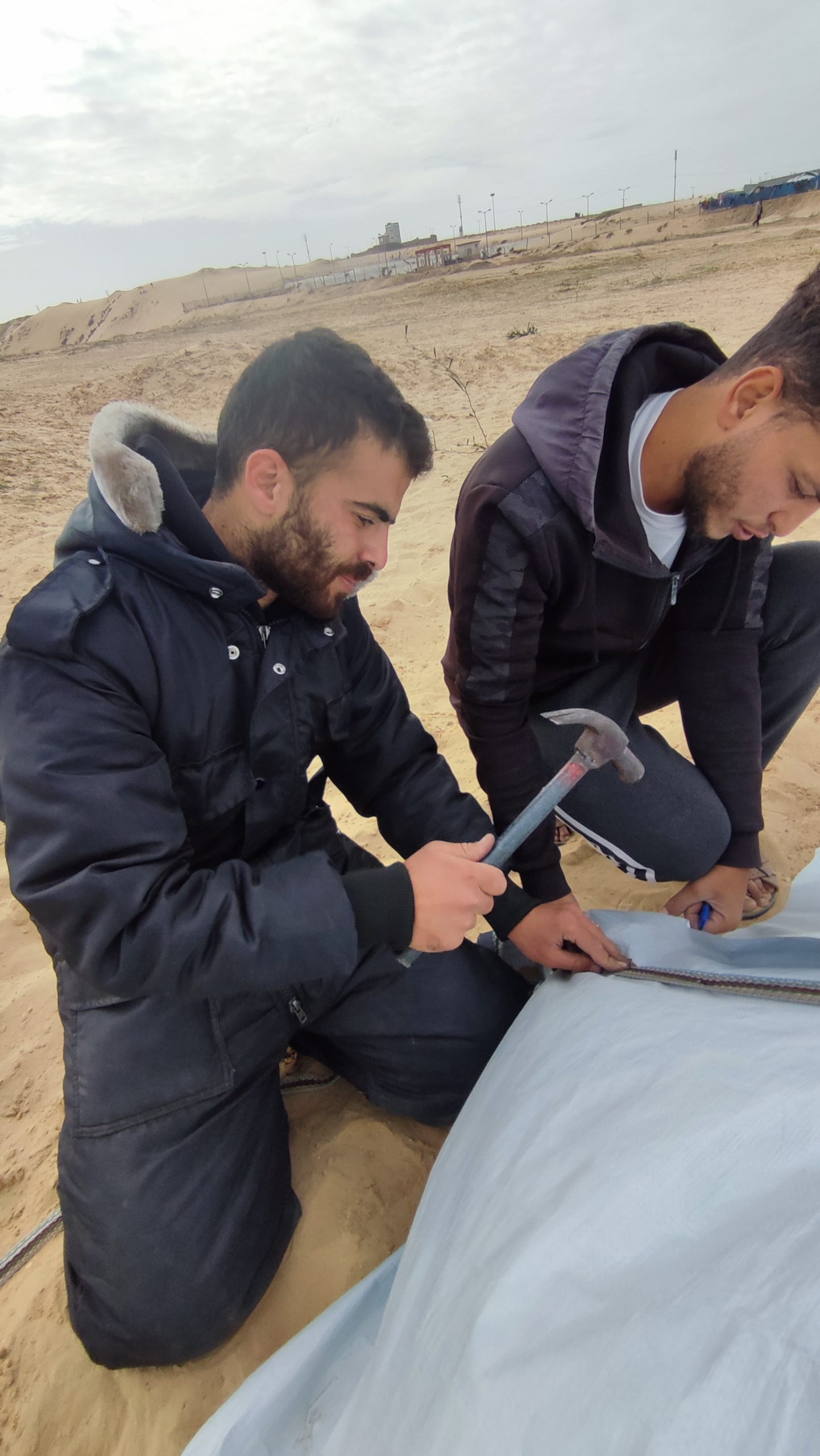
Even with a job, and before the conflict started, Khalil says life was tough in Gaza.
“I would be lying if I said there was hope in Gaza. Because I didn’t have hope before war,” he says.
Khalil says that having a regular life in Gaza was a challenge, even before the war, as most people were unable to find sustainable work.
Instead, Khalil found hope in moving to Australia and starting a new life here – he hopes to be able to bring his family here with him.
“Sometimes I say – I came from Palestine, but you belong where people support you. I came here, and AMES provided me with a job, they paid for my license, they check on me regularly,” he says.
“I feel like I belong. That’s the thing. I’m planning to sit here and start my life and continue my life in Australia.”