




 Loading tweets...


Tuvaluans begin arriving in Australia
The first climate migrants from Tuvalu have arrived in Australia under the historic Falapili Union agreement, aimed at giving Tuvaluans migration pathways as rising seas inundate their homeland.
More than a third of the Pacific island nation’s 11,000 population have applied for the new visas that are the result of a deal struck with the Australia two years ago.
The intake is capped at 280 visas annually to prevent a brain drain from the tiny island nation.
Among the first to arrive was Alolita Tekapu, who arrived in Melbourne in October to join her partner, who has been in Australia for 12 months as part of the PALM working visa program.
Since then, Alolita has had a baby son. She says life is good in Australia for her family and they are looking forward to the future.
“We are all doing well. Life is different in Australia for us, but we are looking forward to the future,” Alolita said.
“Australia is much bigger and busier than Tuvalu but here my son will have opportunities that he would not have in Tuvalu,” she said.
“We miss our family and friends back home, but many people are wanting to leave Tuvalu and come to Australia as the waters rise,” Alolita said.
Also, among Tuvaluans who gained visas through a Falapili lottery are Tuvalu’s first female forklift driver, a dentist, and a pastor focused on preserving the spiritual life Tuvaluans thousands of kilometres from home.
Manipua Puafolau is a trainee pastor with Tuvalu’s largest church. He is living in Narracoorte, in South Australia, which is home to several hundred Pacific Islanders working in seasonal agricultural and meat processing jobs.
“For the people moving to Australia, it is not only for their physical and economic well-being, but also calls for spiritual guidance,” he said.
Tuvalu’s Prime Minister Feleti Teo recently visited the Tuvaluan diaspora community in Melton, west of Melbourne, to talk about the importance of maintaining strong ties and cultural bonds across borders as citizens migrate.
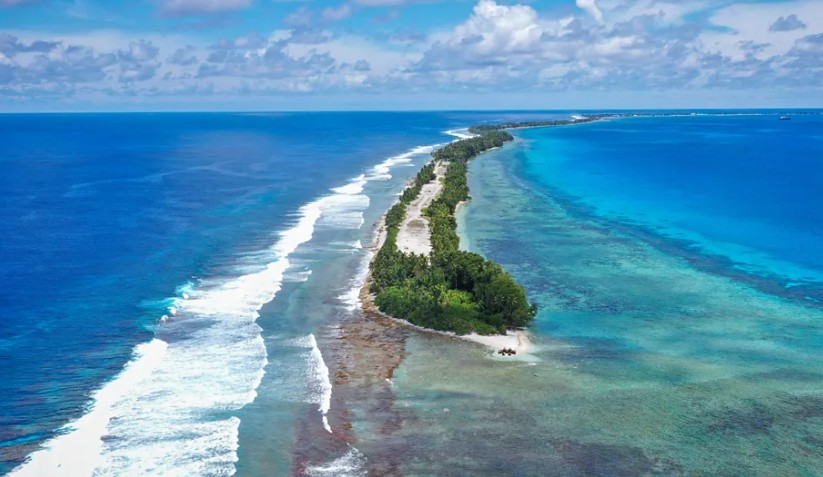 On Tuvalu’s main atoll of Funafuti, the land in some places is barely wider than the road. Families live under thatched roofs, and children play sport on the airport runway because of a lack of space.
Scientists have predicted that by 2050, daily tides will submerge half of Funafuti atoll, where 60 per cent of Tuvalu’s residents live.
The median research estimates predict a one metre rise in sea levels, but the worst-case scenario would double, putting 90 per cent of the country’s main atoll under water.
Australian Foreign Minister Penny Wong has said the climate migrants would contribute to Australian society.
The visa offered “mobility with dignity, by providing Tuvaluans the opportunity to live, study and work in Australia as climate impacts worsen”, Ms Wong said in a statement.