






 Loading tweets...


Is migration the answer to Japan’s economic problems
A Japanese island facing economic ruin because of a dwindling and ageing population has been rescued by an influx of migrants.
Etajima Island, in Hiroshima Bay, is a famed oyster producing community whose product is eagerly sought across Japan.
The island’s clean water and nutrient-rich seas create an environment where delicious, umami-flavoured oysters thrive.
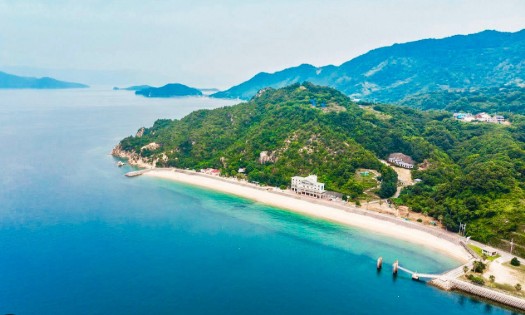 Fishing is a tradition of Japanese culture, and oyster farming is the biggest industry on Etajima, but finding local crew members and workers is now almost impossible.
The island – like most of Japan – is seeing a rapidly aging population, with almost half of its residents aged over 65.
To keep its oyster industry alive, Etajima has imported its workforce from overseas – mostly from Indonesia and Vietnam. More than 90 per cent of the island’s oyster industry workforce now are migrants.
Local skippers can now harvest oysters, and the foreign workers can earn wages far above what they would be paid in their home countries.
Japan has a population problem stemming from decades of low birth rates.
These rates began falling after World War II but have been continuously dropping since then.
In 2025, Japan recorded its lowest number of births in more than a century.
The Japanese government has tried to push policies encouraging women to have more children but has mostly failed.
And, until recently, it avoided immigration to plug worker shortages because of fears over the dilution of Japanese culture and bloodlines.
Currently, Japan has the oldest population on earth, draining the economy of labour and income taxes, while putting a strain on resources.
There are instances where Japanese companies have been bankrupted because they can’t attract labour.
In 2024, the number of Japanese nationals shrank by a record 889,970 people. At the same time, immigrants have been entering the country at record levels.
The immigrant population now totals around 3.9 million people, or 3.21 per cent of the total population, and almost double what it was in 2012.
This is small proportion but significant for a country well-known for its homogeneity.
Japan has approached the issue of immigration in practical ways, studying migration programs in comparable countries – including Australia – before acting.
The main scheme for low and mid-skilled workers – known as the Technical Intern Training Program – provides a worker with a visa for a set number of years, without their family.
Effectively, it is a temporary worker scheme that imports temporary workers, not permanent community members.
Over the last 18 months, about 1,200 people a day have received work permits to come and work in Japan.
This has sparked growing community concern about whether new migrants will harm social cohesion.
Japan’s new conservative Prime Minister Sanae Takaichi has vowed to introduce tougher immigration policies and polls show her stance is popular.
And, in the recent elections, the anti-immigration Sanseito party made significant gains.
Local government surveys on Etajima show only a small proportion of the local population want to engage with the foreign residents – about six per cent.
In contrast, 60 per cent of immigrants surveyed say they want to engage with their Japanese neighbours.
One theory is that most elderly people haven’t had much contact with foreigners and are reticent to engage.
Etajima’s local government has launched an effort to build social cohesion and provides free language and culture classes for migrant workers.
It also holds large multicultural events, with food and dancing showcasing the island’s increasingly diverse community.
Local islander Yukio Fujimori says coexistence and understanding is key for economic progress.
“This is not just an issue for Etajima, but for the whole of Japan,” she says.
“Cultural diversity brings a sense of vitality and economic possibility and I think it’s a good thing,” Ms Fujimori says.