



 Loading tweets...


Refugee resettlement commitments tank – UNHCR
The number of people needing resettlement because of humanitarian need has decreased in 2026 but the number of resettlement places available has also dropped to the lowest level since 2003, according to the UN refugee agency UNHCR.
The recently released ‘UNHCR Projected Global Resettlement Needs’ report, says the global resettlement needs for refugees are projected to decrease from 2.9 million to 2.5 million in 2026.
“Despite the record number of resettled refugees in 2024, the anticipated resettlement commitments for 2025 have significantly dropped, with quotas at their lowest since 2003,” the report says.
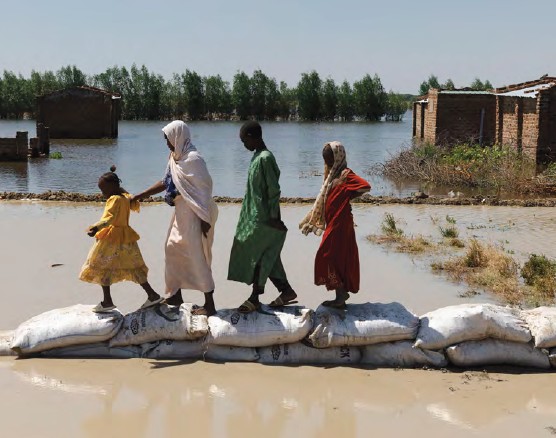 It says the Middle East and North Africa (MENA) region and Turkey have seen a substantial reduction in resettlement needs due to the changing situation in Syria.
“As many Syrians, however, will not be able to return in the foreseeable future, they remain the second largest group in need. Conversely, resettlement needs for Afghans – now the largest refugee population in need of resettlement – along with South Sudanese, Sudanese, Rohingya and Congolese (DRC) refugees have all increased,” the report says.
“The needs of Sudanese refugees, in particular, have risen by 30 per cent, driven by ongoing displacement into neighbouring countries in West and Central Africa, the Eastern Horn of Africa and the Great Lakes and the MENA region.
“In 2026, Iran is expected to have the largest resettlement needs, while notable increases are seen in Pakistan, Chad, Bangladesh and Uganda,” the report says.
For 2026, the UNHCR’s goal is to resettle 120,000 refugees. The agency says the target is achievable, but larger resettlement quotas will remain crucial into the future.
“The quotas of smaller and mid-sized countries will be equally important in the coming years, especially if cases can be quickly processed and reviewed remotely,” the report says.
“Smaller quotas can have a significant impact collectively and the engagement of less well-known resettlement countries is understood as the expression of solidarity it is intended to be.”
UNHCR has called on donors to help preserve the established resettlement structures, expertise and partnerships to ensure the sustainable, safe and effective resettlement of refugees.
The agency says many countries are applying increasingly restrictive criteria for resettlement admissions, impacting UNHCR’s ability to refer the most vulnerable refugees for resettlement.
“New and protracted crises coupled with chronic underfunding leaving humanitarian responses with insufficient resources underscore the continued and growing need for resettlement as a vital tool of protection, a durable solution but also a strategic intervention,” the report says.
“Resettlement offers a concrete alternative to dangerous journeys, helps preserve fragile protection spaces, showcases meaningful international solidarity and fosters partnerships with host countries.
“By offering solutions for refugees with high needs and greater dependency on assistance, resettlement helps ease the pressure on national systems in host countries and thereby supports sustainable responses,” it says.
The report identified the resettlement needs for regions across the globe.
For the Americas, it was 172,200m the Asia Pacific 806,700, East Africa and the Horn of Africa 659,400, Europe 258.100, Middle East and North Africa 322,200, Southern Africa 106,100 and West and Central Africa 202,500.
The top the countries with highest resettlement needs by country of origin are: Afghanistan, 573,465; Syria, 442,460; South Sudan, 258,190; Sudan, 246,790; Myanmar, 233,360; DRC, 179,560; Eritrea, 103,685; Venezuela, 100,910; Somalia, 99,285; and, the Central African Republic, 98,480.
The top ten countries of asylum, where displaced people have found temporary refuge, are: Iran, Thailand, Egypt, Bangladesh, Chad, Lebanon, Uganda, Ethiopia, Pakistan and Turkey.