



 Loading tweets...


The world’s forgotten refugees, the Rohingya of Cox’s Bazar
More than a million Rohingya refugees, who fled violence and persecution in Myanmar, have been languishing in an overcrowded refugee camp of Cox’s Bazar in Bangladesh for almost a decade.
Now, the UN refugee agency UNHCR warns that among global humanitarian aid funding cuts, they are facing increasing challenges around the basics of food, shelter and health.
“Life is extremely challenging, and Rohingya refugees live in highly congested conditions and rely on humanitarian assistance for their essential needs, including protection, food, health, education, water and sanitation and shelter. Livelihood opportunities remain severely limited. Set against this backdrop are the impacts of humanitarian funding cuts,” a recent UNHCR report said.
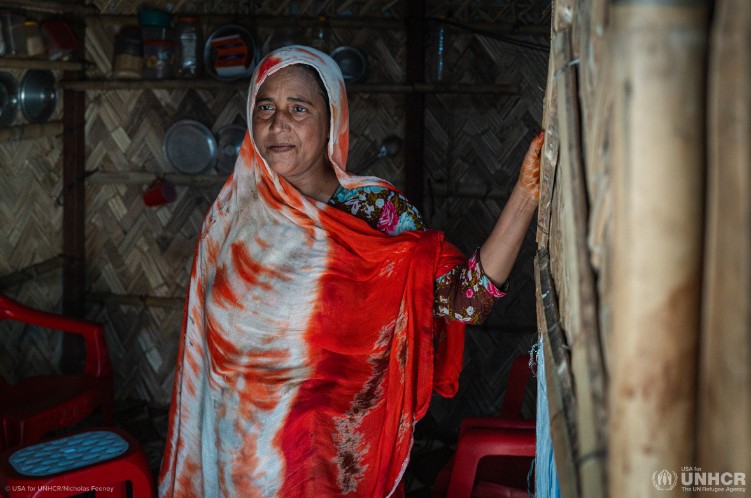 And as the conflict in Myanmar continues, Rohingya refugees continue to seek safety in Bangladesh.
Since 2024, around 150,000 new arrivals have sought refuge. Funding cuts are forcing UNHCR, the UN Refugee Agency, to make difficult decisions about how best to support refugees amid increasingly challenging conditions.
UNHCR says safe shelter is an enduring challenge for Rohingya refugees living in Cox’s Bazar. During the monsoon season heavy rains can trigger landslides that threaten shelters.
The agency has recently a ‘community counsellors’ program in which locals are trained by UNHCR and local health partners in Bangladesh to help deliver care throughout the refugee settlements.
Rohingya community counsellors deliver health care that is timely and culturally sensitive to the needs of the Rohingya community. Community counsellors also play an essential role in communicating refugee needs back to UNHCR staff as humanitarian funding cuts have forced UNHCR and its partners to reduce health care services in the settlements, forcing many clinics to close.
Meanwhile, Bangladesh has said it has no scope to allocate more resources to Rohingya refugees and has urged the international community to find a sustainable solution to the crisis.
Children make up half the 1.3 million Rohingya refugees now living in Bangladesh, because of what the UN has called a “textbook example of ethnic cleansing”.
Hosting the refugees has put a huge strain on Bangladesh, in areas from its economy and environment to governance, according to Nobel peace laureate Mohammad Yunus.
“We don’t foresee any scope whatsoever for further mobilisation of resources from domestic sources, given our numerous challenges,” Mr Yunus said.
He called for the international community to draft a practical roadmap for their return home.
“The Rohingya issue and its sustainable resolution must be kept alive on the global agenda, as they need our support until they return home.”