




 Loading tweets...


Human rights protection the key to social cohesion
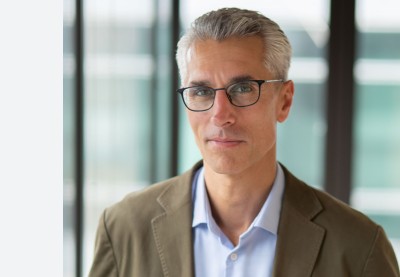
Australia needs a Human Rights Act as social cohesion frays and we live lonelier, less connected lives, according to one Australia’s leading human rights advocates.
Hugh de Kretser, the President of the Australian Human Rights Commission, says social cohesion has declined over the past twenty years and the causes of this drift paint a “grim picture”.
Delivering the recent Menzies Oration at Federation University in Ballarat, he said there were declining levels of trust in government, rising anti-migrant sentiment and rising racism and prejudice particularly against First Nations, Jewish, Muslim and Palestinian Australian people.
“Wealth and income inequality is widening. There has been growing concern around housing affordability and cost of living issues,” Mr de Kretser said, during the 90-minute oration.
“Few of the Closing the Gap targets to address Aboriginal and Torres Strait Islander inequality are on track. There is a human rights divide between the cities and bush, particularly in relation to health, education, jobs and exposure to the impacts of climate change,” he said.
Mr de Kretser said public debates and politics, as well as the media, were becoming more polarised and contested.
 “Our media and social media compete for attention and advertising dollars. The more eyeballs on their content the more advertising they can generate. This incentivises stirring up controversy and conflict. This drives further polarisation as it feeds a harsher political cycle,” he said.
“Social media algorithms monetise division and outrage. People say things online and often anonymously that they would never say to someone face to face.
“There is a search for outrage. Assuming the worst of possible meanings. Twisting words out of context and attacks increasingly target people instead of policies and ideas,” he said.
Mr de Kretser said truth, especially around issues relating to cohesion, was being eroded by a rise in misinformation and disinformation and blatantly false information that is often deliberately spread.
“This is a grim picture,” he said.
But he found some positives in the fact that support for multiculturalism remains strong at more than 80 per cent.
“Most Australians recognise that diversity makes our nation better. Trust in many public institutions remains reasonably high and compares favourably with OECD averages,” Mr de Kretser said.
“On a world scale, socially and economically Australia is faring better than many similar countries,” he said.
But he said it was undeniable that in recent times our social cohesion has been under threat, citing the Bondi shooting, that claimed xx lives, and the attempted bombing of a group of indigenous people on Australia Day.
He also referenced the attack on Muslim worshippers in Christchurch by an Australian man in 2019 that killed 51 people.
“This violence underscores the importance of promoting a more socially cohesive society where all people can be safe and proud in their identity, faith and culture,” he said.
Mr de Kretser identified some key factors in strengthening cohesion. He said truth telling, being seen and heard and better protecting human rights were among these factors.
“Truth telling is an invitation to listen respectfully and walk together toward a brighter shared future in these lands we all call home,” he said.
“Communities have felt unsafe. They have felt pressure to shed aspects of their cultural and religious identity to avoid racism and harm. They have felt pressure to retreat from public life. Their sense of belonging in our country has been eroded. They have felt let down by institutions meant to support them and to be safe for them.”
Mr de Kretser said social cohesion involved a sense of belonging and a shared vision.
“We should embrace difference within a unifying concept of what it means to be Australian. People must be able to retain their cultural, linguistic and religious identity while proudly being Australian,” he said.
“And so, to strengthen social cohesion in Australia under a shared national identity, we should strengthen our understanding, support and protection of our human rights.”
Mr de Kretser said the best way to do this was by introducing an Australian Human Rights Act.
He said such legislation “passed by the Australian Parliament which protects in law the human rights that belong to all people in Australia”.
“Repeated inquiries have highlighted the gaps in protection of people’s rights in Australia and problems this creates. A Human Rights Act would help to address this,” Mr de Kretser said.
“It would require our governments and public servants to properly consider and act compatibly with our human rights when they are making decisions, developing policies and delivering services.
“This would create a culture of thinking about people’s rights which would help to prevent breaches of rights.
“It would provide a framework, drawing on well-established principles, to help governments, parliaments and our community to navigate differences and resolve issues where rights conflict.
“It would promote human rights education and understanding by listing in one place, in Australian law, all the human rights that belong to all of us.
“And if governments did breach someone’s rights, it would give people the power to take action to address the breach.
“For me, a Human Rights Act would be like a reverse citizenship pledge where Australian governments and parliaments legally promise to protect the human rights of all Australians. It would strengthen people’s trust in our government and our parliament,” Mr de Kretser said.
He said other responses to declining social cohesion included building shared understanding and connection; acknowledging the experiences of others; seeing and hearing with respect, looking for common ground and recognising our common humanity.
He also cited: “building a unifying vision of what it means to be Australian with human rights as an essential part of that” and “strengthening the understanding and protection of human rights including through an Australian Human Rights Act”.
“By doing this, we can strengthen social cohesion in Australia and build a society together which is stronger, fairer, safer and more prosperous for all,” Mr de Kretser said.
Read the full oration here: https://humanrights.gov.au/about-us/media-centre/speeches/hugh-de-kretser/menzies-oration-2026-social-cohesion-and-the-future-of-australia-leadership,-civility,-and-the-greater-good