
 Loading tweets...


Fall of a dictator – is this end of Iran’s regime
Neda Zeyghami is part of Australia’s Iranian diaspora. In this opinion piece, she examines the emotional and political realities of witnessing upheaval in one’s homeland, and questions what the fall of a leader truly means for systemic change.
News of missile strikes hitting the soil where you were born, where you went to school, where you grew up and built your earliest memories, is not just political news. It is a blow to identity itself. The streets that watched you come of age, the cafés that held your laughter, the buildings layered with memory, and the people whose hospitality defines an entire culture — all suddenly reduced to coordinates on a military map.
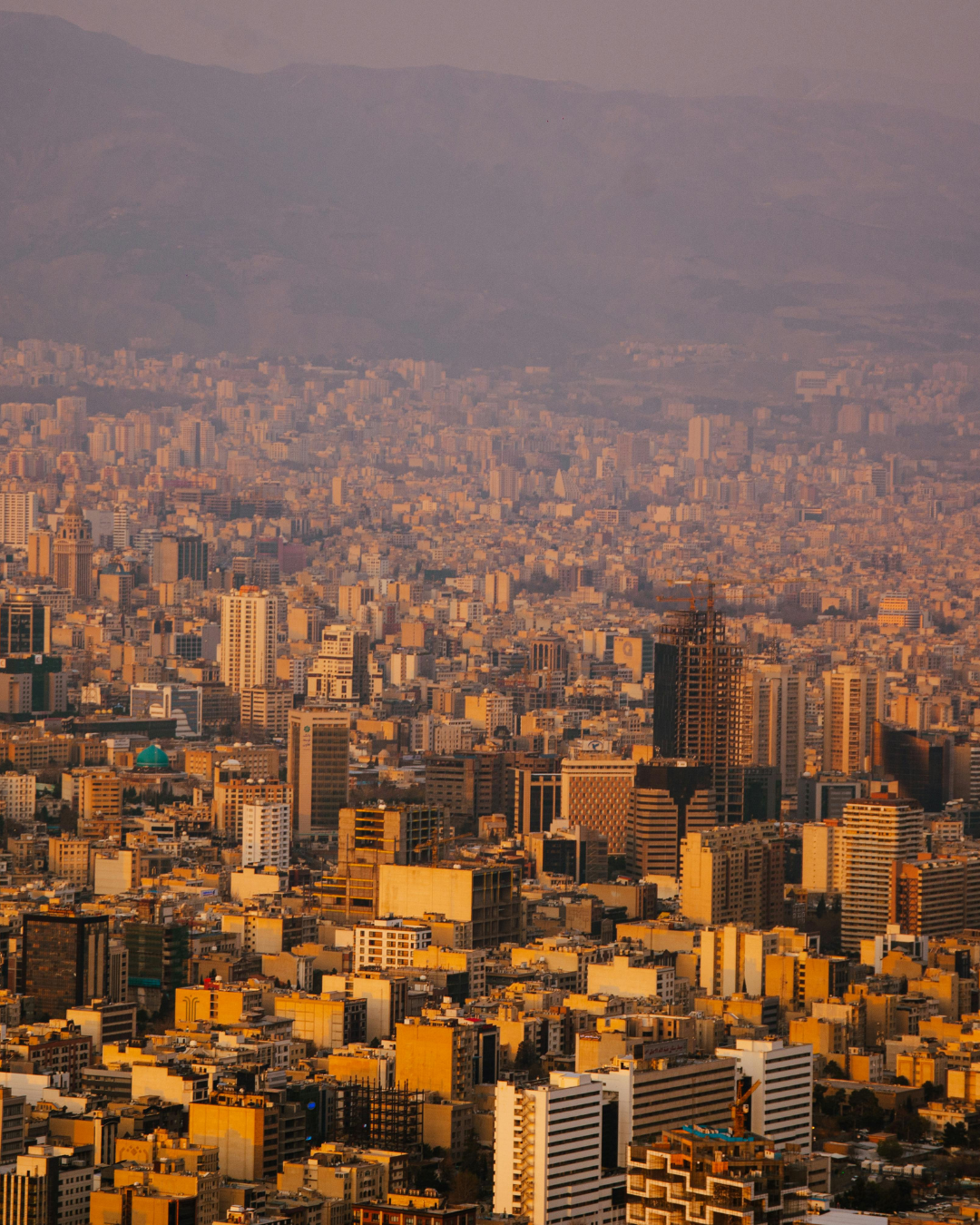 Did the people expect this? It is painful to admit, but many had reached a point where they hoped outside forces would intervene. They had already taken to the streets with empty hands, facing a regime determined to hold power at any cost. Tens of thousands were killed. Tens of thousands of families entered mourning. These are not statistics; they are homes that will never feel whole again.
No people – except those who profit from blood and war – celebrate the bombing of their own country. What happened in Iran was never about loving war. It was about a population pushed to the brink. I have heard young people say: “If I die in the streets, at least I will have died for the freedom of my land. If I stay silent, I will be indebted to future generations.” Those were not slogans. They were convictions.
The night of the missile strikes, very few Iranians slept. Phones were checked hourly. News was consumed with trembling hands and racing thoughts. The report of the death of Iran’s Supreme Leader reached many of us abroad at dawn — between disbelief and shock. If true, it marked the end of a man who, under the cover of religion, presided over years of repression and injustice. For many, his death did not feel like justice. Accountability seemed larger than mortality.
To those who only see “Middle East tensions” on a screen, understand this; we are not joyful about bombs falling on our homeland. No one with roots in that soil is happy to see it burn. But for families who buried their children, the fall of the man they hold responsible brings a complicated relief – a mixture of grief, anger, and a fragile sense of release. Social media filled with videos of parents, still dressed in black mourning clothes, dancing. It is a dance that carries both sorrow and vindication at once.
And this raises the deeper question: Does the death of a dictator mean the collapse of the system he built?
History tells us that authoritarian structures do not vanish with a single individual. Networks of power, security institutions, and deeply embedded ideologies do not dissolve overnight. The fall of a figure can be symbolic. It can break fear. It can open a door. But it does not automatically guarantee freedom.
I know many hearts stand beside us. I know that each time a bomb falls or news breaks from Iran, many of you think of us. Yet perhaps it is hard to fully grasp the duality we carry. We grieve the destruction of our country – the broken windows, the smoke over familiar neighbourhoods – and at the same time, we feel relief at the collapse of a corrupt regime. Both emotions coexist. Both are real.
To my fellow Iranians – inside the country and across the diaspora – if you find yourself distracted, exhausted, unable to focus, or emotionally fractured, know that this is not weakness. It is a human response to watching your homeland under threat. When the place that formed your earliest memories is shaken, your sense of safety is shaken too.
If you are able, take a day to rest. If you cannot step away from work or responsibilities, then be gentler with yourself. Reduced productivity during collective trauma is not failure; it is physiology. Stress narrows attention and scatters the mind. That is normal.
And when your body settles, even slightly, consider how you might support your community through information, through care, through financial assistance, or simply through presence. Not everyone will respond in the same way. Some will grieve. Some will feel anger. Some will feel relief. Many will feel all of it at once – and that too is human. Contradictory emotions in times like this are not hypocrisy; they are human.
What we seek is not a simple transfer of power from one individual to another within the same structure. We are not asking for a new face in an old system. We are asking for a civilized, democratic, and prosperous Iran – a country governed by law, accountability, and dignity. It is bitter that rebuilding may have to begin from rubble. It is tragic that renewal may emerge from the aftermath of missiles. But the political reality is harsh: without shifts in the international system, domestic transformation alone often lacks the power to break entrenched structures.
To those who think of us whenever Iran appears in the headlines – thank you. Thank you for your patience with the Iranian community in these days, for your empathy, for wishing freedom for us in human and compassionate terms.
I hope one day you will remember Iran again not through smoke and conflict, but through its art, its poetry, its handwoven carpets, its music, and even its quiet sun-soaked cats. That is the Iran we carry inside us.
And to those who mourn the former leader as a symbol of religious devotion and resilience: I ask you to look again. Place his record on the scale of the very ethics, humanity, and faith you speak of. Set aside loyalty for a moment and weigh the 35,000 lives lost. Ask whether such bloodshed could truly be separated from a pursuit of power. History will judge with distance and clarity. I hope we, too, can find the courage to judge without bias – before history does it for us.