

 Loading tweets...


A key to empowering marginalised communities
“Creating links between minority and marginalised communities can empower them to challenge the mechanisms of power.”
“And utilising the knowledge they hold collectively can help them overcome challenges and advocate for themselves.”
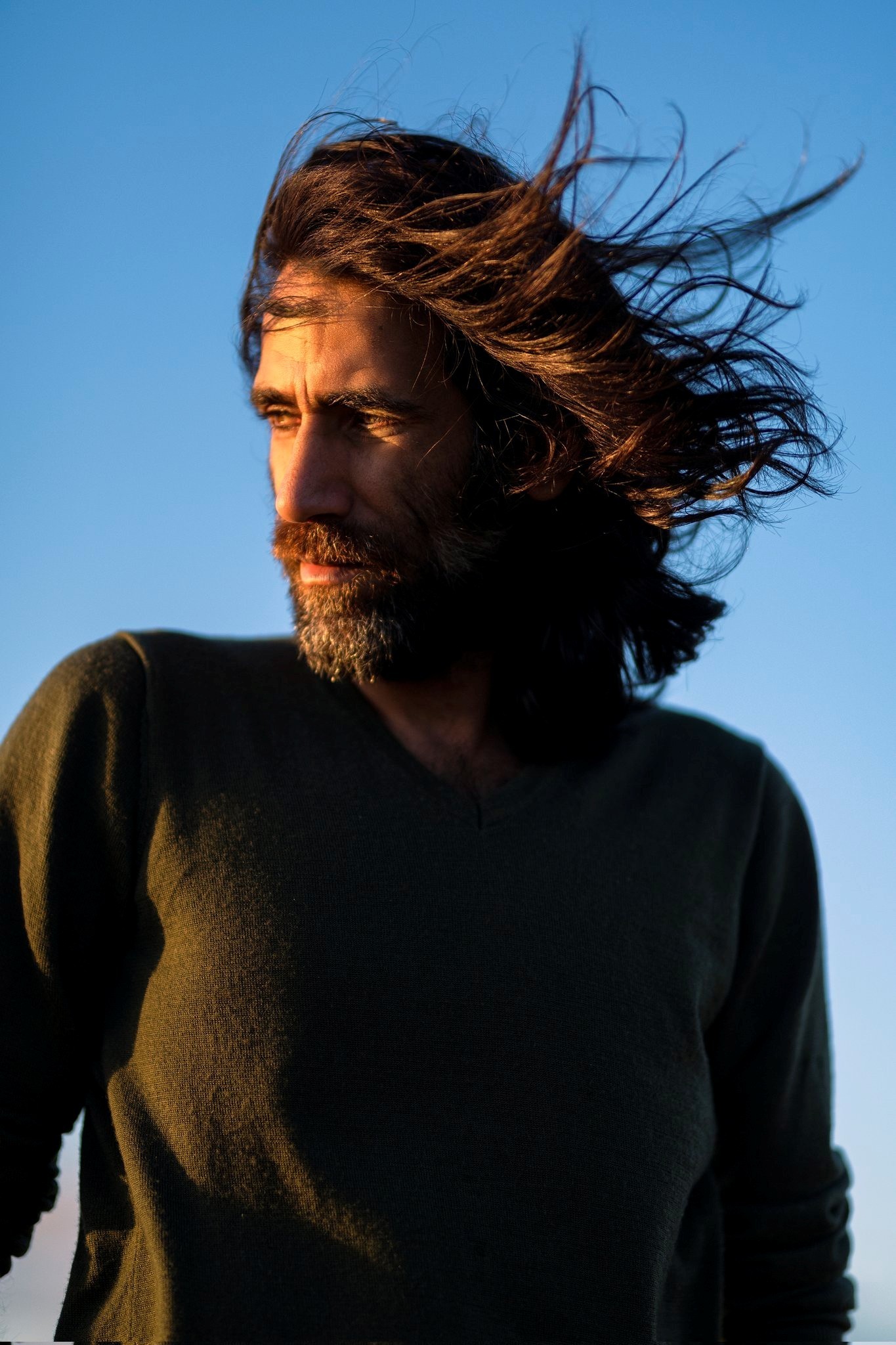 This was the message from Kurdish-Iranian journalist and human rights advocate Behraz Boochani delivered to the recent Refugee Communities Association of Australia conference in Adelaide.
Mr Boochani, who spent four years in detention as an asylum seeker on manus Island, said that minority and marginalised communities possess what he called “resistance knowledge” that was important in advocating and having a voice in national conversations.
“There is knowledge in minority and marginalised communities. I call this ‘resistance knowledge’. It exists in me, and I can replicate it,” he said.
“We in these communities can empower each other and we should get to know each other. For instance, my duty as a Kurd to know and understand the Rohingya and first nations people,” Mr Boochani said.
“If we all do that, we can empower each other,” he said.
Mr Boochani also told the conference of his connections with the ‘Grandmothers for Refugees’ group.
“The grandmothers are a group of women who supported people on Manus Island and still support people in detention,” he said.
Mr Boochani said the group’s mission is to drive change in Australian government policy regarding asylum seekers, advocating for a compassionate reception, fair assessment of refugee status, proper care, safety, support, and, when suitable, a path to permanent residency.
“The group’s narrative is that of the ancient role of mothers and grandmothers of offering love as a counter to the forms of violence often suffered by refugees and asylum seekers,” he said.
He told the story of one of these women who passed away in 2017 buy whose final act was in support of an asylum seeker on Manus Island.
“Her last act was in support of a desperate person. There are many stories like this in Australia and its important we hear them,” he said.
Mr Boochani was held in the Australian-run Manus Island detention centre in Papua New Guinea from 2013 until its closure in 2017.
He remained on the island before being moved to Port Moresby along with the other detainees in September 2019. On 14 November 2019 he arrived in New Zealand on a one-month visa, to speak at some events.
He was later granted refugee status in July 2020 and became a research fellow at th4e University of Canterbury.
His memoir, ‘No Friend but the Mountains’, written on Manus Island, which won the Victorian Prize for Literature and the Victorian Premier’s Prize for Nonfiction. The book was tapped out on a mobile phone in a series of single messages over time and translated from Persian into English by Omid Tofighian.
Mr Boochani visited Australia for the first time to promote the book in December 2022.
After graduating from university, he began his journalistic career writing for the student newspaper at Tarbiat Modares University, before working as a freelance journalist for several Iranian newspapers.
He wrote articles on Middle East politics, minority rights and the survival of Kurdish culture and, in secret, he taught children and adults a particular Kurdish dialect from the region of Ilam, regarded as their mother tongue.
Huis work promoted Kurdish culture and politics and, as a member of the Kurdish Democratic Party, outlawed in Iran, and the National Union of Kurdish Students, he was watched closely by Iran’s Islamic Revolutionary Guard.
In 2013 eleven of Mr Boochani’s colleagues were arrested, several of whom were subsequently imprisoned.
After publishing news of the arrests online and the news spreading globally, Boochani went into hiding for three months and in May 2013, fled Iran and made his way to Indonesia.
Attempting to get to Australia by boat, Mr Boochani and 60 other asylum seekers were intercepted by the navy and detained on Christmas Island before being transferred to Manus Island.
On Manus Island, Mr Boochani launched a campaign on human rights abuses in the island and human rights campaigners launched a bis to stop him being returned to Iran, where he faced imprisonment, ort worse.
He also became a spokesperson for the men in his camp, meeting with PNG immigration and other officials as well as Amnesty International and the UNHCR.