




 Loading tweets...


UN chief lays out global migration strategy
Global migration is not a crisis but the world’s collective failure to manage it is, according to the head of the United Nations.
Speaking at the International Migration Review Forum, UN Secretary-General Antonio Guterres urged the international community to reject the “fear and misinformation” surrounding global migration.
He said the movement of people is an historical constant rather than an inherent disaster.
“Migration is not the crisis. The crisis is the world’s collective failure to manage it together,” Mr. Guterres told the forum in New York.
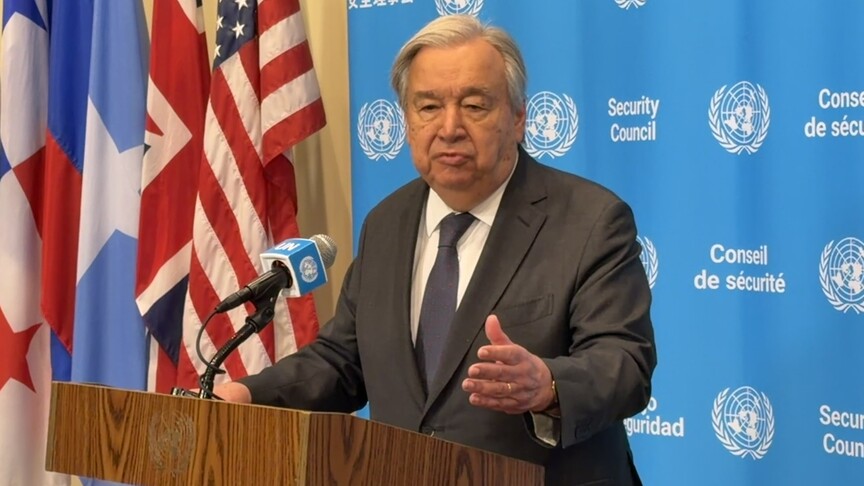
He slammed the political scapegoating and dehumanisation of migrants, saying that more than 15,000 people have died or disappeared along travel routes in two years.
Mr Guterres proposed a six-point strategy to address the humanitarian toll, which includes 200,000 trafficking victims identified in the last four years.
He called for a crackdown on human smugglers equivalent to the war on drugs and demanded that member states dismantle criminal networks by “cutting off their financial flows.”
“Member states have taken concrete steps to expand regular pathways, strengthen labour mobility initiatives, improve search‑and‑rescue, enhance data systems, and support safer return and reintegration,” he said.
“But over four years, at least 200,000 victims were trafficked – most of them women and girls while in just two years, more than 15,000 people died or disappeared along migration routes.
“And families and children continue to be detained, and countless workers remain exploited and excluded from labour protections,” he said.
The UN chief said that human rights must remain “front and centre,” regardless of an individual’s legal status. He called for an end to the detention of families and children while expanding regular legal pathways to “curb exploitation” and meet labour market needs.
Mr. Guterres also emphasised the need to invest in education and economic opportunities in countries of origin to reduce the pressure for “perilous journeys”.
He urged partners to support the Migration Multi-Partner Trust Fund, which has mobilised $68 million since 2019.
The six point strategy:
- Migration governance must be anchored in dignity, humanity and rights with the end of criminatory practices, ensuring due process, and halting the detention of children and families.
- Migration must be made safer, including stronger cooperation to assist migrants in distress and to make sure any returns are safe and dignified, with no refoulement, no disappearances, no torture.
- A crack down on smugglers and traffickers, with criminal networks dealt with in the same way as drugs traffickers.
- A need for real and workable regular migration pathways for students, workers, families, and people seeking safety and protection.
- The international community must expand opportunities in countries of origin through increased investment in education, skills acquisition and decent work, particularly for young people.
- Nations must invest in better cooperation, including on the issue of refugees as people fleeing conflict and people seeking opportunity increasingly travel together.