


 Loading tweets...


Children displaced by conflict hits record high
A record 13 million children are now displaced by war or conflict around the globe, according to new data from the Internal Displacement Monitoring Centre (IDMC).
The figure is part of an all-time high of 32.3 million people displaced last year.
The IDMC, which is part of the Norwegian Refugee Council, says its data shows that internal displacements increased by 60 per cent last year, from 20 million in 2024 to 32 million in 2025.
The 13 million figure represents more than 35,000 children being displaced each day.
The Democratic Republic of Congo (DRC), Sudan, Iran and the occupied Palestinian territory were among the countries where violence and conflict led to the most displacements of children last year.
The IDMC defines an internal displacement as each time a person is forced to move within their home country, with some people forced to move several times.
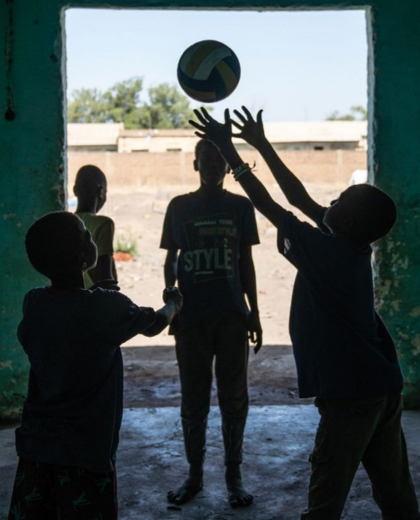 “Displacements triggered by conflict and violence rose by nearly 60 per cent to reach a record 32.3 million, while disaster displacements fell by 35 per cent to 29.9 million after the exceptional levels recorded in 2024,” the report, the Global Report on Internal Displacement said.
The rise in displacement comes as more children than ever are growing up surrounded by war and violence.
A report by Save the Children in 2025 revealed that a record 520 million children were living in active conflict zones in 2024, or over one in five globally, which is up 60 per cent since 2010.
UN verified incidents of killing, maiming, sexual assault and other grave violations against children surged 373 per cent in the same period showing the increasing brutality of conflicts for children.
In 2025, 32.7 million children were living in internal displacement – more than four in five of these due to conflict and violence, while over 19 million children were living outside their countries as refugees or asylum seekers, according to the latest data from 2024.
The UN Special Rapporteur on the human rights of Internally displaced persons (IDPs) Paula Gaviria Betancur said the IDMC report came at a moment of “profound contradiction”.
“Internal displacement is more visible in global policy discussions than ever before, yet it still fails to mobilise the urgency and sustained action it requires,” Ms Betancur said.
“In a context of competing crises – each vying for attention, resources and political will – millions of internally displaced people continue to be pushed to the margins. This report offers a stark reminder of that reality.
“In 2025, renewed and increasingly internationalised conflicts drove displacement across all regions. In many places, violence escalated at a speed and scale that left civilians with little warning and few real choices.
“Homes, hospitals and schools – objects protected under international humanitarian law – came under attack, forcing families to flee, often repeatedly, in search of safety.
“Internal displacement is not solely a humanitarian concern. It is also a development, peacebuilding and climate challenge that reflects deeper structural issues, including weak governance, inequality and exclusion. Addressing it requires sustained national leadership, stronger international cooperation, and a multilateral system that is fit for purpose.
“Above all, internally displaced people must be at the centre of the response. Their perspectives, capacities and rights must shape policies and solutions – not as an afterthought, but as a foundation for durable solutions,’ Ms Betancur said.
Save the Children’s senior advisor on migration and displacement Melinda van Zyl said the numbers were “staggering”.
“The statistics are staggering, but a displaced child is not just a number. Behind each number is a child who has most likely witnessed the kind of violence or destruction no child should ever have to see, before having to leave behind everything that they know, including their schools, their friends, and their communities to face an uncertain future.
“States must act decisively to prevent conflict, promote peace, and protect children from displacement, while ensuring accountability. They must also guarantee safe, sustained humanitarian access, and make sure that displaced children living in conflict zones, as well as those who have fled from violence have access to humanitarian aid and long-term solutions that take children’s needs into account,” M Van Zyl said.
Read the full report: IDMC-GRID-2026-Global-Report-on-Internal-Displacement.pdf