




 Loading tweets...


Turning refugee camps into communities
Kenya has recently adopted a revolutionary new approach to managing its large refugee populations.
It is moving away from a long-standing camp-based model towards a model centred on integration and turning camps into communities.
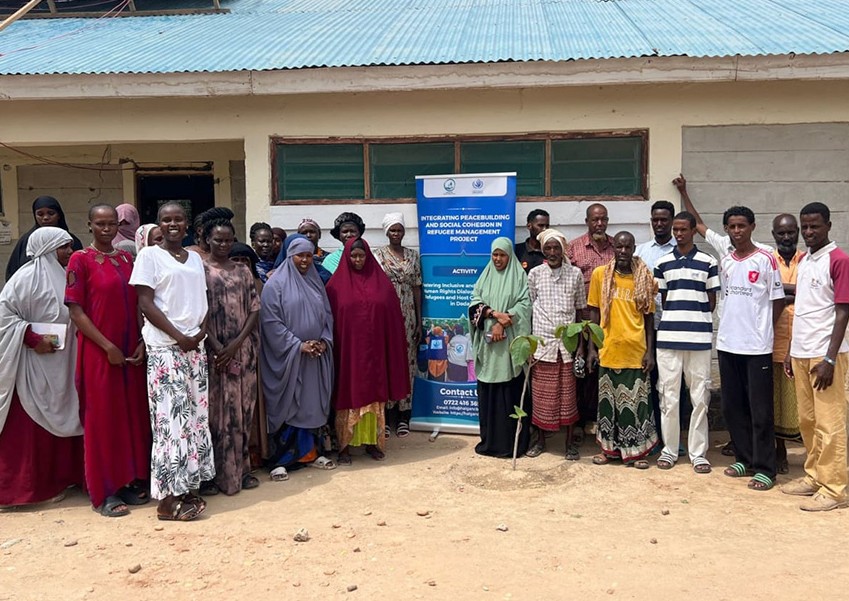
One example is the colossal Dadaab camp in northern Kenya, home to more than 400,000 refugees.
Dadaab is an example of one of the most protracted humanitarian situations globally, shaped by chronic resource shortages, insecurity, and decades of marginalisation.
But now Kenya has introduced reforms aimed at addressing these challenges. The Refugees Act, 2021 and the Shirika Plan sees a move toward a more inclusive, rights-based framework designed to improve protection while creating shared opportunities for refugees and host communities.
Dadaab is at the centre of this plan.
Former Assistant Secretary of the United Nations Professor Gillian Triggs says refugee resettlement in third countries is now not a durable solution to the growing global crisis of human displacement.
She said new solutions were needed across a range of localised circumstances.
“We need big thinking. This needs to include local communities offering support, opportunities through education and employment support,” Prof Triggs said.
“We have seen a great example of this in Kenya where there are huge refugee camps that are being transformed into viable towns and cities,” she said.
“The President of Kenya declared that people in the major camps should be integrated into the local community.”
“And the World Bank has funded access to medical care and opportunities to start businesses. This has effectively amounted to empowering refugees in places where it was safe so they can build lives and transform camps into viable cities.”
The project has helped foster resilience and opportunity. It has supported vulnerable youth, including those at risk of suicide, and enabled more than 600 women to start small businesses by creating pathways toward economic independence.
But Kenyan academic Professor Francis Owakah of the University of Nairobi has warned that the project was still seeing strained resources.
“Peacebuilding and social cohesion must be deliberately integrated into refugee management if Kenya’s progressive refugee policies, like the Refugees Act and the Shirika Plan, are to succeed,” he said.
Beyond refugee management, the UN has maintained broader engagement across Northern Kenya aimed at strengthening community resilience and accountability.
The UN’s Human Rights Office (OHCHR) has supported efforts to advance a human rights-based economy in Kenya by training communities on rights-based budgeting and equipping them with tools to participate in county-level budgeting processes that shape allocations for essential social services.
Its engagement has also included civilian-security coordination initiatives and human rights monitoring efforts across the region.
Working with institutions such as the Kenya National Commission on Human Rights, the University of Nairobi, UN Development Program, UNHCR, and the World Food Program, the project aimed to strengthen protection systems while fostering trust between communities.
Kenya National Commission on Human Rights official Abdi Kassim said the project was thoughtfully designed, embedding participation throughout the implementation phase, with clear interlinkages between its activities.
“Its implementation was meticulous, fostering an in-depth understanding of the context and structures that support human rights protection long after the project was completed,” he said.
Despite the measurable progress, the initiative is now ending due to funding constraints, which is raising concerns about how gains will be sustained.
UN Human Rights Officer in Kenya Vincent Omunyin outlined the risks of scaling back support at a critical moment, highlighted the role of continuous monitoring and engagement in safeguarding vulnerable populations.
“Refugees are exposed to numerous human rights abuses and violations with gender-based violence emerging as the most prevalent concern,” Mr Omunyin said.