
 Loading tweets...


Refugee Week – Refugee entrepreneur thriving
Young entrepreneur and Syrian refugee Fadi Abo reflects on how a decade in Australia has given him opportunities but also a more rounded life.
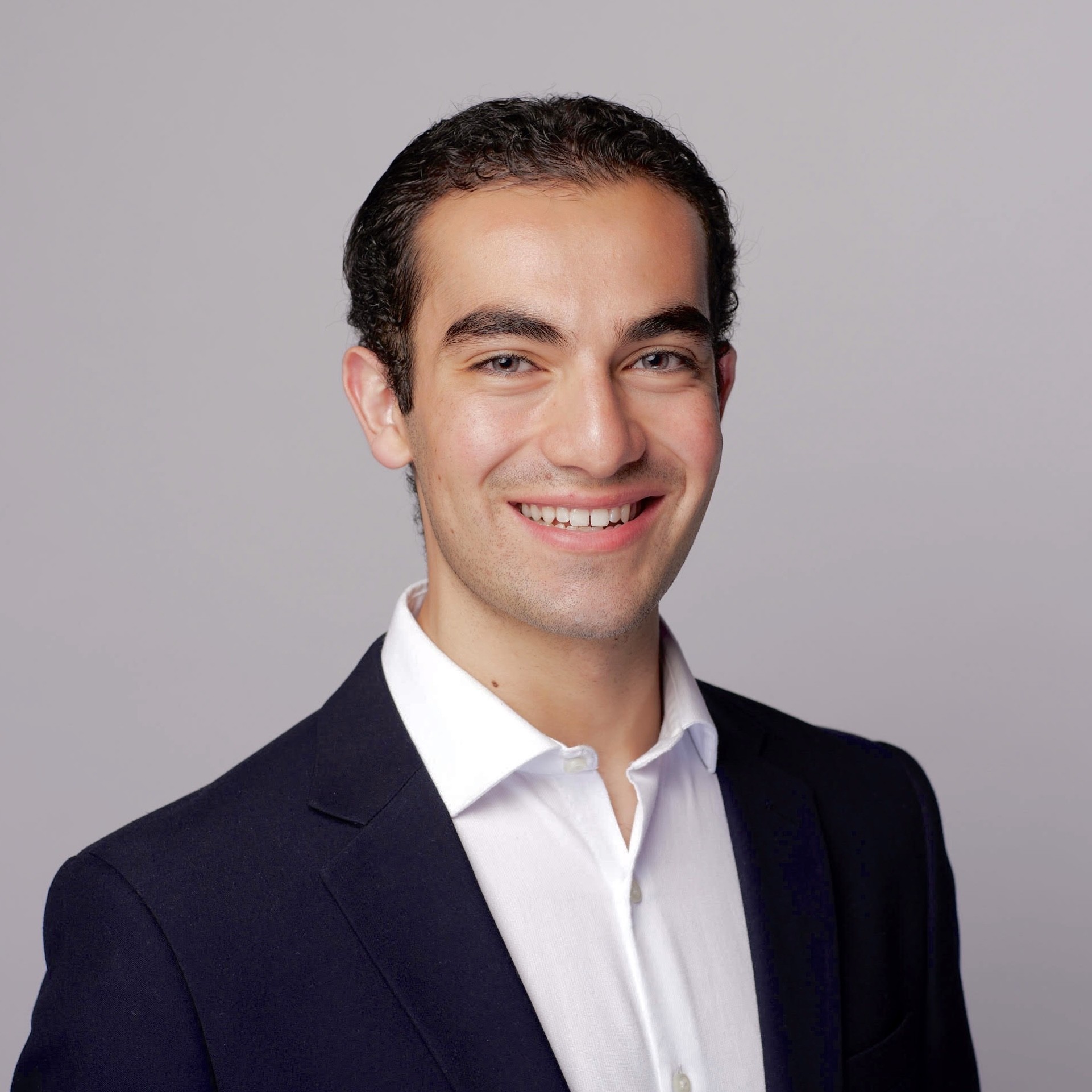
Nearly six years ago, I sat down to reflect on my experience as a Syrian migrant in Australia and as a young business owner, utilising the great opportunities in this country to chart my own path.
What I remembered most from my early days in Australia wasn’t a single defining event, but rather a feeling, like I was half a step behind.
It started small – in quick conversations, slang, humour, and cultural cues that didn’t quite translate. By the time I had processed what was said, the group had already moved on.
Australian humour felt like a moving target – dry, culturally derived, and at times, self-deprecating. Arriving from a Middle Eastern country, I was nurtured around a different pace. One that prioritised a strong sense of urgency in relation to academics, work, and familial values.
But here, life seemed less driven by survival and more by balance. It took time to understand that neither approach was wrong, just different.
Adapting and assimilating, for me, wasn’t a conscious decision as much as a gradual reshaping. Early on, I learned to soften my cadence and understanding of Australian culture.
It allowed me to become more focused on the conversation at hand, less on presenting who I was and what my ambitions were.
It showed me the importance of scaling back my analyses, zooming out, and taking more time to assess situations, people, and subject matters. The stereotypically laid-back lifestyle allowed me to move in an open rhythm without unnecessary pressure or expectations of performance.
This was the hybridisation process that allowed me to learn a different language of belonging.
But belonging, I’ve found, is rarely absolute.
Returning to my cultural roots, I began to notice something else. I no longer fit there in the same way either. My accent sits somewhere between American and Australia, my references and humour have become a mix of Arabic, French, and English idioms and sayings, and my interests in food, sport, and culture were continuing to develop.
Things that once felt natural started to feel slightly unfamiliar. It leaves you in a kind of in-between space. Not fully one, not fully the other.
For a long time, I thought of that as a loss. Now, I see it differently.
Living between cultures has given me an ability I am highly grateful for. It’s allowed me an intuitive ability to read people closely – understand their rhythm, communication style, and what makes them comfortable.
I can morph how I show up, not in an inauthentic way, but rather a way that meets people where they are. It’s created this impeccable relationship building engine that spans a range of backgrounds and interests leading to more connections with a wider range of people than I otherwise might have.
At work, specifically, this has become one of my greatest strengths. Whether in business, negotiations, or building partnerships, I rely on that instinct – finding common ground, understanding perspective, and creating alignment.
This formula began as a natural response to my circumstances and situation but has slowly become a great asset. It’s a form of social awareness that comes from observing before you participate, to listen before you speak.
There’s also something I think is often misunderstood about migrants from that period. Many arrived not just with hope, but with experience – educated, skilled, and ready to contribute. In communities like mine, and that of many other Asian cultures, there is a high emphasis on education and professional development.
Doctors, engineers, lawyers – people who had spent years building careers. The unravelling of the Middle East unfortunately no longer allowed for a seamless transition for many of these professionals. Language barriers and accreditation systems can interrupt that path. What isn’t always visible is the resilience required to start again.
Australia, in that sense, has given something invaluable. Not just safety, but opportunity. The systems here and society have provided a foundation where people can rebuild, redirect, and pursue something new.
For me, that meant the chance to grow into an entrepreneur, to build, to take risks, and to compete on a global level from a place that still feels grounded. What I appreciate most about Australia is that despite its growth and modernity, it hasn’t lost a certain simplicity.
There’s a calmness to it. A warmth. A sense that life doesn’t always have to be rushed or forced. That, in itself, was something I had to learn.
It’s allowed me and many other migrants to create this beautiful hybrid, third culture. One that sits at the intersection of our origin country and Australia. One that derives the positives and beauties of both to create a unique melting point that embraces both areas.
There is such beauty in this mix and one that reaffirms that strength, resilience, and solution-oriented thinking that migrants continue displaying in the face of struggle.
If I think back to the version of myself ten years ago, I don’t think he’d be surprised by the ambition, but he might be by the perspective; by the idea that home is no longer a fixed place. It isn’t a city or a country in the traditional sense.
It’s something more fluid.
A collection of experiences, cultures, and moments that shape how you move through the world.
And in that sense, home is no longer where I’m from.
It’s something I carry with me.