





 Loading tweets...


Refugee family reunion programs under threat
The tightening of family reunification rules for refugees and migrants and increasingly complex and expensive procedures are keeping families apart and taking a heavy emotional and psychological toll on refugee families, new research has found.
The ‘Family Reunification: A right not a privilege’ report by NGO Caritas Europe say that program suspensions, longer waiting periods, tougher evidentiary burdens and stricter eligibility criteria are making it more difficult – and more expensive – for refugees to reunite with family members.
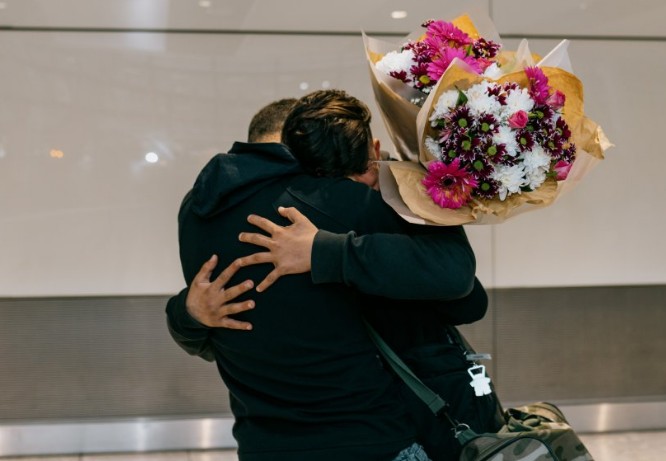
The report is focused on Europe but many countries, including Australia, have recently tightened family reunion arrangements for migrants.
The report says increasingly restrictive process is particularly impacting unaccompanied minors and people with subsidiary protection status.
Among the country policies highlighted in the Caritas report are Austria, which has suspended family reunification for six months in 2025, mainly affecting Syrian refugees.
Germany has implemented a two-year suspension of family reunification for beneficiaries of subsidiary protection in 2025. Before that, reunification had already been capped at 1,000 relatives per month since 2018. Similarly, Syrian refugees were among those most affected.
Belgium has tightened rules on family reunification that included a two-year waiting period, proof of sufficient income, housing, and stricter evidence of family connections.
The report says that even where family reunification remains legally possible, growing administrative hurdles are making the process harder, more expensive and, in some cases, dangerous.
“These are deliberate bureaucratic burdens that make it almost impossible to comply with the requirements,” said Leïla Bodeux, a senior policy and advocacy officer at Caritas Europa.
According to Caritas, in order to apply for family reunification, applicants are often required to produce official documents that may be difficult or impossible to obtain.
For people fleeing conflict, proving family ties can involve securing marriage certificates, birth certificates or other documents from countries affected by war or political instability, the report says.
“Four to six months may sound like a long time but for an asylum seeker, this can mean collecting documents from countries that are not safe or traveling considerable distances for embassy appointments. All of this takes time and money,” Ms Bodeux said.
The report says that migration policy should take into account the emotional anguish of prolonged family separation enforced by more restrictive policies.
Family reunification should be viewed as a key part of integration rather than a migration-management tool.
Research cited in the report suggests that refugees who remain separated from close family members are less able to invest in education and skills, while delays can have long-term effects that extend to children and future generations too.
“The bureaucratic procedures take time, energy and money. This is all time, energy, and money diverted from other aspects of life that impact integration like focusing on school, learning a language or finding a job,” Ms Bodeux said.
She said unaccompanied minors often experience the strongest emotional impact of separation while also facing some of the most complex legal and administrative barriers. In some cases, lengthy procedures can mean children reach adulthood before their applications are processed, potentially affecting their eligibility for family reunification.
For refugee communities across Europe, family reunification is becoming less and less of a practical possibility.
Caritas is urging EU governments, and others, to treat family reunification as a fundamental right rather than a migration-control measure by calling on them to end restrictive policies such as waiting periods, quotas and unequal treatment of people with different protection statuses. The report also called for simpler and more flexible procedures that reflect the realities of refugee families.
“Families should not be rejected solely due to missing documentation. Authorities must accept alternative forms of evidence and apply a flexible approach to establishing identity and family relationships,” the report said.
Read the full, report: Family reunification: a right, not a privilege – www.caritas.eu