


 Loading tweets...


US’ foundational promises under threat 250 years on
As the United States marks 250 years since its founding, the nation is confronting a profound and discordant paradox.
The Trump administration has effectively ended the arrival of refugees, as well as migrants from many countries, while also dismantling the infrastructure that supports their settlement.
This flies in the face of two of the US’ foundational statements.
Two and half centuries ago the US was born with Thomas Jefferson’s declaration: ‘We hold these truths to be self-evident, that all men are created equal, that they are endowed by their Creator with certain unalienable Rights, that among these are Life, Liberty and the pursuit of Happiness’.
Not long after this Emma Lazarus’s words were engraved on the pedestal of the Statue of Liberty: Give me your tired, your poor, your huddled masses yearning to breathe free…”
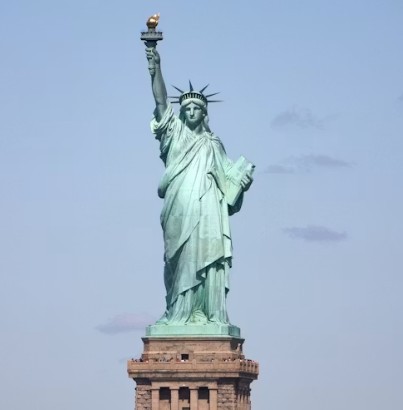 The Statue of Liberty has long represented the US as a place of refuge and renewal and Lazarus’ words captured that idea.
The US was built by the very people it is now trying to exclude and, ironically, by slaves it brought from Africa.
Immigrant labour built the nation’s canals and railways and provided the innovative spirit that fuelled the US economy over centuries.
The US’ story has been one of constant immigration and integration.
Africans who arrived in chains were forced to labour for a country that denied them freedom and human rights.
Irish immigrants fleeing famine who arrived to face conditions of suspicion and exploitation.
Chinese workers who built the transcontinental railways and were later the first immigrant group to be excluded by law from entering the country at all.
Mexican workers who were vital to US agriculture and infrastructure for generations were excluded from the national identity.
Jewish refugees who arrived through Ellis Island seeking safety, faced quotas and restrictions that limited entry even as fascism and antisemitism rose in Europe.
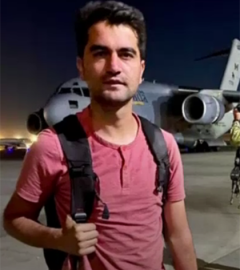
Afghan refugees have arrived more recently years after a decades-long war created largely by the US geopolitical decision making.
These separate strands form an overall narrative of slow acceptance.
The descendants of these groups now serve in the US Congress, in the armed forces, in businesses and industry and in universities.
During the Civil War, a quarter of the Union Army were foreigners. Another 18 per cent had at least one parent born overseas.
President Lincoln said that the soldiers who died at Gettysburg would not die in vain, that the US would see a new birth of freedom in their honour.
In the Second World War, Japanese Americans – at first stripped of their rights and interned as ‘enemy aliens’ – later served as linguists and in intelligence roles.
And more recently, thousands of Afghans, many of whom have now been resettled in the United States, fought alongside US forces against Taliban rule.
But 250 years on, the political conversations have become divisive. A small but powerful cabal now feels threatened by this slow demographic change.
They are using the language of division and exclusion and the tools of the state to deport people, or jail them or force them into hiding.
A recent survey by the Washington-based think tank The Pew Centre found two-thirds of US adults think that by 2050 the country will have become more politically divided.
More than half say they think the US will play a less important role in the world, be less prosperous, become a more dangerous place to live and have a worse system of government.
Once a country that set a global standard for welcome and opportunity, the US has recently become a country associated with rejection and exclusion.
Laurie Nowell