

 Loading tweets...


Painting provides healing and happiness
Cancer, spinal surgery and long-term unemployment have failed to dampen the dreams of Thai migrant Chattraporn Suwantevakup.
Between 2019 and 2022, Chattraporn, 62, underwent intensive treatment for follicular lymphoma, including chemotherapy and radiotherapy.
The treatments left her physically drained and socially isolated, making the idea of returning to work feel impossible. In April 2023, she faced another major setback when a spinal tumour was discovered, requiring complex surgery. The operation further restricted her mobility and caused chronic pain.
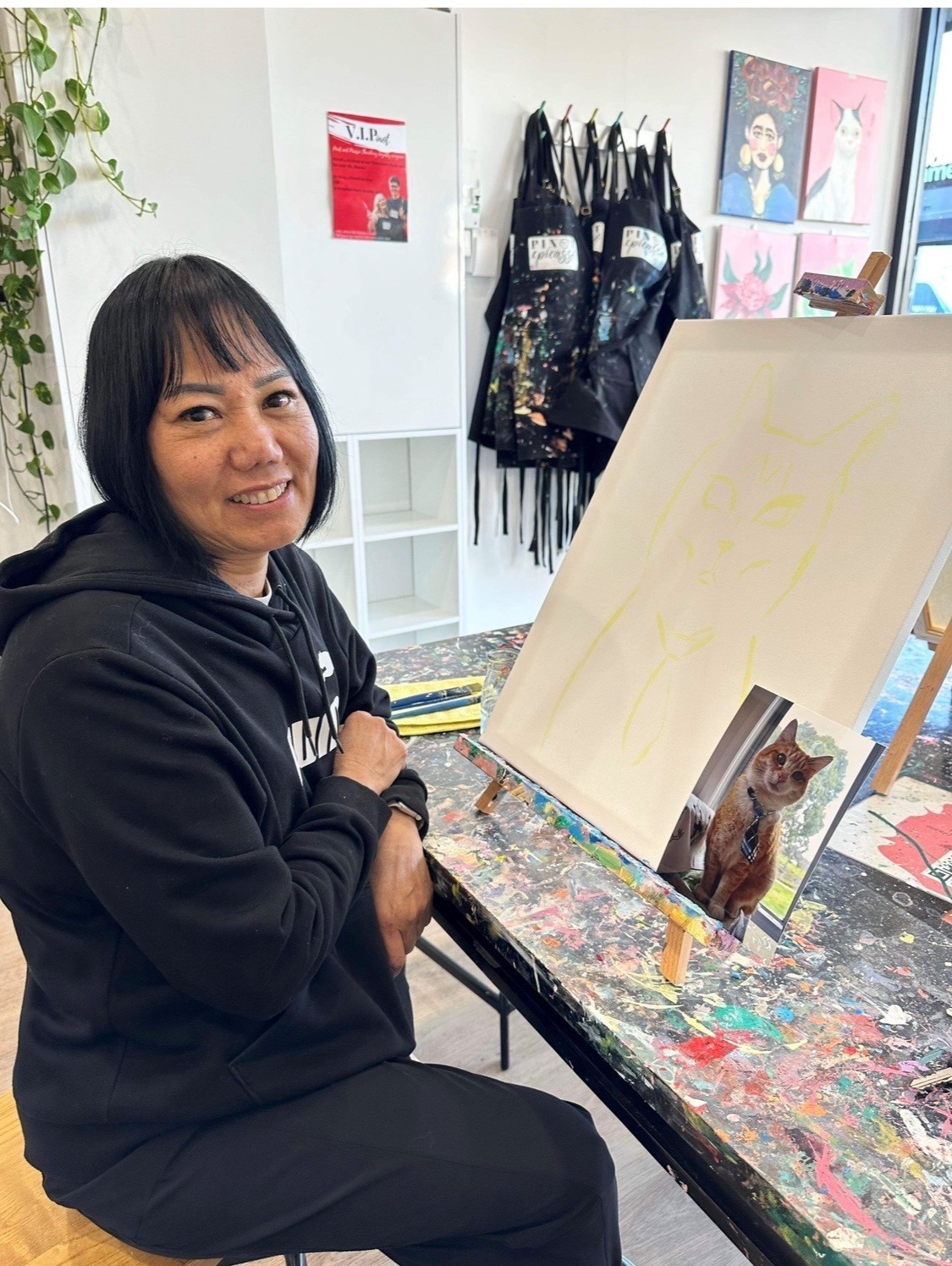 “My life changed a lot after my illness and surgeries. For a long time, I felt lost and believed I could never work again. I had no confidence and did not know what my future would look like,” Chattraporn said.
During a three-month rehabilitation at Royal Talbot Hospital, she actively participated in physiotherapy and hydrotherapy and also engaged in painting activities.
Painting was the key to her healing and her future.
After being referred to the employment service at migrant and refugee settlement agency AMES Australia, things changed for Chattraporn.
Her medical conditions resulted in ongoing physical limitations, chronic pain, reduced mobility, and a loss of confidence in her ability to return to work in the physically demanding roles she had become used to.
The initial focus of her employment support was focused on her wellbeing, rebuilding confidence, and identifying strengths and interests that could lead to sustainable participation in employment suited to her circumstances.
Her AMES Employment Mentor Shaima Hussain understood that Chattraporn needed more than job search assistance.
“The priority was rebuilding her confidence, emotional wellbeing, and sense of purpose. We provided a supportive and patient environment, allowing Chattraporn to progress at her own pace while focusing on her strengths rather than her limitations,’ Shaima said.
Early support centred on establishing small routines, setting achievable goals, and helping her reconnect with activities that brought meaning and enjoyment.
“Talking with Chattraporn, we learned that she had discovered painting during rehabilitation in hospital as a therapeutic activity to manage stress and support recovery,” Shaima said.
“We explored this as a potential pathway toward self-employment, allowing flexibility around her health needs while promoting independence and purpose.”
In August 2025, Chattraporn was helped to purchase painting materials and she began work as a self-employed artist.
“Painting started as part of my rehabilitation, and it helped calm my mind. I never imagined it could become my job,” Chattraporn said.
“I slowly gained the courage to work on something that not only generates income but also soothes me mentally and motivates me to wake up every morning to complete a task,” she said.
“From restless and dull days, I now cherish every day, knowing I have time to spend on something that helps me mentally, physically, therapeutically, and economically.
“Receiving my first order made me believe in myself again. It gave me hope and motivation. When I paint, I feel peaceful and strong. It helps me manage my health challenges and keeps my mind positive,” she said.
Chattraporn says her life has been transformed by art.
“Now I wake up with purpose every day. I feel independent and proud of what I am creating. I want to continue improving my skills and growing my art business step by step. Each painting I complete gives me confidence and a sense of achievement,” she said.
“This journey has taught me that it is never too late to start again. Employment has given me direction, happiness, and confidence. It has transformed my life, allowing me to turn a hobby into a meaningful career, regain independence, and face each day with hope and strength.
“I am excited to continue developing my skills, expanding my business, and seeing where my creativity can take me,” Chattraporn said.
Chattraporn has transitioned from painting as therapy to operating a small home-based art business. Her work attracts consistent positive feedback from clients, and she has received multiple orders through word-of-mouth referrals.
Her business continues to grow steadily, providing both income and independence.
Looking ahead, Chattraporn aims to grow her art business sustainably, refine her techniques, and potentially showcase her work publicly.
Her story is reflective of how more flexible, nuanced employment services can improve employment outcomes for cohorts of jobseekers with high barriers to workforce participation.
It comes after the Federal Government announced it will create more flexible and individually tailored pathways to employment, especially for groups of people with significant barriers.
AMES CEO Melinda Collinson said: “We recognise the value of employment programs that are community based, culturally sensitive and tailored to the needs, barriers and aspirations of particular groups or communities”.
“We have seen first-hand how specialist services, embedded in the mainstream service, can improve employment outcomes.”