



 Loading tweets...


Gaza crisis worsening – new report
Eighty per cent of households in the Gaza Strip are facing critical or catastrophic living conditions in their current shelters, according to a new report.
The report on living conditions in Gaza, by the Norwegian Refugee Council (NRC), found two thirds of households are living in makeshift shelters or tents that are not fit for long-term habitation and almost 90 per cent reported rodents inside their shelters.
Eighty per cent reported the presence of mosquitos, ticks, or lice; and 71 per cent said they were affected by flooding during last winter’s rains.
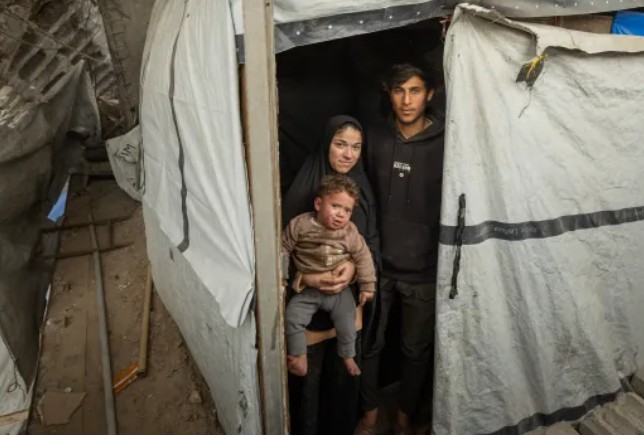 Due to Israeli restrictions and funding gaps, only 10 per cent of households received shelter aid in the month before the survey was carried out.
The report paints a dire picture of the results of the continued obstruction of aid efforts and stalled progress on reconstruction nearly a year after Israel and Hamas signed a ceasefire last October.
Since then, there have been repeated attacks throughout Gaza, killing more than 1200 people. Israeli still occupies almost 70 per cent of the enclave, where the vast majority of Palestinians are barred from entering, it says.
And the entry of critical humanitarian supplies, including materials needed for shelter are being blocked, while reconstruction plans by the US-led Board of Peace have failed to materialise.
The report says there are 1.9 million people in need of shelter in Gaza, with 1.2 million people escribed as living ‘critical’ or catastrophic’ circumstances.
It says more than half of the tents or makeshift shelters being used in Gaza are in ‘poor’ or ‘very poor’ condition and have been in use for more than a year.
“Beyond limiting privacy and everyday household activities, many shelters failed to protect occupants and their essential belongings from the surrounding environment. This was particularly evident in households’ exposure to flooding, rodents, and other vectors,” the report says.
It said 43 per cent of households were classified as ‘critical’ and 7 per cent faced shelter conditions so poor they were considered a risk to life.
Energy access was extremely limited across the population, with households facing overlapping challenges in lighting their shelters, maintaining safe indoor temperatures, and accessing fuel.
Lighting and cooking were also identified as issues for households in Gaza.
More than half relied primarily on torches or mobile phone lights, while a quarter sed battery-powered lights and affordability was the most commonly cited barrier lighting.
Sixty-eight per cent of households lacked sufficient kitchen space or cooking items to prepare meals.
Access to drinking water was also identified as an issue and depended heavily on water trucking and households’ ability to collect, transport and store water.
“Water trucking was the primary drinking water source for 63 per cent of households, followed by communal or shared storage tanks (12 per cent) and water sellers or kiosks (10 per cent).” The report said.
“Only 15 per cent received drinking water directly at their shelter, while most households collected drinking water themselves (84 per cent).”
Access to health care and education were also identified in the report as being inadequate.
“Shelter vulnerabilities, including environmental hazards, unregulated temperatures and reliance on dangerous fuel sources, can drive health outcomes. Consequently, an inability to access or afford healthcare compounds these vulnerabilities, as households struggle to address health issues exacerbated by underlying shelter conditions,” the report says.
“In Gaza, only 62 per cent of households reported always being able to access healthcare without interruption; 24 pe cent experienced irregular access and 12 per cent could rarely access care when needed. Seventy-three per cent were able to access a health facility within a 30-minute walk.
“Just over half of households with school-aged children reported reliable access to education during the previous 30 days. A further 21 per cent experienced interruptions, 11 per cent rarely had access, and 14 per cent reported no access,” the report says.
It says the scale of current assistance is far below the needs, with only 10 per cent of households reporting receiving shelter or other humanitarian non-food assistance, while households reported extensive needs across every category assessed.
“The scale of identified need substantially exceeds current response capacity. States should provide predictable, multi-year and flexible funding for emergency shelter and other assistance, seasonal preparedness, contingency stocks and sustained delivery pipelines. Funding should reflect the near-universal scale and severity of need, not short-term distribution targets alone,” the report concludes.
Read the full report: a new report