



 Loading tweets...


Local communities support victims of Nepal-Tibet disaster
Australia’s Himalayan communities have rallied to support the victims of the catastrophic floods in Nepal and Tibet.
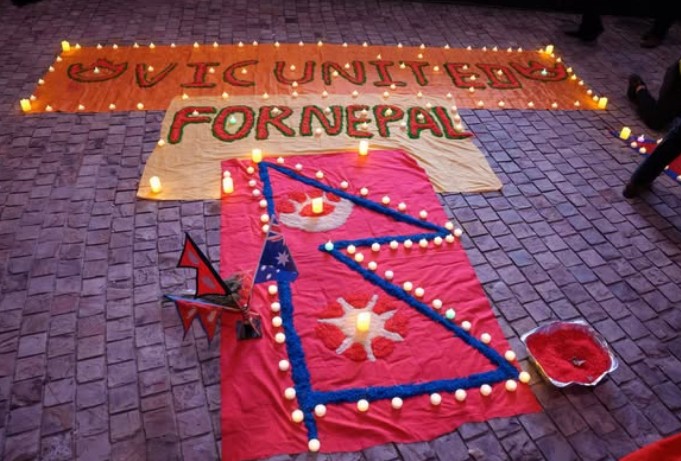 Community groups are raising money to support victims and community vigils are being held to remember victims.
Members of Melbourne’s Nepali community have gathered recently at Federation Square to pray for those still missing after the Nepali-Tibet floods.
The multi-faith event candle-light vigil, attended by Victorian Premier Ben Carroll, was especially poignant because of the large and fast-growing Nepali community that lives in Melbourne’s north.
Chair of the Refugee Communities Association of Australia Parsu Sharma Luital said Himalayan community groups were coming together to support the survivor of the disaster.
“We are raising money to send to the survivors and aid agencies on the ground. This is a whole of community effort and we aim to raise as much money as we cane so we can haver an impact in supporting the survivors to rebuild their lives after what has been a catastrophic event,” he said.
The Australian Nepalese Multicultural Centre’s Keshav Kandel said that, although Nepal was familiar with natural disasters, the scale of the flash flood destruction was beyond imagining.
“The moment before, there was a thriving town. The moment after, there was nothing,” he said.
To support fellow Nepali migrants like himself, Arjun Chalise has organised candlelight vigils and community gatherings.
 A recent gathering was held at Pakenham, in Melbourne’s south-east.
“Sitting so far away, there is not a lot we could do. So, I tried to connect as many families going through the same grief as I was and organised a vigil. We will continue to organise such community events,” Mr Chalise said.
Rescue and recovery efforts continue in Nepal after the floods. As the death toll and list of missing people in the flood-devastated region rises, the migrant communities living thousands of miles away in Australia are facing hard times coping with the loss.
The flash flooding has been declared Nepal’s deadliest natural disaster since the April 2015 earthquake, with more than 1,000 dead, 3,900 missing and 65,000 people requiring emergency water, sanitation and hygiene, according to the United Nations.
More than 10,000 people have been rescued so far, including 252 foreign nationals.
As search and rescue efforts continue, UN agencies have begun to assess long-term needs, including more than 22,000 children needing protection, the UN said in a statement.
Access remains the single biggest obstacle to the response, according to the UN emergency relief agency, OCHA.
Roads are passable only as far as Nuwakot, and some sections of highway linking Kathmandu to the hardest-hit areas remain completely blocked.
Power has been restored in some areas.
Nepal’s Government has deployed more than 20,000 search and rescue personnel and
At the same time, the World Health Organisation has said overcrowding and disruption to water, sanitation and health services raise the risk of infectious disease outbreaks.
Recent OCHA assessments paint a similarly stark picture of humanitarian needs, including about 2,600 children under five expected to require treatment for severe wasting – or acute malnutrition – and around 10,500 pregnant and breastfeeding women needing nutrition assistance.
Some 19 schools have been damaged, nine completely destroyed and eight more being used to shelter displaced families while more than 10,000 school-age children require psychosocial support, OCHA reported.
Most urgently, preliminary reports indicate that 107 children may be separated from their parents or caregivers, leaving first responders to prioritise family tracing and reunification, according to the UN.
The disaster has also affected the Tibet side of the border, where Chinese authorities report at least 16 dead and at least 546 still missing.
The UN has named climate change as a factor in the disaster.
“We also know a warming climate, driven by humanity burning colossal amounts of coal, oil and gas, is making tragedies like this one, and so many others around the world, much more likely, frequent and severe, with vulnerable communities often hardest hit,” said UN climate chief Simon Stiell.
Meanwhile, the World Food Program (WFP) has dispatched nearly 80 metric tonnes of food, reaching about 9,200 people with assistance expected to last 15 days.
The UN Children’s Fund (UNICEF) has moved therapeutic food for about 500 severely malnourished children and mobilised 15 emergency medical teams.
And the UN’s humanitarian partners have set up a coordination hub in Nuwakot to strengthen planning and information sharing in the disaster response among organisations on the ground.
To donate to disaster relief efforts, click on the following links:
https://emergencyaction.org.au/nepal-flood-appeal/
https://www.unicef.org.au/donate/nepal-flash-flood-appeal-2026
39 Australians missing as Nepal-Tibet flood death toll surges | ABC News Top Stories – ABC listen