


 Loading tweets...


Migrant, refugee agency AMES Australia celebrates 75 years of nation building
This month, leading settlement agency AMES Australia marks 75 years of supporting migrants and refugees settle successfully in Australia.
From humble beginnings teaching English to new arrivals in makeshift Nissen Huts at Bonegilla, AMES Australia has grown into one of Australia’s leading settlement agencies, delivering services to more than 30,000 clients and touching the lives of more than 250,000 people from multicultural communities each year.
Formally established in 1951, the organisation’s original mission of teaching English to new migrants has grown to include humanitarian settlement, employment services and community development programs.
AMES Australia was an integral part of the birth of multiculturalism, a term that was new in the 1970s but which now is accepted as an accurate description of the cultural and ethnic diversity of contemporary Australia.
The organisation’s programs are aimed at fostering a sense of belonging among our clients and they recognise that social and economic participation are key ingredients in maintaining social cohesion.
AMES Australia’s network of more than 800 staff and 2500 volunteers – 43 per cent of whom were born overseas and collectively speak more than 90 languages – work to create community links between our clients and the broader society.
In supporting more than a million people new to these shores on their settlement journeys AMES has contributed to the transformation of Australia’s economic, cultural and social life.
The milestone as marked at an even at Melbourne’s Immigration Museum this month attended by the federal MP for Holt Cassandra Fernando – a former AMES volunteer – and Victorian upper house member Lee Tarlamis MP.
Ms Fernando told the gathering AMES had delivered impactful services across eight decades.
“I’m proud to have been a volunteer at AMES and I’m in awe of the important work the organisation has done over so many years supporting families to build successful lives in Australia. It’s work that continues and is needed today,” she said.
AMES Chair Dr Vanda Fortunato told the gathering that the journey had been “a long arc from helping post-war migrants learn English to supporting refugees fleeing the recent conflicts in Africa, Ukraine and Palestine”.
“In supporting a million people new to these shores to settle successfully, we have also contributed to the transformation of Australia’s economic, cultural and social life,” Dr Fortunato said.
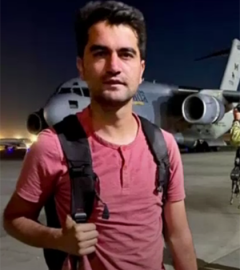
Among AMES’ recent achievements in have been supporting refugees fleeing conflicts in Syria and Iraq and in Afghanistan under difficult circumstances. The organisation has also supported refugees from Ukraine and Gaza.
AMES established the Melbourne Multicultural Hub in partnership with the City of Melbourne and created of a prevention of gender violence program for diverse communities.
The organisation has also pioneered AI learning through its MyAMES Chat platform which helps migrants and refugees learn English and navigate the employment market.
And its settlement team have developed more than 400 podcasts in 17 languages that support people to navigate life in Australia. They have been accessed by more than 10,000 people.
AMES’ community engagement activities have seen the creation of the Luminous Lantern Festival and the ‘Taste the Difference’ Refugee Week dinner.
The organisation’s Skilled Professional Migrant Program has helped thousands of migrants and refugees gain employment in keeping with their skills and qualificators; while also benefitting the broader economy.
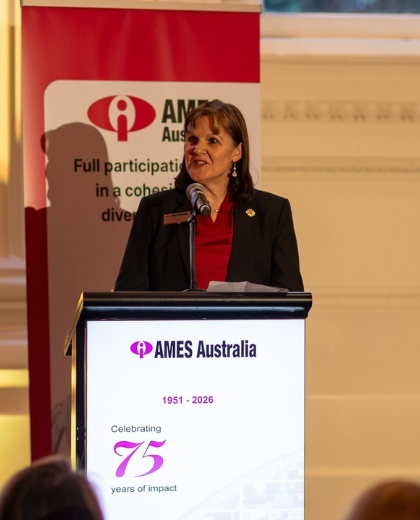 AMES CEO Melinda Collins said that AMES would adapt to the changes the future presented.
“The world around us continues to change, and the needs and aspirations of the people and communities we serve are changing with it. Staying abreast of the latest innovations will allow us to respond to emerging opportunities, challenges and changing needs; and it will allow us to invest in our people and in the capabilities we will need for the future,” she said.
“A large part of our plan is our Vocational Education and Training strategy which is aimed at supporting migrants and refugees realise their potential and not end up in jobs that don’t reflect their skills and experience,” Ms Collinson said.
AMES Australia’s network of more than 800 staff and 200 volunteers – 43 per cent of whom were born overseas and collectively speak more than 90 languages – work to create community links between its clients and the broader society.
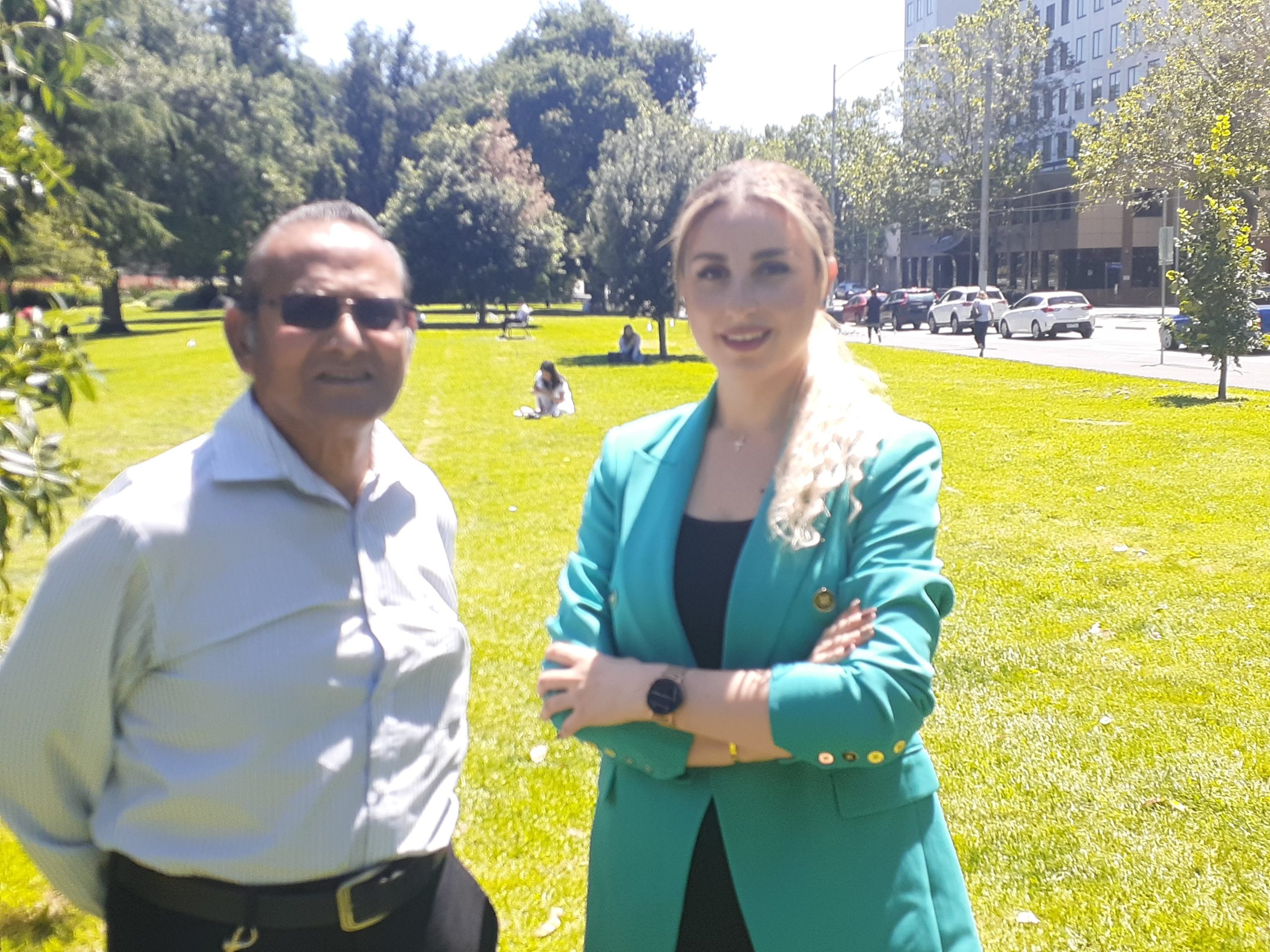 Fifty years separates the journeys of Hector de Santos and Jamila Alarkan to Australia. But both have been supported by AMES on their settlement journeys.
Jamila was studying engineering in Syria in 2012 when war broke out cutting her off from her university in Aleppo.
Refusing to give up, she found a convent in the battle-scarred city that housed nuns and other students – but which had no power or running water.
“Missiles were falling around but I managed to graduate,” Jamila said.
“I was only able to see by candlelight to study, but I could see a future for myself,” she said.
After completing her studies, she fled her homeland arriving in Melbourne, where AMES supported her to rebuild her life. She is now working as an engineer on renewable energy projects critical to Australia’s future prosperity.
She says AMES helped her improve her English and connect with the engineering industry, which was vital in re-establishing her career.
Hector de Santos fled Burma in the 1960s with his wife Wendy, says AMES services are critical for new arrivals ton Australia,
He spent 15 years as an AMES volunteer helping migrants and refugees navigate a new society.
“AMES is very, very important. Having been through the refugee journey myself. I know how difficult it can be. When we left Burma, we had to go through Thailand, where not many people spoke English,’ Mr de Santos said.
A statutory authority of the Victorian Government, AMES manages a range of federal and state government programs under its vision of ‘full participation for all in a cohesive and diverse society’