


 Loading tweets...


Child migrants at risk from people smugglers
People smugglers are preying on child migrants, the UN migration agency has warned as new data shows 20,800 of 31,100 children who reached Europe along migration routes last year arrived without a parent or guardian.
Director General of the International Organisation for Migration (IOM) Amy Pope has urged closer cooperation between European states and countries along the routes to protect children travelling alone and to counter the smuggling and criminal networks that prey on them.
Ms Pope said the new data suggests that reduced opportunities for safe, protection-sensitive movement along these routes may be pushing young people towards riskier journeys, with greater reliance on smugglers and greater exposure to violence, exploitation and abuse.
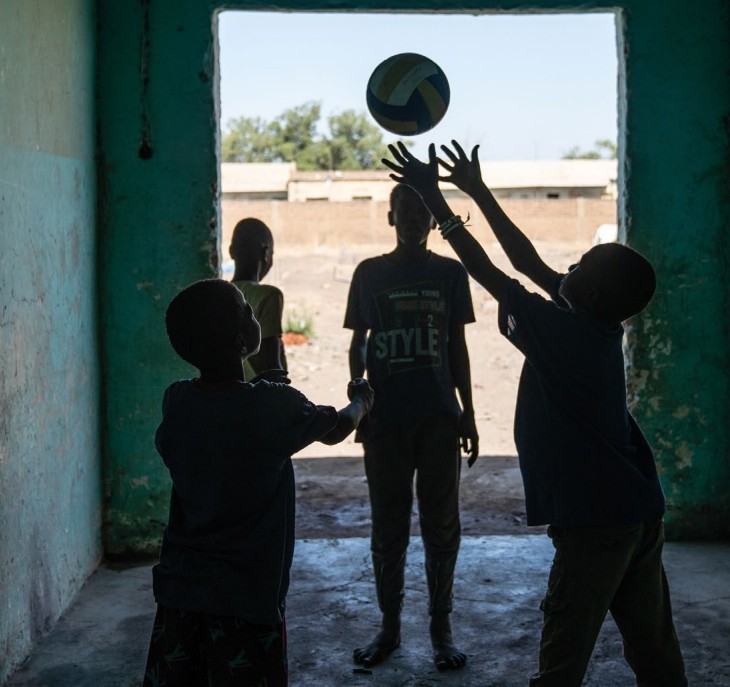 “Children are making difficult and dangerous journeys without a parent or guardian by their side,” she said.
“This report shows how exposed they are to violence and exploitation when safe pathways are limited, and they have to rely on smugglers. No child should have to face these risks alone. Our shared responsibility is to work across borders to protect them, uphold their rights, and provide the care and support they need,” Ms Pope said.
Overall child arrivals by sea and land in Bulgaria, Cyprus, Greece, Italy, Malta and Spain fell by 25 per cent compared with 2024. Of the children who arrived, 78 per cent were boys and 22 per cent were girls, the IOM data revealed.
But the share recorded as unaccompanied rose to 67 per cent, up from 51 per cent a year earlier. The highest proportions were in Italy and Spain, where 86 per cent of children arrived alone.
The data come from a new report, titled ‘Migrant and Refugee Children via Mixed Migration Routes in Europe: Accompanied, Unaccompanied and Separated – Overview of Trends 2025’, jointly produced by UNHCR, the UN Refugee Agency, UNICEF and IOM.
The report found overall arrivals in Italy were stable, but the number of children rose by 12 per cent to almost 14,100, most of them from Egypt, Eritrea, Somalia, Bangladesh and Ethiopia.
As part of the study, IOM interviewed more than 4,600 adolescents and young adults aged 15 to 24 along the Mediterranean, Western African Atlantic and Western Balkan routes.
Almost half of those asked about their experiences reported physical violence. On the Central Mediterranean route, 28 per cent said they had been held against their will, and 17 per cent said they had been forced to work. Libya remained the country most often cited as the place where abuse occurred.
Meanwhile, safe alternative protection routes narrowed. Children made up half of the 6,800 people in refugee resettlement procedures to Europe in 2025: 3,400 children, compared with 8,900 a year earlier.
Also, only 199 children were relocated between European States under the Voluntary Solidarity Mechanism, down 67 per cent, and none of them was unaccompanied.
In total, 214,600 children sought international protection in Europe in 2025, 79 per cent of them first-time applicants. Around 71 per cent of first-time applications were lodged in just four countries: Germany (30 per cent), France (19 per cent), Spain (15 per cent) and Greece (7 per cent). Of 210,900 first-instance decisions on children’s claims, 56 per cent were positive, while rejections rose by 25 per cent.
IOM has urged European Union Member States to put the best interests of the child at the centre of every decision, to guarantee timely access to services, and never to detain children for immigration purposes.
Meanwhile, Pope Leo XIV has also issued an urgent appeal for nations and people to take responsibility for young migrants and refugees exposed to violence, exploitation and traumatic conditions along migration routes.
His appeal marked the 112th World Day of Migrants and Refugees and focused on minors forced to leave their homelands.
“Children and adolescents are the most vulnerable. They often endure unspeakable suffering—violence, torture, exploitation, and traumatic conditions—and not infrequently lose their lives along migration routes,” the Pope said.
“I appeal to everyone’s sense of responsibility. Let everyone feel personally involved in the lives of these young people, who must always be protected and cared for.”
He said that minors were among the most vulnerable people involved in migration and forced displacement.
“Millions of children and adolescents are forced to leave their homeland because of war, poverty, violence, environmental disasters and other tragedies. Sadly, their number continues to grow,” the Pope said.
“Deaths along migration routes, trafficking and exploitation, the recruitment of minors for use in armed conflicts, sexual violence, forced marriages, and the atrocities they have suffered or witnessed during their travels. Their dignity is trampled upon in countless ways.”
“Before this tragic reality, my thoughts turn to the words of Jesus that profoundly challenge our consciences: ‘Whoever receives one such child in my name receives me.”
According to UNHCR’s Global Trends 2025, published in June 2026, 117.8 million people worldwide were forcibly displaced at the end of 2025 because of persecution, conflict, violence, human rights violations and the climate crisis.
The figure included 41.6 million refugees, 9 million asylum-seekers and 68.7 million people displaced within their own countries by conflict or violence.
Children make up a particularly large share of displaced populations. UNHCR estimates that 45 million children under the age of 18 were among the 117.8 million forcibly displaced people at the end of 2025. Among refugees, people in refugee-like situations and other people in need of international protection, 39 per cent were children.
Read the full UN report: https://data.unhcr.org/en/documents/details/124318