

 Loading tweets...


Refugee kids missing out on education – report finds
There are significant and persistent gaps in access and progression in education among refugee children globally, a new report has found.
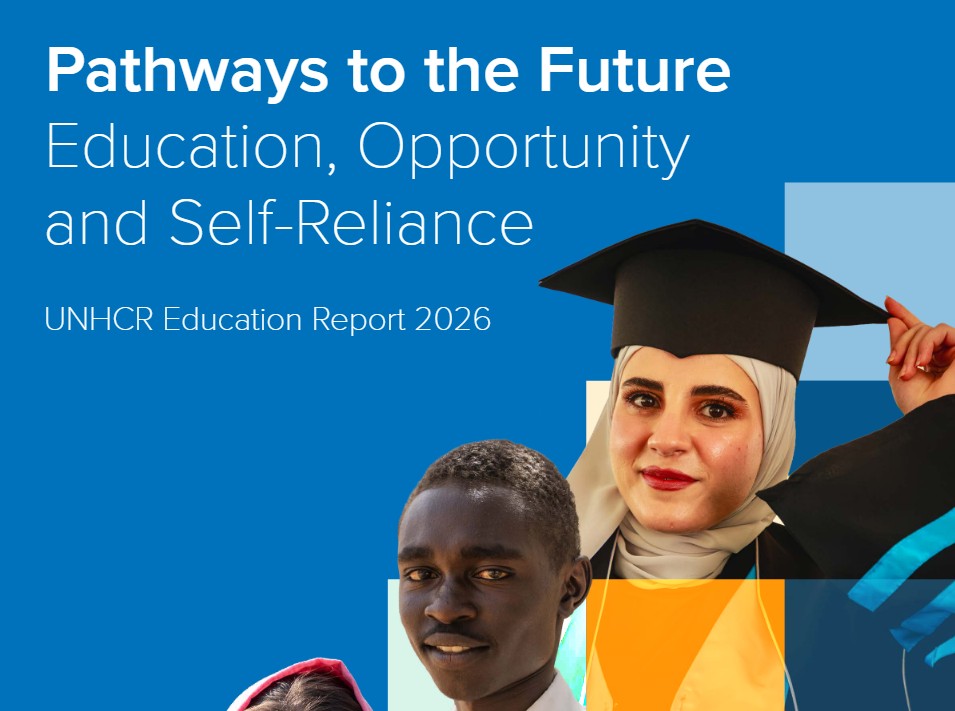 The ‘2026 UNHCR Refugee Education Report’ found that in 2025, 5.8 million refugee children were out of school, with gross enrolment rates of 65 per cent at primary level, 32 per cent at secondary and just 11 per cent at tertiary level.
“At the same time, the cuts to humanitarian and development aid risk further constraining access to education, underscoring the need for greater investment, stronger partnerships and support to national education systems,” the report said.
It said education remained one of the most important investments in the future of refugee children and young people.
“Beyond protecting children during displacement, it builds the knowledge, skills and qualifications needed to rebuild lives, strengthen self-reliance and contribute to host communities and, ultimately, countries of origin,” the report said.
“Yet these opportunities depend not only on whether children enter school, but also on whether they are able to continue learning and progress through each successive stage of education.”
At the end of 2025, an estimated 35.6 million refugees and other people in need of international protection were under UNHCR mandate, including approximately 13.1 million school-aged refugee children.
Of these, an estimated 5.8 million remained out of school, representing 44 per cent of the global school-aged refugee population and a modest improvement on the 46 per cent recorded in 2024.
“Continued population growth, however, meant the absolute number of children excluded from education was largely unchanged,” the report said.
“Participation varies sharply by stage: it peaks at primary level and falls away on either side, at pre-primary and secondary through to tertiary.
“Primary education remains the point of greatest access, with a global gross enrolment rate of 65 per cent. At pre-primary level, the rate falls to 33 per cent and at secondary level to 32 per cent, declining further in tertiary education to 11 per cent.”
Gender parity remained equitable in pre-primary and primary education but widened at secondary level, reflecting the additional barriers many girls face during adolescence.
The report said each stage of education was built on the one preceding it, making progression between education levels just as important as participation within them.
“Children who miss out on organised early learning are more likely to begin primary school at a disadvantage,” it said.
“Those who do not complete primary education are far less likely to continue to secondary school, and limited access to secondary education, in turn, narrows opportunities for skills development, tertiary study and future employment.
“Participation also depends on more than the barriers that refugees face directly. As more and more refugee children are educated within national systems, their access and progression are increasingly shaped by the capacity of those systems.
The availability of school places, qualified teachers, learning materials and sustained financing all influence whether refugee children enrol, remain in school and continue progressing, the report said.
“That capacity came under strain in 2025. Humanitarian needs continued to rise as many refugee-hosting countries faced mounting pressure on public services, while preliminary figures from the Organisation for Economic Co-operation and Development (OECD) indicate that official development assistance declined by approximately 23 per cent in 2025, the largest annual contraction on record,” the report said.
“Aid to education had already declined by 8 per cent between 2023 and 2024, the most recent period for which sectoral data are available and one that pre-cedes the steepest reductions.
“Where national systems are already absorbing additional learners, reductions on this scale constrain the resources available to expand provision, and changes in participation should be read alongside demographic change, population movements, financing constraints and the capacity of national systems to respond to rising demand.5 OECD, Preliminary official development.
“National inclusion sits at the centre of both the Global Compact on Refugees and the UNHCR Refugee Education 2030 strategy.
“What follows tracks participation stage by stage, from pre-primary through to tertiary, alongside what the data show about learning, teachers, operational context and system capacity: where children are being reached, and where investment still needs to go,” the report said.
Read the full report: UNHCR Education Report 2026 – Pathways to the future: Education, opportunity and self-reliance | UNHCR US
By Sam Nowell