





 Loading tweets...


Parkinson’s plan – how to fix immigration to Australia
Former top public servant Dr Martin Parkinson has laid out a bold plan to fix Australia’s contested and confused immigration system.
The former head of the Department of Prime Minister and Cabinet says Australia needs to restore visa categories that are fit for purpose and plan for the people who come here as migrants or students.
He says the nation also needs to clear the backlog of people waiting for permanent residence and better utilise the skills of migrants and refugees who are already here.
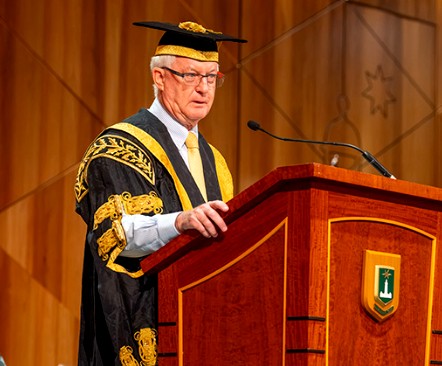 Speaking at Macquarie Business School Forum on Migration, Dr Parkinson said the purpose of the immigration system needed to be restored.
“First… every visa category should answer three questions. What is it for? What does it require of our housing and services? And who is accountable? Where a category cannot answer, it should be reformed or closed,” Dr Parkinson said.
“Second, plan for the people we admit. That means tying population settings to housing and infrastructure delivery, including purpose-built student accommodation, so that people and homes arrive as one decision.
“Third, end the permanent state of being temporary. That means clearing the bridging visa backlog and giving people who are already here and contributing a clearer and faster road to permanence or to departure.
“And fourth, use the people we already have… more than 250,000 skilled migrants in Australia are working below their skill level, while one in three occupations has worker shortages. We are importing scarcity and wasting supply,” said Dr Parkinson, who is now Chancellor of Macquarie University.
He told the forum there was need for “one national governance system for overseas skills and qualifications recognition, with an independent commissioner who can hold the system to account”.
“We must also choose skilled migrants with occupational licensing in mind, so that we do not invite people to do jobs they are then not permitted to do,” Dr Parkinson said.
He said that migration to Australia was not a failed enterprise, but its purpose had been forgotten.
“We lost sight of what migration was for. And once you lose sight of the purpose, you lose the ability to plan for it, to explain it, and in the end to defend it.”
He said migration, a program designed to build the country, had drifted into a system for supplying temporary labour and international education became the biggest channel for that drift.
Dr Parkison said recently Australia had not planned for the people it invited.
He said the result of this was a loss of social licence which cutting numbers alone would not restore.
Dr Parkinson said post-war immigration had a purpose that everyone understood.
“’Populate or perish’ was blunt, but it was a purpose: a small country with a vast continent, a recent experience of war and a fear of invasion, needed people. Migrants came to stay, to settle, to raise children, to become citizens,” he said.
But in the 1990s Australia saw an evolution of skilled migration and temporary work rights. This included a 457 visa, initially for specified specialist occupations but in 2001 extended to several hundred occupations without labour-market testing.
“Not all temporary migration is low-skilled: there are around 270,000 temporary skilled workers here. But the biggest and fastest-growing streams — students, working holiday makers, people on bridging visas — were never built around a skill test, and no one was accountable for what they added up to,” Dr Parkinson said.
“By 2000… temporary migration was adding more people than the permanent program, and a decade later about twice as many. About half of those who arrive on a temporary visa are still here a decade later.”
Dr Parkinson said there were currently 1.8 million in Australia on temporary visas.
“Over 400,000 of these people are on bridging visas, many of them waiting for years on decision and review systems swamped for a decade by underinvestment under governments of all persuasions,” he said.
“Seventy years ago, we knew what migration was for. We can know it again. If migrants work at their skill level and become part of the community, the economy gains, the migrant gains and the public can see that the system works.
“That is how social licence is built. But it will take something harder than a number. It will take the discipline to say what the system is for, to plan for the people we invite, and to keep faith with the people who come. The choice is ours,” he said.
Read the full speech: Before we cut migration, we need to decide what it’s actually for | The National Tribune