




 Loading tweets...


Rohingya community welcome genocide ruling
The Rohingya community in Australia is celebrating the International Court of Justice ruling that Myanmar committed genocide against the Rohingya minority.
Melbourne-based Rohingya community leader Majid Abdul said he and his fellow Rohingya were “very happy” with outcome.
“Everyone is happy that we have won this ruling. It corrects narratives that have been put out there by the Myanmar junta that the Rohingya are bad people,” Majid said.
“We hope this is the start of an improvement in the conditions suffered by the Rohingya and that maybe one day we will be able to go home.
“But for now, it doesn’t really change anything in the lives of millions of Rohingya. We need the international community’s support to try to use this ruling to bring change,” Majid said.
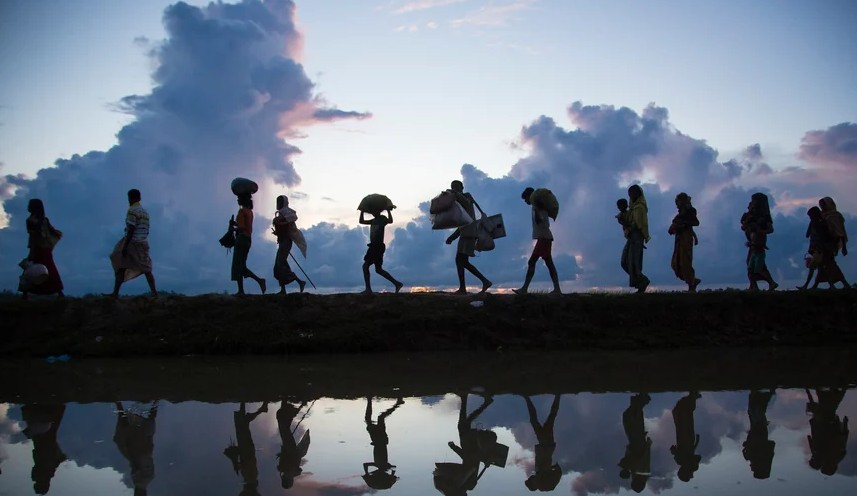
The International Court of Justice ruled this week that Myanmar committed genocide against the Rohingya minority.
The historic judgement marks the first time a state – rather than an individual – has been found responsible for the “crime of crimes” since the creation of the 1948 Genocide Convention.
The decision comes nearly a decade after Myanmar’s security forces and local militias launched a campaign of mass murder, sexual violence, and destruction that killed at least 10,000 people and forced almost a million to flee into Bangladesh.
The Rohingya community recently marked the nine-year anniversary of the genocide that sparked the exodus.
In August 2017, Myanmar’s military, the Tatmadaw, unleashed waves of violence against Rohingya ethnic minorities in Rakhine State.
The conflict triggered the exodus of more than 700,000 Rohingya into neighbouring Bangladesh, marking the largest and fastest influx into the country.
The UN refugee agency UNHCR said, in a statement, the judgment underscored the importance of international justice and accountability.
“Today, more than 1.3 million Rohingya refugees remain displaced across the region, the vast majority generously hosted by Bangladesh, while over 100,000 remain internally displaced in Myanmar’s Rakhine State,” UNHCR said.
“Justice and accountability are essential to achieving lasting solutions for Rohingya communities. Today’s judgment is an important step that could help pave the way towards addressing the root causes of their displacement and finding lasting solutions, particularly through access to citizenship and creating the conditions for their safe, voluntary and dignified return to Myanmar.
“UNHCR will continue to stand alongside Rohingya refugees and communities in Myanmar, Bangladesh and around the world, as we have for decades, working to uphold their rights, ensure their protection and support efforts towards lasting solutions.
Expert on state violence Professor Penny Green, who is professor of law and globalisation at Queen Mary University in London, says the judgement comes well over a decade too late.
She says all of the evidence pointing to this genocide was available from 2012 onwards, at least.
“It’s a genocide that began in the 1970s, but really picked up pace after 2012, when there were pogroms in Sittwe, the capital of Rakhine State,” Prof Green said.
“The Myanmar regime, which is a military regime, has always denied and will continue to deny accusations of genocide, so it will not be affording the Rohingya any form of reparations of all.
“The rulings on reparations are purely symbolic goals. They are not even punishments, because Myanmar is supported by very powerful regional powers: China, India, and Russia,” she said.
Meanwhile, Malaysia has announced it will resettle 10,000 Rohingya refugees in Turkey through a structured skills training program.
The initiative would be the biggest resettlement initiative involving the Rohingya since the 2027 military crackdown.
The plan, announced by Malaysian Deputy Prime Minister Ahmad Zahid Hamidi, is part of the government’s efforts to address the Rohingya refugee situation in Malaysia in a more “coordinated, effective and humane manner.
“I welcome the government of Turkey’s agreement to receive 10,000 Rohingya refugees. This marks an important step in Malaysia’s efforts to find a long-term solution to an issue that has long posed challenges for migration management and national security,” Mr Hamdi said.
Malaysia has recently come under internal pressure to send Rohingya refugees back to Myanmar amid rising tensions with local communities.
According to UNHCR, Malaysia had about 193,000 registered refugees from Myanmar at the end of February, around two-thirds of them Rohingya.
Malaysia has sent more than 10,000 Myanmar nationals back to their country since January.

