






 Loading tweets...


Aussie slang classes helping migrants settle and feel welcome
Classes in Aussie slang are helping newly arrived migrants and refugees settle successfully, develop a sense of belonging and engage with their local communities.
The classes, being delivered online, are often tailored to work and sectors of employment, including hospitality and construction. They are helping people build successful lives in Australia.
English as Second Language (EAL) teacher Michael Snook is delivering the classes for migrant and refugee settlement agency AMES Australia.
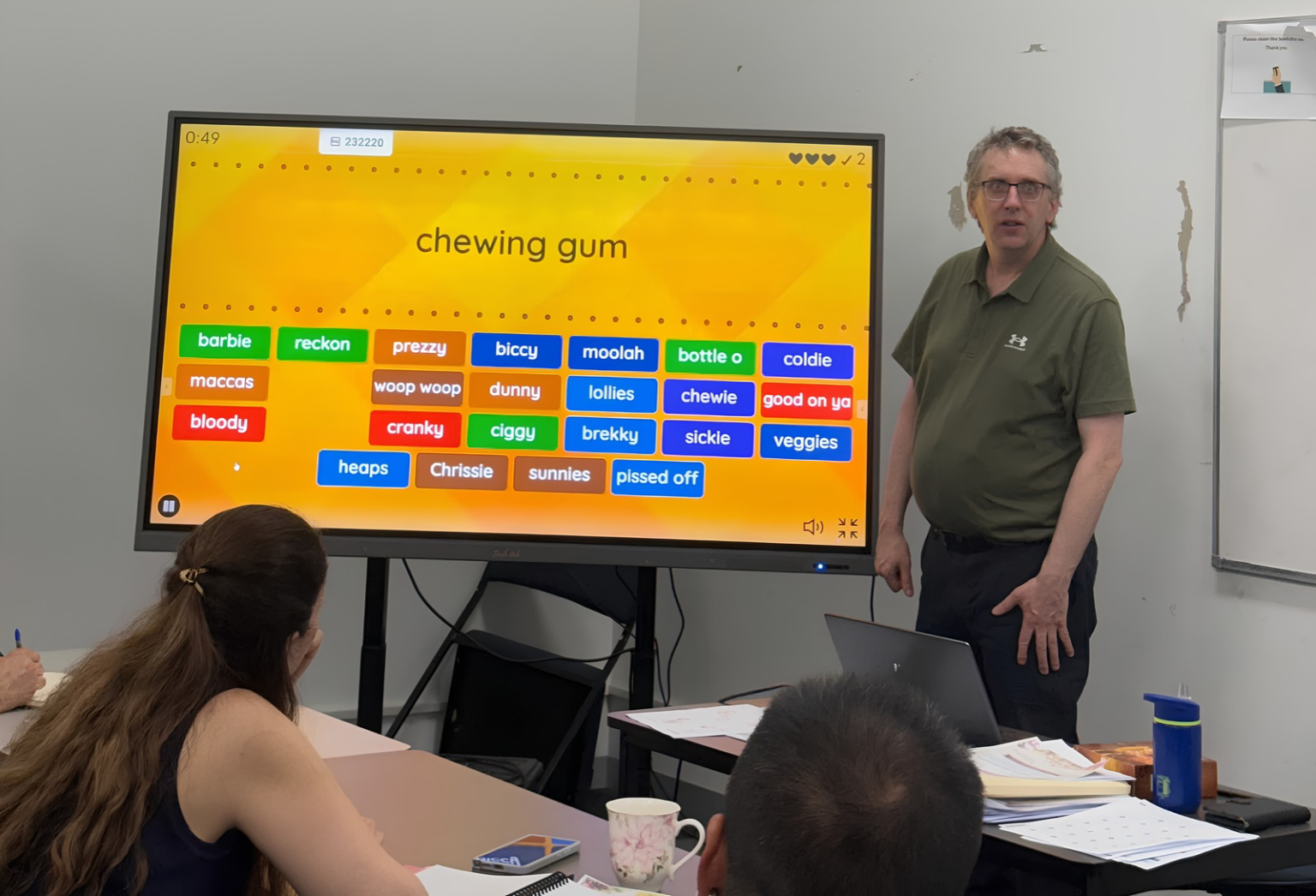 The classes are delivered face to face in classrooms in Melbourne as well as online.
Michael says he has personal experience of trying to understand Australian slang.
“When I came from England 16 years ago, I was a little frustrated trying to understand what people were saying,” he said.
“At one point my wife said to me we are going to ‘whoop whoop’ and I thought it was an actual place.
“I teach the class once a month and more often online. Part of it is with a word wall where I get the students to match the slang word with the ordinary English word.
“We cover areas like food and drink, work, money and health and services.
“I have an Afghan student who is probably the best in the class. He has an Aussie boss, and he gets to hear a lot of slang, and he helps his classmates.”
Michael says friendships and networks are also forged through the classes.
“You might have an Afghan construction worker sitting next to Vietnamese housewife. They help each other to learn the meanings of slang words that they may be scared to ask about in another situation,” he said.
“The classes are a good experience for the students, and they help build their confidence.”
Michael says one technique he uses is to record a friend with a strong Australian accent speaking Australian slang.
“It is helpful for them to hear the vernacular spoken in an Aussie accent as they might encounter it out in the wider world. It helps them put the words into context and prepares them to comprehend what is being said.”
He says there is also a safety benefit to the classes.
“It’s important people understand the meaning of slang words for safety reasons, especially in a workplace setting,” Michael said.
“I had one student who was told at work to ‘chuck that over here’. He was on the verge of actually throwing a tool at colleague before he checked what the colleague actually meant.
“So, it’s important people know both the meanings of slang words and context in which they are used.”
Michael says understanding slang is also a life skill that is important to successful settlement.
“People need to understand vernacular and what is being said to them to build a sense of belonging, take up opportunities that come along, access services and engage with their local communities.”
Michael said common slang words his students had encountered and asked him about included ‘pushie’ for a bicycle, ‘flat chat’ for busy, ‘arvo’ for afternoon, ‘chook’ for chicken and ‘brekky’ for breakfast.