




 Loading tweets...


Cultural diversity a positive – survey finds
Australians overwhelmingly see cultural diversity as a positive thing, according to new data from the Australian Bureau of Statistics (ABS).
A recent ABS social wellbeing survey found three-quarters of Australians (75 per cent) agreed that it is good for society to be made up of different cultures. Women were more likely to agree than men (79 per cent compared with 73 per cent).
People who live in major cities were more likely to agree that diversity is good for society to be made up of different cultures (78 per cent), compared with those living in inner and outer regional areas (69 pe cent), and remote areas (73 per cent).
The survey also found that 18 percent of Australians experienced discrimination in the previous 12 months, higher than in 2020 (13 per cent), but similar to 2019 (17 per cent).
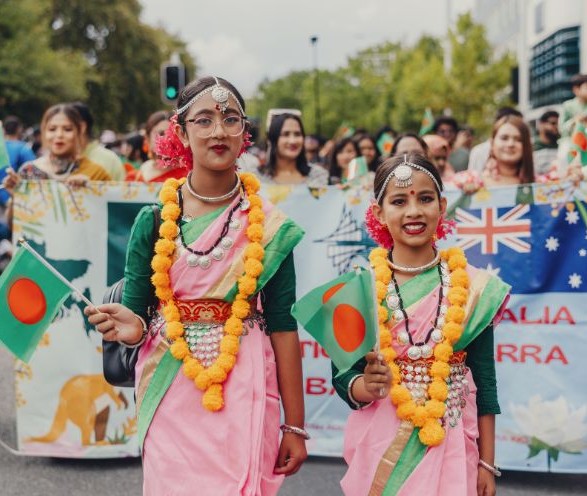
Migrants suffered similar rates of discrimination as people born in Australia at 20 per cent, the ABS survey found.
It found 36 per cent of people who identified as gay, lesbian or bisexual experienced discrimination and 31 per cent of people with a mental health condition experienced discrimination.
Of those who experienced discrimination, 46 per cent felt that their ethnic or cultural background or appearance was the reason for their most recent incident.
The most common place for discrimination to occur was in public (51 per cent), followed by at work (44 per cent), the survey found.
Men and women experienced different types of discrimination with men more likely than women to experience discrimination based on their ethnic or cultural background or appearance (51 per cent compared with 42 per cent).
Women were more likely than men to experience discrimination based on their gender (35 per cent compared with 25 per cent).
The places where discrimination occurred also differed for men and women, including: when applying for work or jobs (21 per cent of men compared with 12 per cent of women); when dealing with government officials (20 per cent of men compared with 10 per cent of women).
When dealing with the justice system, 13 per cent of men experienced discrimination compared with 6 per cent of women.
The survey found that overall life satisfaction was 7.1 out of 10, similar to 2020 (7.2), but lower than 2019 (7.5) and 2014 (7.6).
Just under a quarter of people surveyed did unpaid voluntary work through an organisation (23 per cent), similar to 2020 (25 per cent), but down from 30 per cent in 2019.
More than half of people (53 per cent) had weekly in-person contact with family or friends living outside their household, more than in 2020 (42 per cent), but less than 2019 (68 per cent)
Half of people surveyed agreed that most people can be trusted, down from 61 per cent in 2020 and 55 per cent in 2019.
A quarter of households had at least one cash flow problem, up from 21 per cent in 2020 and 22 per cent in 2019.
women’s overall life satisfaction (7.3) was higher than men’s (7.1).
Of those with a low overall life satisfaction (4 or below): half felt that their health was fair or poor; 47 per cent often felt very lonely; 40 per cent experienced a very high level of psychological distress.
Of those with a very high overall life satisfaction (9 and over): 72 per cent felt that their health was excellent or very good; 61 per cent felt that most people can be trusted; 80 per cent experienced a low level of psychological distress and 93 per cent felt that they could get someone to help out when needed.
Read the full report: General Social Survey: Summary Results, Australia, 2025 | Australian Bureau of Statistics