




 Loading tweets...


Displaced Ukrainians struggling with basic needs – IOM report
About 3.9 million people are now internally displaced in Ukraine with increasing numbers of people struggling to access food, money and shelter, according to a new report by the UN’s migration agency IOM.
While the number of internally displaced people has stayed at around 12 per cent of the population since 2023, the report shows that the longer displacement persists, the more families are struggling to meet their basic needs.
Almost seventy per cent of internally displaced people have now been away from home for more than two years, highlighting the increasingly protracted nature of displacement in Ukraine, IOM’s ‘General Population Survey’ found.
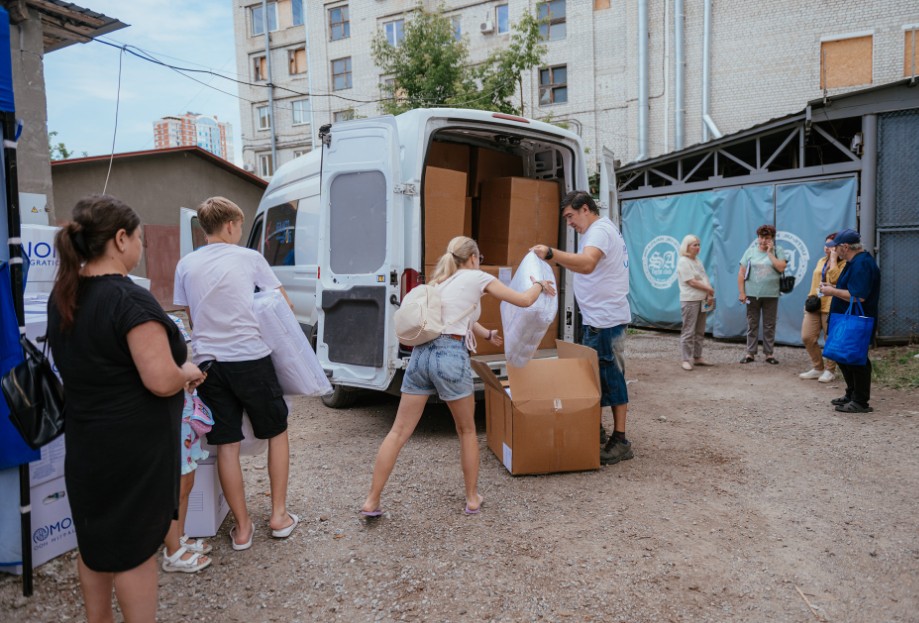 New displacement is also still occurring with an estimated 132,000 people were forced to leave their homes between January and June this year.
Deputy Chief of Mission at IOM Ukraine Dejan Keserovic said the ostensibly stable figures hid a growing problem.
“Stable displacement figures should not be mistaken for stable living conditions,” Mr Keserovic said.
“Many displaced families are exhausting their savings, reducing essential expenses, including health care, and moving into less adequate housing as they try to meet their basic needs.
“Sustained support remains essential to help people regain stability and make informed, voluntary choices about their future,” he said.
The report found that 87 per cent of displaced households have had to take at least one difficult step to cope.
The most common include using up savings (75 per cent), cutting back on utilities (59 per cent) and reducing health spending (53 per cent).
One in five households also reported moving to lower-quality housing, while 17 per cent have fallen behind on rent.
The pressure has been building steadily – last winter’s harsh weather and long power and heating outages hit already-vulnerable families particularly hard.
“Safety remains the biggest factor in people’s decisions about the future: 82 per cent of internally displaced people say they only want to return home once the fighting stops,” the report said.
“At the same time, more people are considering settling permanently where they now live – interest in local integration increased from 51 per cent in March to 58 per cent in June 2026, highlighting the need to support displaced families wherever they are, while still keeping an eye on the risks of people returning too soon or unsafely.”
The report said about 2.15 million individuals – 56 per cent of all those displaced in Ukraine – originally came from areas that were fully or partly occupied at the time of the survey. This group has faced longer displacement, greater hardship, and fewer options for going home.
“The findings show why emergency aid alone isn’t enough. People need longer-term support with housing, jobs, health care, protection, and other essential services — so they can make informed, voluntary choices, whether that means settling where they are, moving elsewhere, or returning home safely once conditions allow,” the report said.
It is based on IOM’s latest survey of the Ukrainian population, carried out between 23 April and 30 June 2026.
Russia invaded Ukraine on February 24, 2022, starting the largest and deadliest war in Europe since WWII.
The attack was an escalation of the existing war between the two countries that began when Russia annexed Crimea in 2014.
The fighting has caused hundreds of thousands of military casualties and tens of thousands of Ukrainian civilian casualties. As of July 2026, Russian troops occupy about 20 per cent of Ukraine.