

 Loading tweets...


Diverse communities vulnerable to climate disasters
Migrant and refugee communities are more vulnerable to natural disasters and extreme weather events than the general population, according to a raft of new research.
The research says heat is the biggest environmental killer of people in Australia and many diverse communities are amongst the least prepared for it.
The studies come as the first National Climate Risk Assessment report paints an alarming picture for Australia’s cities, farmlands and natural environment if global temperatures continue to rise and nothing is done to prepare for drastic climatic change.
It says heatwaves fuelled by climate change will kill thousands of people each year, wipe more than $600 billion from property values and put under threat of rising sea levels around 1.5 million homes.
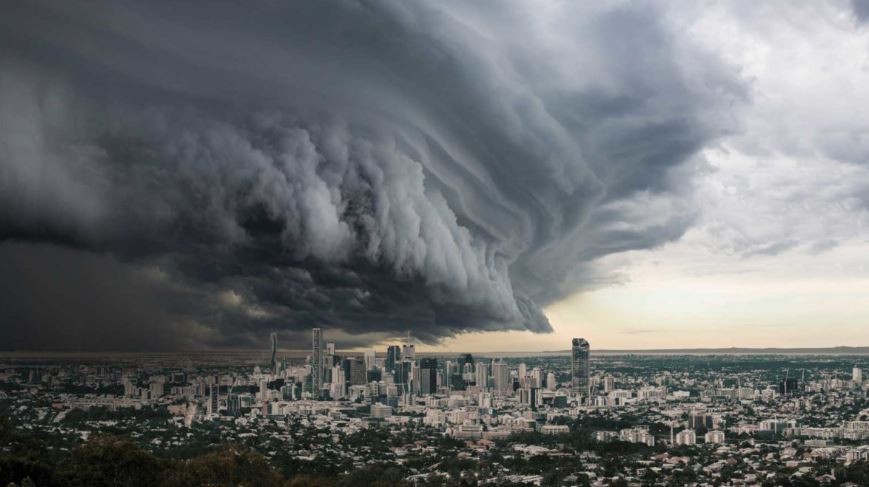 The report says parts of Australia will regularly see maximum temperatures above 52 degrees, with more frequent heatwaves forcing people indoors more often.
It says oceans will continue to warm, with some species likely to become extinct as they fail tom acclimatise.
The federal government recently set a net zero target of 62 per cent to 70 per cent by 2035 while also announcing a $5billion Net Zero Fund and $2billion for the Clean Energy Finance Corporation.
The recent Federation of Ethnic Communities Councils of Australia (FECCA) conference heard how new strategies were being implemented across the country to improve the resilience of diverse communities in the face of disasters or extreme weather events.
In response, one program in south-western Sydney has seen the production of a ‘community reliance toolkit on extreme heat’.
Program founders local doctor Lai Heng Foong and psychologist Carole Chow told ta recent conference that heat was the biggest environmental killer of people in Australia and that south-west Sydney was one of the hottest areas of the city.
“In the wake of disasters, it is always communities that are left to pick up the pieces,” Dr Foong said.
“And non-English speaking communities have less resilience when disaster hits and multicultural communities have less capacity to handle a disaster.
“So, we wanted to do something to help communities to protect themselves from disasters,” she said.
The program identified vulnerabilities specific to diverse communities when it comes to disasters.
These include a new and unfamiliar environment, increased severe weather events dur to climate change, weather events that behave differently to those experienced pre-arrival in Australia, a dearth of easily understood translated information, inaccessible warning systems, poor English and digital literacy, a fear of authority and service providers who do not understand the pre-settlement experiences of communities and the post settlement impacts of severe weather preparation and management.
The program delivered knowledge community leaders in as part of a strategy to move from response to events to risk reduction.
“We aimed to inform community leaders and members to mitigate and adapt to climate change and extreme heat events,” Dr Foong told the conference.
Ms Chow told the conference the program had increased awareness of disaster mitigation through information sessions across five different language groups.
“We saw a massive improvement and a key takeaway for us was that if people could go away with just one or two strategies to deal with a heat event, it can save lives,” she said.
Another program delivered in Brisbane saw information sessions on natural disaster preparedness delivered 742 participants over three years.
The ‘Disaster Resilience in Brisbane CALD Communities’ program also provided advice on putting together emergency kits, designed to help people get through the first three days following a natural disaster.
“We reached 22 cultural communities and connected them with emergency services,’ said program coordinator Hyatt Narsh.
The conference also heard about a program that delivers emergency preparedness information and strategies to respond to the impact of climate change among refugee communities in Bendigo.
Bendigo is home to around 3,500 Karen and 350 Afghan Hazaras and increasing numbers of South Sudanese.
The ‘Emergency Preparedness Program’ has co-designed culturally safe and easily understood resources addressing gaps in community knowledge identified by a review of literatures.
It has provided community education sessions and training for community champions as well as sessions for emergency management staff on understanding residents from refugee backgrounds.
Bendigo Community Health Services manager Kaye Greaves said migrant and refugee communities are often more vulnerable than others to the impacts of emergencies and disasters.
“People who are new to our country are really worried about fire, heat and flood events. There are real fears,” Ms. Greaves said.
“They need a tailored, targeted approach to safely in Bendigo. This is an amazing program. It needs to be embedded in settlement programs throughout the country,” she said.