




 Loading tweets...


Dolly Parton’s quiet refugee advocacy
Music legend Dolly Parton, who died recently, quietly stood up for refugees and undocumented migrants when few others would.
She is known and celebrated as one of the entertainment world’s most prolific philanthropists, using her success to support causes ranging from childhood literacy and education to healthcare, disaster relief and more.
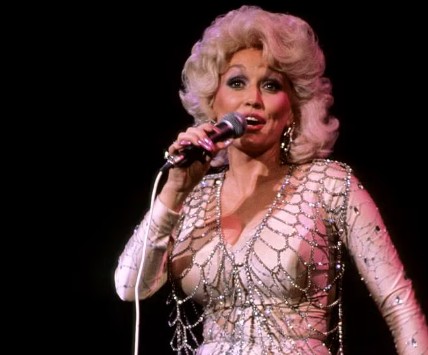 Dolly’s connection to refugees is probably best known through her global literacy initiative, the Imagination Library, which extends free books to refugee and displaced children through community and asylum-seeker support networks.
She founded the Dollywood Foundation program in 1995, which has gifted over 300 million free books to children worldwide from birth to age five.
She donated $US1 million to the Vanderbilt University Medical Centre, which helped fund the research that led to Moderna’s COVID-19 vaccine, which saved the lives of millions of refugees and displaced people.
But few people know about her musical contribution to the cause of humanitarianism and refugee protection.
It started with her 1980 cover version of Woody Guthrie’s song Deportee (Plane Wreck at Los Gatos).
Woody Guthrie wrote the song in 1948 in memory of a plane crash in California’s Central Valley that killed all 32 on board, including 28 Mexican nationals who were being deported back home.
Guthrie was angry that media reports named the four white victims but none of the Mexicans, reducing them to their status as mere deportees. Indeed, their names were not recorded until 2013, when they were inscribed on a commemorative cross at the crash site.
In 1980, the Reagan administration was remaking American politics. American sentiment was turning against migrants, whether they were refugees from the Vietnam war, Cuban and Haitian boat people, Central Americans fleeing civil wars or Mexicans looking for economic opportunity.
Dolly could have limited her songs to farmers, coal miners, factory hands or other blue-collar workers that are the stock in trade of country music. It would have been the safe option.
But Dolly felt that immigrants – legal and otherwise – were also a part of America’s story.
She sings ‘Deportee’ with emotional depth and she evokes the humanity of the victims by reciting the names of the Mexicans Guthrie envisioned were on the plane – Juan, Rosalita, Jesús and María.
“They chase us like outlaws, like rustlers, like thieves,” Dolly sings, evoking the fears of Mexican immigrants, then and now.
Guthrie’s words – “the oranges piled in their creosote dumps” – resonate today as they describe a society that works migrants to exhaustion and then discards them.
“Who are these dear friends all scattered like dry leaves?” Dolly asks towards the end of the song.
“The radio said, they were just deportees,” she says, with an edge to her voice.
Dolly never said why she included ‘Deportee’ on the hugely successful ‘9 to 5 and Odd Jobs’ album.
It was one of the few times she delved into politics, which she famously said wasn’t “her thing”.
But standing up for the marginalised and calling out their persecutors at the height of her career, and against the political zeitgeist of the times, tells us something about who Dolly really was.
Listen to Dolly’s version of Deportee (Plane Wreck at Los Gatos).