






 Loading tweets...


Economic impact of migration revealed in new report
By Joshua Tyrell
According to a new report from the European Parliament, across the world, more than 160 million people have chosen to move to a new country so they can work, support their families, and build stable futures; generating 10 per cent of the global gross domestic product while they do so.
But the report says migration is not just an economic process; it is a human one – providing insights into understanding how migration shapes both host countries, like Australia, and the countries people originally come from.
 For Australia, migrant workers can help fill skill shortages, bring fresh perspectives, and create new wealth in the areas they settle. For their countries of origin, the departure of workers brings both opportunities and challenges, from increased financial support through remittances to growing gaps in local workforces.
The report warns that benefits brought to a new country are benefits taken away from home.
“Brain Drain,” refers to a mass exodus of highly skilled or educated workers from their home country to seek better opportunities elsewhere. This can lead to skill shortages and innovation stagnation which can affect the home country’s potential quality of life. This is seen to be especially impactful through shortages of healthcare workers.
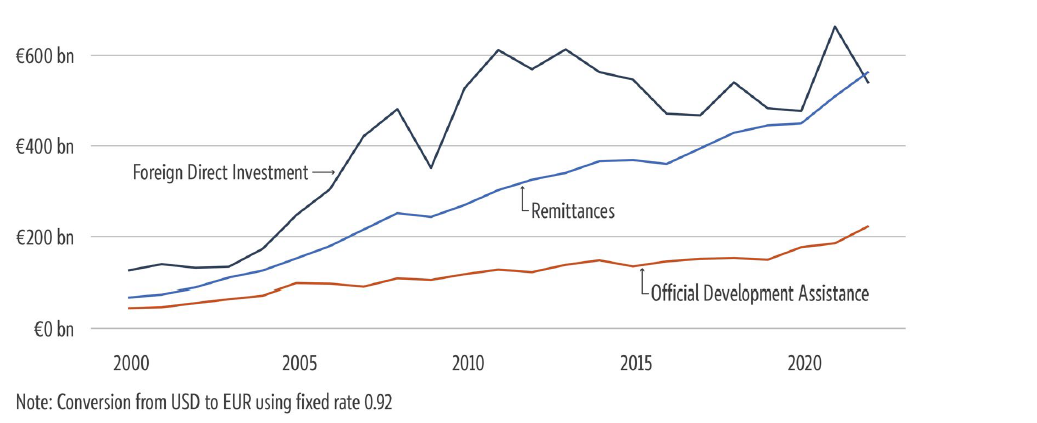
A way migrants can offset this is through financial support. Remittances, the money migrants send home, remains one of the most significant economic impacts of labour migration, far exceeding foreign aid and investment in many regions. These funds are commonly used for food, schooling, healthcare, rent and small business investment
 Diaspora communities across Australia play an important diplomatic role by sharing culture, language and support, the report suggests.
Migrants living abroad act as ambassadors for their countries, raising awareness of their origins and influencing how nations understand one another. Economically, Diasporas have been known to increase trade and investment between the host country and the country of origin and even influence local politics and culture.
Labour migrants can face irregular working conditions, be that in the form of underpayment or lax safety measures. A 2023 report on the exploitation of migrant workers in Australia, prepared by the Grattan Institute, an Australian public policy think tank, concluded: “Recent migrants are twice as likely as long-term residents to be underpaid, and up to 16 per cent of recent migrants are paid less than the national minimum wage”.
Migrants may feel as if they are not in the position to stand up against mistreatment due to their sensitive status and unhappily accept the working conditions. This, in turn, “perpetuates their poverty and contributes to their serial migration. Indeed, poverty often pushes domestic workers not only to migrate but to re-migrate, resulting in serial labour migration.”
| All workers in Australia, regardless of age, race, or migration status, have the right to fair pay and working conditions. If you feel you are being mistreated, you are encouraged to seek help. A great place to start is the Fair Work Ombudsman where you can make an anonymous report and receive advice on what you can do. |
Post migration opportunities
The main three options that most migrants will face are to stay, go home, or move to another country.
Some migrants choose to stay and continue building their lives in Australia, contributing to their adopted locale and diasporas.
According to the OECD, 20-50 % of migrants leave within five years of arriving, either to return home or to move to another country. When migrants do return home they often bring back new skills and savings, bolstering their home communities. Economic migrants are more likely to return than migrants leaving for family or humanitarian reasons.
Each year, more countries, including Australia, are using short‑term or repeat‑entry migration pathways to meet changing workforce needs. Circular migration allows workers to move between countries throughout their career, helping destination countries manage shortages while allowing migrants to build skills and maintain ties at home.
Read the full report: How labour migration affects countries of origin