



 Loading tweets...


Europe’s migrant crisis – ten years on
Ten years on from Europe’s 2016 ‘migrant crisis’ in which around a million refugees and irregular migrants arrived without warning, a new analysis has revealed the lasting effect of the influx.
The Washington-based think tank The Migration Policy Institute has examined the fallout from the crisis.
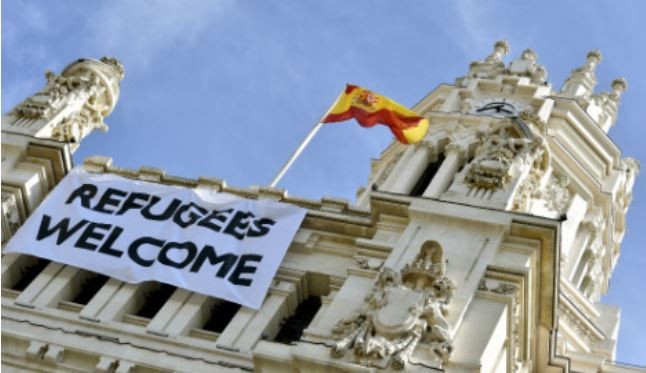 In a new report, it says that ten years after the 2015-16 migration and refugee crisis, the European Union has reshaped its process for dividing up asylum claims and controlling external borders.
“Many systems are stronger, and newcomers have integrated into their new countries, but tensions remain, and key questions are unresolved,” its report says.
It says more than a million refugees and other migrants arrived irregularly in the European Union in 2015 and 2016, straining processing systems across the bloc.
Despite intense pressures, Europe’s free-movement Schengen area and its common asylum framework have persisted, but internal border checks and disputes over responsibility-sharing continue to linger, the report says.
EU policymakers have tightened access to asylum and prioritised enforcement, growing the budget of the EU border agency, Frontex, more than eightfold from 2015 to 2026.
And the period also propelled far-right politicians into unprecedented positions of influence, the report says.
“In 2015, the European Union’s asylum system buckled as more than a million refugees and other migrants arrived without warning, chiefly from Syria but also many other nationalities,’ the report says.
“An increase in shipwrecks and deaths at sea, combined with chaotic scenes in reception centres and train stations, pushed migration to the top of the public agenda. On the Greek islands, screening centres were overcrowded and thousands of people slept on beaches, on streets, or in abandoned hotels.
“Tensions spread as migrants moved inland. Governments erected fences, reinstated border controls, and deployed armies to secure their borders, posing a major test to the Schengen zone and raising existential questions about the future of the European Union.”
The report says many of the effects of the crisis are only just becoming apparent.
Although the crisis eventually subsided after 2016, lasting effects on the European Union’s political identity, border-free model, and asylum architecture were left. Also, public confidence in government was shaken.
The report says the immediate demands were practical. Things like local governments needing beds, asylum offices rushing to process people quickly.
At the time, German Chancellor Angela Merkel famously said, ‘we can manage this’, but the situation soon descended into an EU political crisis as governments struggled to share responsibility and the system for determining which country should examine an asylum claim broke down.
“Countries such as Germany and Sweden that had initially welcomed large numbers of asylum seekers soon encountered constraints to their capacity and public support – limits that were further tested when millions of Ukrainians were displaced following Russia’s 2022 invasion,” the report says.
“Eventually, this opened the door to once-taboo debates about restricting asylum. Meanwhile, Hungary’s government, which opposed becoming a country of immigration, began testing the outer limits of EU and international law.”
A decade later, EU migration policy has become almost totally focused on curbing arrivals at the borders, at considerable human, political, and financial cost.
“National asylum agencies have increased capacity, while policymakers have reshaped operations to make returns more efficient,” the report says.
“Meanwhile, many refugees have established themselves in their new homes. But scars remain.
“EU policies have focused on restricting access to asylum, at times in ways that critics contend expose people to danger, and the future of responsibility-sharing still hangs in the balance.
“Trust between Member States on migration issues remains frayed and some segments of the public remain sensitive to even small changes in arrival numbers.
“Migration diplomacy has also become more transactional, as countries outside Europe, particularly Turkey, moved to the centre of the EU response.”
Also, EU neighbours, such as Libya, have become more aware of their leverage and have extracted billions of euros for support.
Meanwhile, far-right populist parties have leveraged public frustration to achieve electoral success, winning over voters by facing down established parties and promising to restore control.
And even when not in power, far-right parties poll well enough to have an influence in shaping migration policy in places including France, Germany, Portugal, and Sweden.
“The clearest lesson is that there are no shortcuts to building a common migration system. In a decade, the European Union has strengthened its technical ability to administer and restrict movement, but more political questions around how to distribute obligations and sustain public trust have proven thornier. The next question will be whether it can use that greater capacity to provide protection predictably, resolve claims fairly, and support receiving communities. Ultimately, the depth of cooperation among its 27 Member States makes the European Union a defining test case for what responsibility-sharing can look like,” the report concludes.
Read the full report: How Europe Was Transformed by the 2015-16 Migration and Refugee Crisis | Migration Policy Institute