




 Loading tweets...


Fears for World Food Program as famine on the rise
Human rights and humanitarian agencies fear the World Food Program could go the way other global relief programs that have effectively been gutted by the US’ withdrawal from humanitarian funding and the global rules-based order.
As famine and hunger spread across the globe, the fear has been triggered by the planned resignation of Cindy McCain, for health reasons, from the executive directorship of the WFP.
By convention, the US appoints the head of the United Nations-run WFP. The questions being asked in humanitarian circles are: ‘will the UN Secretary General Antonio Gutteres accept a US nominated candidate to fill vacancy? If so, ‘will President Trump use his influence to cut finding and do to the WFP what he has done to other UN agencies?’
International Affairs expert Sam Vigersky says that President Trump could potentially offer restored funding if a Trump acolyte is appointed or threaten to further gut support if his candidate is blocked.
His says the recent US withdrawal from the World Health Organisation offers a clue to the consequences of Trump not getting his way.
“A consideration that would have seemed far-fetched a few years ago must be taken seriously today: preserving the integrity of the WFP itself,” he wrote recently.
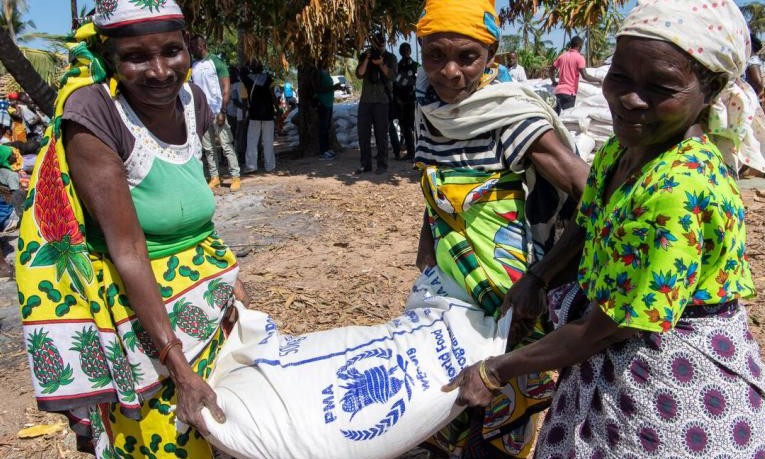
“A Trump appointee forcing WFP to procure exclusively from America, or to prioritise unprincipled aid at the direction of Washington, is not out of the question. The standoff between the US-backed Gaza Humanitarian Foundation and the UN last year previews how the latter might look,” Mr Vigersky wrote.
The WFP’s future is now more uncertain than at any time in its 70-year history. Already, US funding has been cut by more than half, falling by $US2.6 billion following the closure of USAID, America’s international aid agency.
The move saw almost a third of the WFP’s workforce laid off, or the loss of 6000 jobs.
At the same time, research reveals the human impact of the cuts.
Afghanistan is experiencing its highest rise in malnutrition ever recorded. Three out of four acutely malnourished Afghan children are being turned away for treatment, according to the WFP.
This means they will suffer irreversible growth stunting, or death.
In Somalia food assistance is now reaching just 600,000 people, down from 2.2 million a year ago.
And the year ahead could prove even more difficult for the WFP.
America’s military destabilising actions in Venezuela and Iran could threaten create new humanitarian crises.
As the humanitarian community braces for impact, a wider move by the US State Department threatens to end decades of precedent, with the US planning to channel almost all UN funding through a single entity, the UN’s humanitarian aid coordination arm, OCHA.
This would mean direct funding to organisations such as WFP, UNICEF, and the UN refugee agency (UNHCR) would bend.
Mr Vigersky says humanitarian aid is no longer operating on needs-based principles but as a lever of statecraft.
Under the deal with OCHA, the US will fund countries the Trump administration deems to be in the national interest.
“Among those countries currently banned from receiving US funding are Afghanistan and Yemen: nations seen to be hostile to American interests that also happen to be facing catastrophic food insecurity,” Mr Vigersky said.
“The US is trying to redefine humanitarian principles by dictating discrimination. Humanitarians – and other donors – must draw a line,” he said.
“In the deal with OCHA, the US has dumped its biggest bilateral partner and toppled WFP’s perch at the apex of global humanitarian coordination. The efficiencies WFP once brought to the entire aid system – economies of scale, speed of response – will rely on a patchwork funding structure that forces it to work through a UN intermediary in each country before it can act.”
The $2 billion the US pledged to OCHA – designed to cover all humanitarian aid agencies – is less than half of the funding the WFP received in 2025.
“Will the next WFP chief answer to Washington, or to a principled humanitarian calling? Mr Vigersky asks.
“While past American nominees emerged from the same political reward system, all understood the imperative of putting the institution ahead of national politics. Whether the next appointee continues that tradition will determine whether WFP comes back and saves millions of lives – or walks away from a starving world,” he said.