


 Loading tweets...


Iran football women granted citizenship
Two Iranian woman footballers who claimed asylum in Australia in March have been granted citizenship.
Atefeh Ramezanisadeh, 34, and Fatemeh Pasandideh, 22, publicly defied their government and become the centre of a storm of publicity.
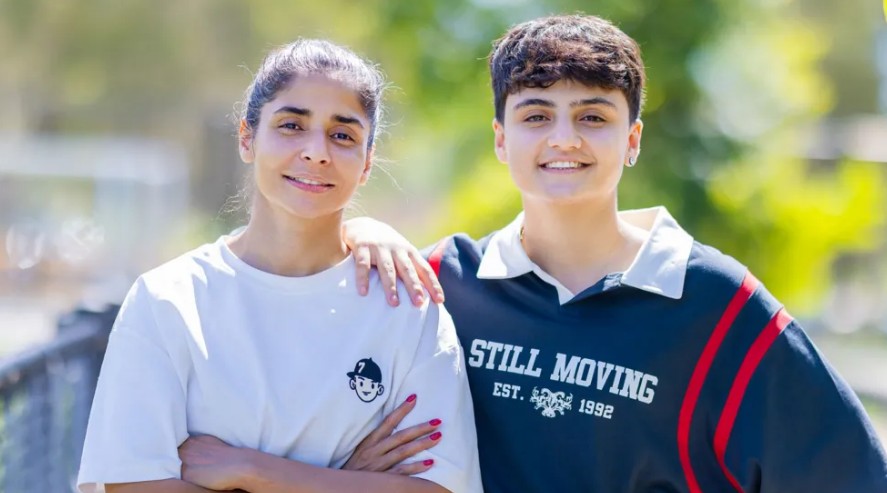 They were naturalised by Home Affairs Minister Tonty Burke Brisbane.
Friends and supporters from the local Iranian community attended the ceremony.
“Yesterday was a truly special and unforgettable day for me. I feel proud and deeply grateful to become an Australian citizen. Australia has given me the opportunity to build my life and my future, and I feel, more than ever, that I belong here,” Ms Ramezanisadeh said in the statement.
Ms Ramezanisadeh said her Iranian roots and memories would always be part of her.
Ms Pasandideh said the of her naturalisation that it was “one of the happiest days of my life”.
“I’m incredibly proud and grateful to officially become an Australian citizen. After everything we’ve been through and all the challenges we faced, this moment means more than words can express,” she said.
They were among seven members of Iran’s national team to be granted humanitarian visas while in Australia for the Women’s Asian Cup in March – but the other five changed their minds and returned home.
It was feared the team would face repercussions for refusing to sing the Iranian anthem at their opening match, just days after the US-Israeli war against Iran began.
Under pressure from the Iranian community in Australia, authorities initially gave the players a chance to seek asylum. But only Ms Ramezanisadeh and Ms Pasandideh took up the offer.
Refugees and migrants usually must live in Australia on a valid visa for four years before they can apply for citizenship.
Their fast-tracked citizenship means they are now potentially able to play football for Australia.
The Iranians have joined A-League team the Brisbane Roar, after they were granted asylum when Iran dropped out of the Women’s Asia Cup that Australia hosted.
The team had arrived in Australia before the United States and Israel attacked Iran in February.
Concerns for the team’s welfare at home were raised when players decided against singing the Iranian national anthem before their first match of the tournament.
Protesters demanding asylum for the team widely cited Iranian sports commentator Mohammad Reza Shahbazi calling the women “wartime traitors” in a television broadcast.
US President Donald Trump used social media to call for the team to be granted asylum and reportedly telephoned Prime Minister Anthony Albanese on the issue.
Iranian-Australia community leader Nadia Zarah Ahmadi said the two women were doing well.
“They are both happy and looking forward to playing football and building new lives in Australia,” she said.