






 Loading tweets...


Japan ramps up deportation of asylum seekers
Japan has launched a deportation drive to remove undocumented migrants and asylum seekers that has sparked fear among expatriate communities in the country and drawn criticism from human rights groups.
Following the election of conservative Prime Minister Danae Takaichi last year, Japan launched the Zero Illegal Foreign Residents Plan (Zero Plan), a government initiative to speed up deportations and reduce the number of undocumented foreign residents.
Last year, a record 318 foreigners were deported from Japan, up 30 per cent over on the 2024 figure, official data shows. Of the total, 52 had applied for refugee status.
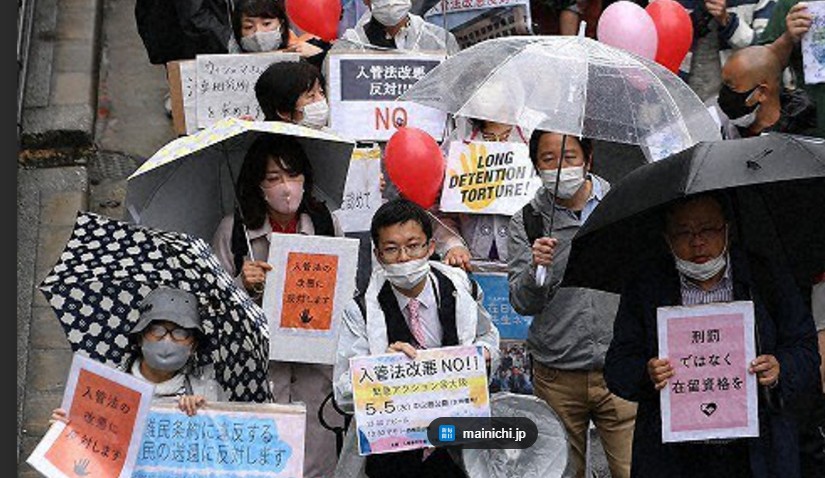
Zero Plan reflects not just the harder line policies of the Prime Minister and the ruling Liberal Democratic Party but also unease in parts of Japanese society at the growing number of ‘outsiders’ or ‘gaijin,’ as well as the massive recent influx of tourists.
Human rights groups in Japan say the deportations program are frightening and intimidating foreigner in Japan, including some who have lived in the country for decades and others who fear for their lives if returned to their homelands.
The Japan Association for Refugees (JAR) has pointed out that Japan is a signatory to the Refugee Convention which prohibits ‘refoulement,’ or returning people to a country where they face the risk of persecution.
“We frequently hear from refugees who live in constant fear of forced deportation,” said.
JAR spokesperson Shiho Tanaka said the fear of deportation was widespread.
“Even children who have grown up in Japan and speak Japanese as their native language are living with deep anxiety,” she told local media.
Ms Tanaka also said there was evidence some people were being persecuted after Japan rejected their refugee applications.
In 2025, Japan recognised just 187 refugee, three fewer than the previous year, while the number of applications rose from 8,377 cases to 14,832 last year, according to JAR.
More than 12,600 people were refused refugee protection in the same year.
Most of those given permission to remain in Japan were from Afghanistan, with 26 from Yemen.
Just nine people from strife-riven Myanmar were accepted as refugees, despite 1,490 applications, the lowest figure since the 2021 military coup and comes in the face of the UNHCR saying minorities fleeing the country are “highly likely to require international refugee protection”.
JAR said many of the deported people would qualify as refugees under international rules,
The latest group of deportees “includes individuals who, based on our organisation’s knowledge, clearly qualify as refugees, such as those from conflict-ridden and violent regions, those who have been detained or assaulted by the military, and those who have been imprisoned and subjected to sexual violence,” JAR said in a statement.
Under the five-year Zero Plan, the Japanese Government to plans forcibly deport people who have requested refugee status three or more times or those convicted of serious crimes resulting in a prison sentence of three years or more.
The initiative also includes reducing processing times from a peak of more than 33 months in 2022 to less than six months, enabling swifter deportation; as well as rules preventing people on provisional visas from working in Japan.
Ms Tanaka said the government was demonising migrants by promoting the Zero Plan as “abusers of the system” because they are repeat applicants.
“They are seeking to deport people using public anxiety as a justification. But we do not believe that vocal opinions amplified on social media necessarily represent the consensus of the Japanese public,” she said.
Meanwhile, right wing groups in Japan are ramping up xenophobia on social media platforms.
Many Japanese are worried about inflation and perceived public safety, and foreign nationals are easy targets for suspicion, Ms Tanaka said.
“There is a noisy campaign that exploiting ant-foreigner sentiment at a time when Japanese people are seeing more foreign nationals in their communities, either as residents or tourists.”
The number of foreigners Japan rose by almost 10 per cent in 2025, surpassing 4 million for the first time, official data shows.
Chinese migrants made up the largest number of foreign residents, with just over 930,000, followed by 681,000 Vietnamese and 407,000 South Koreans.
There were also sizeable increases in residents from Myanmar, up nearly 36 per cent, and Indonesia, up 33 per cent.