





 Loading tweets...


Malaysia deporting Rohingya asylum seekers
Malaysia has begun deporting around 5,000 Rohingya asylum seekers back to Myanmar, under a controversial deal agreed with Myanmar’s military government.
Three ships from the Myanmar navy left from Malaysia recently carrying the first 1,500 returnees.
Meanwhile, human rights advocates have condemned the repatriation, saying the returnees could face violence, persecution and forced conscription into the Myanmar army or ethnic rebel groups.
The Rohingyas, a stateless ethnic minority group that fled a Myanmar military crackdown in 2017, could face a worse fate if returned to Myanmar, as they do not have citizenship and have no safe place to return to.
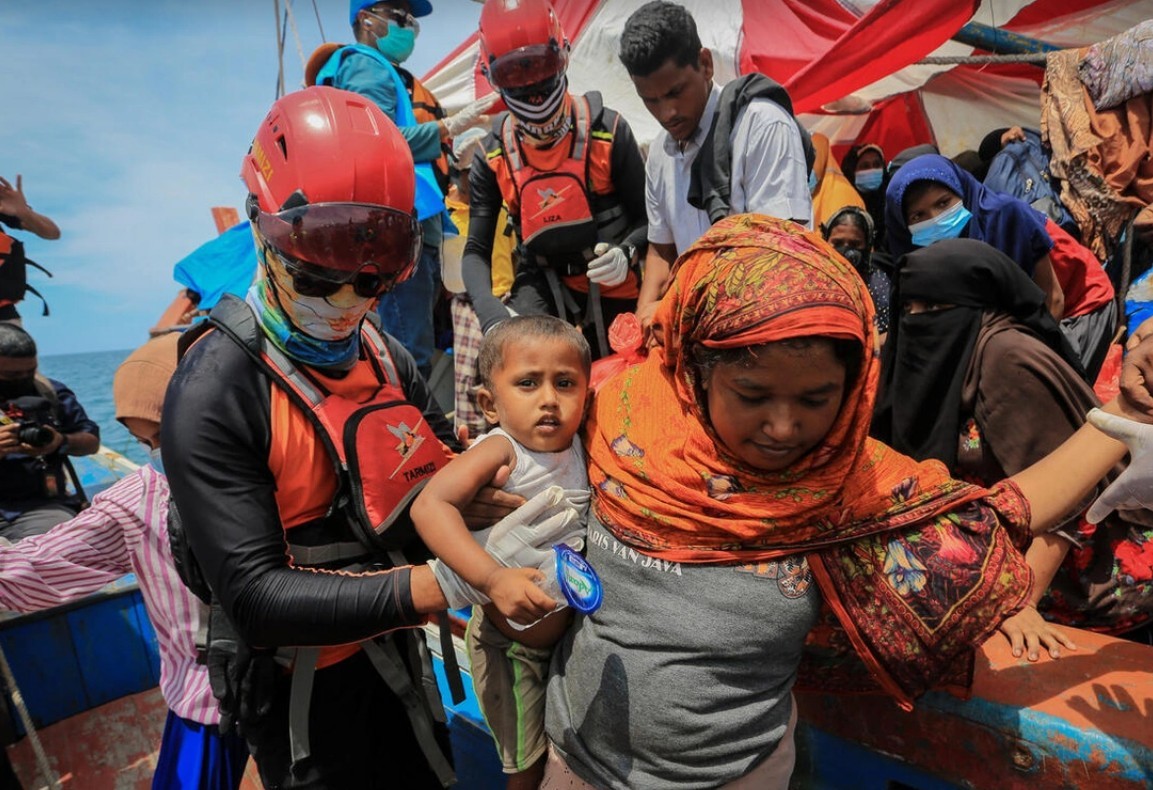 They are not permitted to travel inside Myanmar, and they are only allowed to live in Rakhine State, which borders Bangladesh. However, nearly all of Rakhine State is now under the control of the insurgent Arakan Army, and subject to sustained bombardment by the Myanmar air force.
Malaysia has described the repatriation as voluntary but has prevented the UN refugee agency UNHCR from seeing or screening the returnees, who have been kept in detention centres.
Malaysian Prime Minister Anwar Ibrahim has said he was responding to growing public hostility towards the large population of Muslim Rohingyas in Malaysia and had no choice but to negotiate with the Myanmar government over their return.
There is no official confirmation that any Rohingya were among the deportees, but human rights advocates say they made up the majority of those sent home.
More than a million have been forced to leave Myanmar after violent operations against them mounted by the Myanmar military which the UN says amount to a possible genocide.
Prime Minister Anwar, a former political prisoner, has previously presented himself as a defender of human rights and freedom, and called for more to be done to help the Rohingyas.
But the latest move signals a shift in attitude.
Under Anwar, Malaysia has refused to recognise Myanmar military leader Min Aung Hlaing’s regime and has been one of the strongest voices in Southeast Asia pushing for a negotiated end to Myanmar’s civil war.
Observers say that increased economic strain on lower-income Malaysians since the Covid pandemic has fomented resentment of the Rohingyas.
And the instability characterising Malaysian politics since 2018, when a historic election unseated the United Malays National Organisation (UMNO), the ethnic Malay party which had held power for 60 years, has led to a series of unstable coalition governments.
There was strong public sympathy among ordinary Malaysians for their fellow Muslims in Myanmar for many years.
But sentiment among Malaysians began to shift during the pandemic, which hit the country’s economy hard, also saw allegations on social media that Rohingya migrants had spread the virus.
At the time, the Malaysian government toughened its attitude, saying Malaysia could accept no more migrants.
Since then, an online petition calling for the Rohingya to be deported has attracted more than 400,000 signatures.
Despite his history of sympathy for the Rohingya, Prime Minister Anwar says that the Rohingya must be made to leave.
“They have clearly become a burden, a security burden, an economic burden and a source of hostility among the people,” he said in a recent interview.
The UN refugee agency UNHCR has said it was not involved in Malaysia’s repatriation of Myanmar refugees and warned that it was not safe for them to return to the war-torn country.
An ongoing armed conflict and violence across Myanmar meant there could not be a safe, dignified and sustainable voluntary return of refugees, the agency said.
“Under customary international law – a binding obligation on all states – no one should be sent to a country where their rights or freedoms may be at risk. Any refugee return must be voluntary, based on an informed decision, and take place in conditions of safety and dignity,” UNHCR said in a statement.
By Sam Nowell