




 Loading tweets...


Migrants flee South Africa over anti-migrant violence
South Africa is seeing a massive migrant exodus following an unofficial June 30 ultimatum set by anti-immigration groups demanding all undocumented foreigners leave the country.
More than 60,000 foreign nationals have been deported or repatriated so far and vigilante violence has forced tens of thousands more to flee.
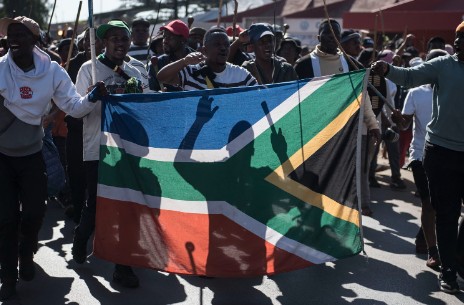 Protest groups, such as “March and March,” set the chilling deadline for migrants to exit South Africa.
They claim undocumented foreigners are to blame for the country’s high unemployment rate, currently more than 30 per cent, rising crime rates, and failing public services.
The tensions have led to protests, looting, and mob attacks in cities like Johannesburg, Pietermartizburg and Durban.
Anti-immigration sentiment had been on the rise in South Africa in recent months, with protests in several major cities across the country.
Some have already turned violent, leaving four people dead in clashes over the past two months.
Migrants have reported receiving direct threats and are leaving South Africa out of fear for their safety.
Meanwhile, violent demonstrations have seen 900 people arrested.
The chaotic protests across the country have forcing families to abandon their homes, businesses and possessions amid fears they would be killed.
South African police have confirmed at least one Malawian, two Mozambicans and one Ethiopian were killed during the recent unrest, though migrants claim the true toll is higher.
Local authorities say more than 15,000 Malawians have now left South Africa, while thousands more citizens from Zimbabwe, Nigeria and Ghana have also returned home in what appears to be the first co-ordinated multinational evacuation.
The most disturbing scenes have emerged from sprawling makeshift camps in Durban, where thousands of migrants have slept on cardboard and blankets beside piles of luggage while waiting days for buses home.
The exodus has created a major regional humanitarian and diplomatic crisis. Thousands of terrified foreign nationals sought shelter in temporary camps or at their embassies to escape the threats.
Many neighbouring African governments – including Nigeria and Zimbabwe – have launched emergency rescue operations to bring their stranded citizens home safely.
South Africa’s cabinet recently approved a revised immigration White Paper that overhauls the system from top to bottom.
The stated aim is to clamp down on fraud and abuse, boost security and digitise services, while attracting skills and investment.
Today about 3.9 per cent of South Africa’s population, or 2.4 million people, is foreign-born.
The White Paper proposes the introduction of digital IDs and points-based visas to target migrants who fill labour shortages and spur growth.
Every person in South Africa, citizen or foreigner, will be in a single digital population registry. All births and deaths are registered with biometric IDs, and newborns are linked to their parents in the system.
South Africa has attracted a population of economic migrants from across Africa because of its large and relatively stable economy, along with people fleeing conflicts elsewhere on the continent.
As well as the 2.4 million immigrants documented in the most recent census, there are millions of undocumented migrants, a number reported to be as high as 10 million.