


 Loading tweets...


Migration policy must align with human rights, human right chief says
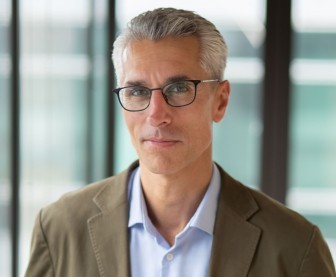
The President of Australia’s Human Rights Commission Hugh de Kretser has defended Australia’s migration program and the nation’s commitment to multiculturalism in an impassioned speech.
Speaking at the Migration Institute of Australia’s recent conference, Mr de Kretser said migrants has made “enormous contributions” to Australia and that migration policy should align with human rights principles.
 He said migration had made Australia stronger, socially and economically and it had fuelled the nation’s success.
Migration “is a core part of who we are,” he said.
“Migration is, at its heart, a deeply human story. It is about people seeking safety, opportunity and belonging.
“It is about people and families making profound decisions about their future, often in circumstances of uncertainty, vulnerability or hope.
“Because migration is fundamentally about people, it is also deeply connected to human rights. Human rights aren’t earned through citizenship, nationality or migration status.
“They belong to every one of us, no matter who we are, or where we are, by virtue of the mere and vital fact that we are human.
“Citizens, permanent residents, temporary visa holders, people seeking asylum, refugees, stateless persons – are all entitled to have their human rights protected.
“This principle sits at the heart of international human rights law, and it provides an essential foundation for migration policy,” Mr de Kretser said.
But he said recent debates about migration had, at times, strayed into dangerous undercurrent of blame and sometimes racism.
“It’s in this context that current public and political debates have been focussed on ways to limit migration. It is of course perfectly fine to debate the number of people who come here, the composition of the migration program, and the impact of migration – both positive and negative – on services and infrastructure. But at times these debates have dangerous undercurrents and sometimes explicit racism,” Mr de Kretser said.
“Migrants are being unfairly blamed for social and economic problems. Particular racial and religious communities are being singled out. And belonging is being said to be conditional on ethnicity.
“Attacks on migrants and multiculturalism do harm. They fuel racism and hate and division in our community. They increase the risk of violence. They damage belonging and unity. Belonging, pride and identity matter,” he said.
Mr de Kretser said there was a need to defend multiculturalism, and that multiculturalism was part of his own life.
“Today of course Australia is incredibly multicultural and migrant. Around a third of us were born overseas and half of us have a parent born overseas,” he said.
“Scanlon Foundation and Lowy Institute surveys repeatedly show very strong support for multiculturalism in Australia.
“Australians know that diversity makes us stronger. But surveys also show that a majority of Australians think migration numbers are too high and support for cultural diversity has dropped.
“Multiculturalism affirms that belonging is not defined by race or ancestry.
“My dad’s Sri Lankan migrant background has been a gift to me. It’s made my life richer and helped me make connections here in Australia and across the world.
“I don’t want to overemphasise this – I grew up in an English-speaking, Christian household with an English first name and a Dutch surname.
“But my multiracial background has given me insight into the importance of belonging, of pride in racial identity and of the need to address racism.
“It has shaped me in different ways throughout my life. As a child growing up in Melbourne’s eastern suburbs, I always felt deeply Australian. But I was also self-conscious of looking different from what many people saw as the Australian norm.
“Then, at 21, I was travelling on a long-distance train in Europe with three fair-skinned friends. Police entered our carriage and asked to see only one of our passports.
“A few years later, I travelled to Sri Lanka for the first time. Staying with relatives and experiencing that side of my family’s story, many things suddenly made a lot more sense.”
Mr de Kretser said multiculturalism is not something to be justified or concession or favour to be granted by some Australians to others.
“It is not an experiment that remains permanently under review. It is who we are as Australians. It is our fabric. Our strength. Our unity.
“And it belongs to all of us – and our children.”
Mr de Krester told the conference that there was an important intersection between human rights, so-called Australian values, human rights and migration policy.
“We often hear that migrants must accept Australian values,” he said.
“I don’t mind this debate. Because when we look at what Australian values are, the path leads to human rights.
“And people and governments should uphold human rights. And we should have a shared Australian identity around human rights.
“This identity should recognise that many of our human rights values have roots in important British democratic and legal traditions; parliamentary democracy, an independent judiciary and the rule of law.
“Australia has taken these traditions and improved on them, particularly in relation to democratic innovations.
“Our citizenship booklet talks about what our shared values as Australians are.
“It says: Australians believe in shared values such as the dignity and freedom of each person, equal opportunity and the rule of law.
“It talks about democracy, freedom of speech, freedom of association, freedom of religion, history,” Mr de Kretser said.
He said migration policy formulation should have regard to human rights.
“As Australia considers reducing migrant numbers and more aggressive polices to remove people without a valid visa, the risks around breaching the human rights of migrants increase. The importance of protecting the human rights of migrants becomes more acute,” he said.
“Human rights standards support effective migration management. They provide a framework for ensuring that migration systems are fair, lawful and centred on human dignity. They remind us that behind every visa application, every policy debate and every administrative decision is a human being, entitled to be treated with dignity and respect. A migration system that upholds human rights is not only better for migrants. It is stronger, fairer and better for all of us,” Mr de Kretser said.
Read the full speech: Belonging: Migration and Human Rights in Australia