






 Loading tweets...


Migration to ancient Britain not what we thought
Long held notions that ancient Britain was an island of uninterrupted heritage breached only by periodic invasions by the Vikings, Saxons, Normans and Romans have been upended by recent research.
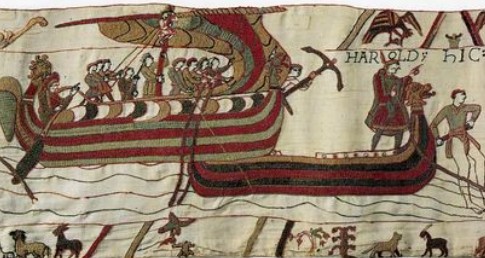
And the findings carry lessons for today’s migration rhetoric, landscape and policy.
After about 6100BC, rising sea levels isolated Britain from mainland Europe, helping to promote later historical narratives of a population relatively isolated.
But new research, based on DNA evidence from people who lived in Roman and medieval times, shows there were smaller and more regular movements of peoples in and out of Britain.
Two new studies have revealed prehistoric Britain saw periodic major migrations as well as smaller and more regular movements of peoples across what was then an adjoined landscape.
One study led by Marina Silva, from the Francis Crick Institute in London, analysed more than a thousand ancient genomes from across Britain during the first millennium AD.
The study found the Roman period, despite the upheaval it wrought, left surprisingly little mark on the genetic structure of the wider population.
About 80 per cent of people who lived during Roman times in Britain share similar genomes to people from preceding Iron Age.
Even in urban centers where occupying Romans congregated, the broader population retained overwhelmingly local ancestry.
In contrast, the early medieval period, from around 410AD, when Roman rule ended, shows significant influx of new ancestry from Europe.
The researchers were able to prove this wave of immigration by comparing British samples with genetic data from populations in north-west Europe.
The migration was not just cultural but demographic on a scale sufficient to leave its imprint on the shape of population structure, the researchers found.
From about 700AD to 1000AD, further waves of continental influence appear in Britain, with the arrival of settlers from central Europe, probably from France and the Rhineland, and also southern Europe.
While traces of Viking migrations are present in the northern and eastern UK, it is not of the same magnitude seen in early medieval migrations.
Most surprisingly, the Norman conquest of 1066 seems to have been restricted to the elites, with little trace in the genomes of the common population.
The research reflects a much longer history of interaction across the North Sea. And ancestry includes Anglo-Saxons, Scandinavians and southern Europeans.
The studies suggest cultural and political change does not necessarily mean large scale demographic change.
Britain’s migration history was not history and uninterrupted wave of people, and it was not large-scale population replacement.
It was a long-term process punctuated by events that reshape institutions more than populations.
Some migrations, especially during the early medieval period – have left significant genetic legacies.
Others, despite their historical significance, left only faint genetic traces.
What the studies show is that the UK’s populations was the result of connections that extended over centuries.
British identity – like the identities of all peoples – has emerged over centuries through migration, cultural sharing and adaptation.
Read more: Genomic history and selection in Roman and early medieval Britain