





 Loading tweets...


Rohingya dying on dangerous sea trips
Almost 900 Rohingya refugees were reported missing or dead in the Andaman Sea and Bay of Bengal in 2025, making it the deadliest year on record for the route, according to the United Nations refugee agency UNHCR.
The number represents more than one in seven of the estimated 6,500 Rohingya refugees who attempted the sea crossing last year.
UNHCR spokesperson Babar Baloch said the Rohingya suffered the highest mortality rate worldwide for refugee and migrant sea journeys.
These dangerous crossings have continued into 2026, with more than 2,800 Rohingya embarking on such journeys up until April 13 this year, Mr Baloch said.
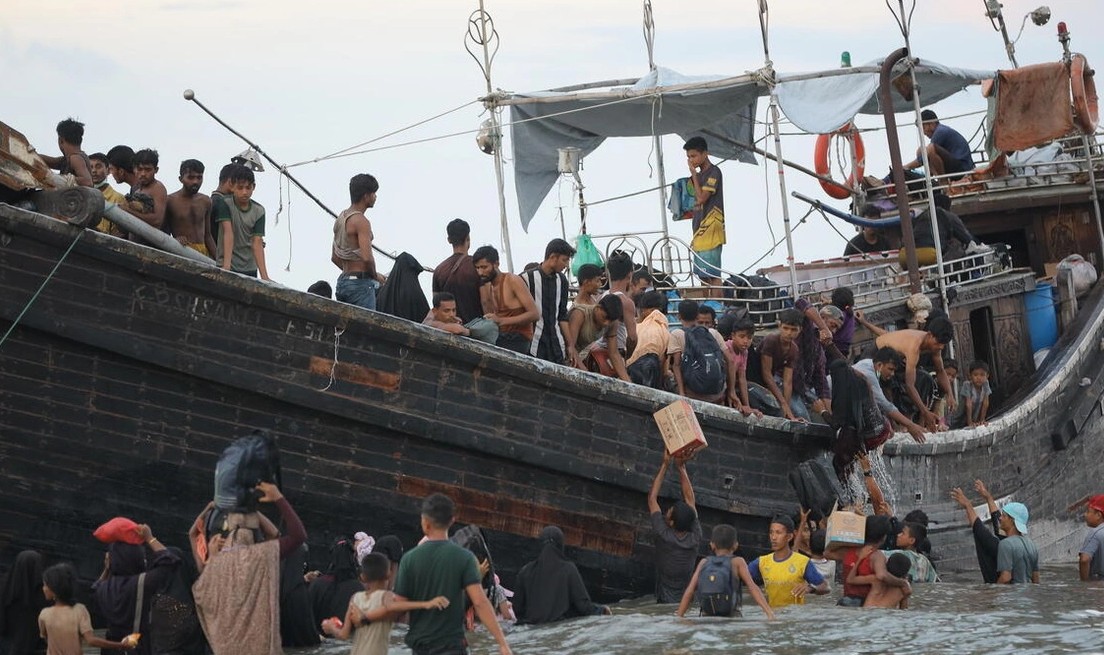
In a further incident this year, 250 people went missing after a vessel sank.
In recent years, more than half of those attempting the crossings have been women and children, the UNHCR said.
“No one would put their family on a risky boat, knowing that the chances of survival are really low, if the sense of desperation is not there,” Mr Baloch told media in Geneva.
Deadly maritime journeys have become the norm in the long-running humanitarian crisis resulting from conflict in Myanmar, as members of the Rohingya Muslim minority continue to risk their lives on overcrowded, unseaworthy boats in search of safety and opportunity.
Their departures are driven by violence at home and desperate conditions in crowded refugee camps in Bangladesh.
Many hope to reach safety and opportunity in countries such as Malaysia, Indonesia or Thailand.
Recently, the UN refugee and migration agencies said that around 250 people were missing after a Malaysia-bound boat that departed from Teknaf in southern Bangladesh carrying Rohingya refugees and Bangladeshi nationals capsized in the Andaman Sea.
Nine survivors were rescued by a ship sailing under the Bangladeshi flag that encountered them at sea. There was reportedly no sign of the others.
Global donor funding cuts, which are impacting humanitarian support, are driving desperation among some of the one million Rohingya refugees currently in Bangladesh, Mr Baloch said.
“This sad and tragic trend continues, this sense of desperation among the Rohingya population,” he said.
The UNHCR has requested $US200 million this year to support the Rohingya population living in the Cox’s Bazar camp and on the island of Bhasan Char who rely entirely on humanitarian assistance including food, water, shelter and health. However, it is currently only 32 per cent funded.
Over 1.3 million Rohingya refugees and asylum-seekers remain displaced across the region, including 1.2 million in Bangladesh according to the UNHCR.
Meanwhile, food assistance has been slashed for hundreds of thousands of Rohingya refugees trapped in Bangladeshi refugee camps.
The Rohingya, already struggling to survive in the overcrowded camps, have seen their food assistance slashed starting, causing alarm throughout the increasingly desperate community.
Currently, the 1.2 million Rohingya trapped in the squalid camps receive $US12 a month per person, an amount the persecuted minority from Myanmar has long warned is barely sustainable.
Most of the Rohingya in the camps fled brutal attacks by Myanmar’s military in 2017 and they are legally barred from working in Bangladesh, leaving them largely reliant upon humanitarian aid to survive.
Under the United Nations’ World Food Program’s new tiered system, the amount each person receives will vary based on the severity of their family’s needs, with around 17 per cent of the population getting as little as $US7 per month.
A third of the population that has been classified as “extremely food insecure,” such as households headed by children, will continue receiving $US12.