




 Loading tweets...


Russia sending migrants, asylum seekers to fight in Ukraine
Russia is using deception and coercion to force migrants and asylum seekers into its military forces to fight in Ukraine, according to a new report from Amnesty International.
The human rights focused NGO says Russia’s practice amounts to a human rights violation and the crime of human trafficking, which it says remains widespread in Russia.
The research details how recruiters have lured individuals from abroad into the Russian military under false pretences and exploited the precarious circumstances of migrants and refugees already present in Russia.
Amnesty International’s Secretary General Agnès Callamard said those targeted were primarily from low-income countries in the Global South.
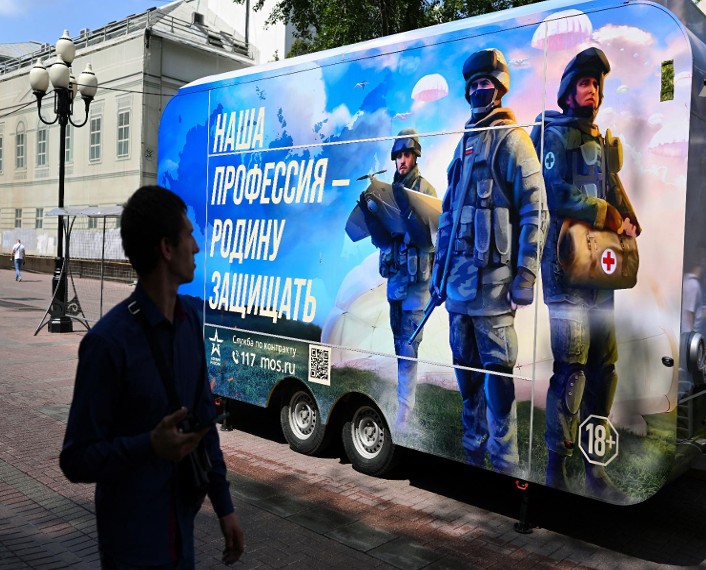 “Amnesty’s research demonstrates how Russia’s Armed Forces are bolstering their ranks with economically vulnerable foreign nationals and using them as cannon fodder in the war of aggression against Ukraine. The level of exploitation and coercion involved led us to conclude that in many cases this amounts to human trafficking, as defined under the UN’s Palermo Protocol,” Ms Callamard said.
“Building on pre-existing exploitative migration pathways and abusive practices towards migrants and refugees in Russia, recruiters have developed a system of coercion, fraud and deception, including false promises of civilian or non-combat employment, to enlist foreigners in the military.
“Once victims sign the paperwork, often in a language they do not understand, military commanders restrict their movements, deploy them to the front lines with minimal preparation, and threaten those who seek a way out,” she said.
The research is based on interviews with individuals from Brazil, Colombia, Cuba, Egypt, Sierra Leone, Sri Lanka, Somalia and South Africa conducted at two Ukrainian prisoner of war camps between 2024 and 2026; and also, conversations with foreign nationals currently serving with Russian forces and members of their families as well as lawyers, human rights activists and journalists.
“Among their primary tools to recruit foreign nationals, the Russian authorities have weaponised the irregular immigration status of those who overstay work-related visas and the precarious situation of foreigners accused of criminal offences, presenting enlistment as a favourable alternative to detention and deportation,” the report says.
Obscuring or misrepresenting the risks involved and the specific nature of the work on offer has become key to the Russian Army’s recruitment of migrants. The prospect of military service is typically presented as a non-combat support function, such as working in a military kitchen or as a driver far from the front line.
The report includes interviews with two Sri Lankan men recruited after overstaying their work visas.
The men told the researchers they were led to believe they would be working as cooks but were sent to fight on the front lines and captured within weeks by Ukrainian forces.
“The scale of fighting is unimaginable. You do not see Ukrainian soldiers, only drones. Drones everywhere. I would never go back there,” one said.
Local agents and misleading online job advertisements have also been used to deceive foreign nationals in their home countries.
People from Brazil, Colombia, Sierra Leone, Somalia, South Africa and Sri Lanka have been recruited from outside Russia. They told the researchers they were falsely promised civilian jobs in security, logistics, construction, IT and other sectors, often with assurances of high salaries and access to Russian citizenship. They were ultimately forced into the military on arrival.
A South African man who applied online for a driving job in Poland received instructions via an agent on WhatsApp to fly to Moscow to pick up a truck and drive it to Poland, his wife told Amnesty International.
“Upon arrival to Moscow, everything was taken from him… He was told that he would not be going to Poland and that he is becoming a soldier,” she told the researchers.
“All the interviewees alleged severe restrictions on their freedom of movement after signing military contracts. Recruits from Brazil and Sri Lanka said their passports and mobile phones were taken from them during training or prior to front line deployment,” the report said.
“Others said they could not leave the facilities they were taken to after signing the paperwork, with all transportation conducted in a secretive and strictly controlled manner,” it said.
“Pedro, a Brazilian IT professional recruited after signing what he thought was a contract for a well-paid tech job in Russia, said he asked his commander to leave but was told: ‘If you try to escape, you will either go to jail or we will kill you’,” the report details.
The report said a lack of military experience appeared to be no barrier to recruitment, with most enlistees deployed to active combat zones after just two weeks of training.
“Many reported insufficient preparation, lack of equipment, and limited communication with commanders due to language barriers. This suggests that recruitment of foreign nationals is driven by a desire to increase the sheer numbers of Russia’s front-line forces, with little or no concern for combat readiness and an apparent disregard for human life,” it said.
“The patterns documented in this research raise serious concerns over Russia’s violations of its international law obligations, including apparent involvement in human trafficking, failure to criminalize and combat human trafficking; conduct prompt and effective investigations of all reported crimes and serious human rights violations and abuses; identify and protect victims and survivors; and bring to account anyone suspected of being responsible or complicit in such practices.”
Amnesty International has called on Russia to immediately end all abusive practices involving the military recruitment of foreign nationals and their treatment in training centres and at the front line.
The agency called for an end to recruitment through coercion, deception and misinformation; the exploitation of economic, legal or other vulnerabilities of foreign nationals in Russia and individuals from economically disadvantaged communities in the rest of the world.
Read the full report: Russia: Trafficking of Foreign Nationals to Fight in Ukraine – Amnesty International