


 Loading tweets...


Statelessness on the rise – UN reports
The UN refugee agency UNHCR is calling on nations to grant citizenship to stateless people as the issue of statelessness rises, especially in the Asia-Pacific region.
A new briefing paper from UNHCR says there are now 2.62 million stateless people in the Asia-Pacific region, amounting to 58 per cent of the global total.
There are 1.53 million people who are refugees, asylum-seekers, or internally displaced persons and 1.09 million stateless people who are displaced. About 70 per cent are Rohingya.
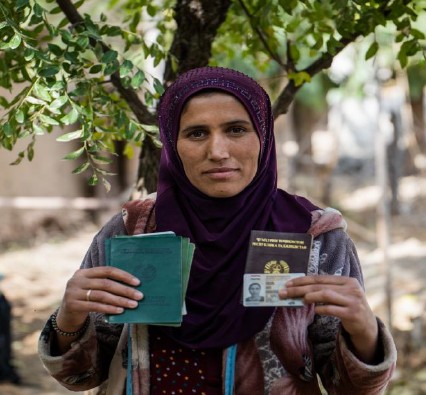 The paper, titled ‘Ending Statelessness in Asia and the Pacific: Achievements and Opportunities’, says the Asia-Pacific hosts the majority of the world’s stateless population.
“Across the region, statelessness disproportionately affects women and children, with the lack of nationality heightening exposure to risks such as child labour, child marriage, and gender-based violence,” the paper says.
Gaps in nationality laws and historical factors are among the main causes of statelessness in the region, it says.
Following the breakup of the Soviet Union in 1991, hundreds of thousands were left stateless across Central Asia, as many people did not obtain the nationality of newly established successor States.
Across the wider region, many nationality laws restrict parents from passing on citizenship to their children – particularly those born abroad – and in four countries, women are still denied this right on an equal basis with men.
“Significant gaps also persist in birth registration, leaving children without proof of their identity or entitlement to citizenship. In some countries, non-citizen children are legally ineligible for birth registration,” the paper says.
“In others, universal birth registration laws exist but are hindered by practical barriers such as the remoteness of civil registration services, costs, or difficulties registering out-of-hospital births.
“Among refugees, the absence of lawful residency status can discourage families from registering births or other vital events, particularly if they fear detention or deportation,” the paper says.
Advocates say statelessness affects every stage of a person’s life. Infants without birth certificates can be denied vaccinations, children may be turned away from schools, and young people are often excluded from formal employment.
Adults can struggle to secure stable housing, and many stateless people cannot legally marry.
“If left unresolved, statelessness exposes people and families to lifelong vulnerability, undermining social cohesion and economic development,” the paper says.
UNHCR says statelessness is solvable.
“Countries across the Asia and the Pacific are demonstrating that it can be eradicated with political will and concrete action. As only States have the authority to grant or confirm nationality, they have an indispensable role to play in solving this problem,” the paper says.
Key steps include the better identification and documentation of stateless people through inclusive Civil Registration and Vital Statistics (CRVS) systems and national census exercises such as mobile outreach to reach isolated communities.
“We welcome opportunities to work with governments to resolve existing cases, prevent new generations from being left without a nationality, and include stateless people in national systems and development plans. Ending statelessness unlocks opportunities, restores dignity, and gives people the chance to fully belong,” the UNHCR said in a statement accompanying the paper.
The paper tells the story of Adolat Shabozova, who says that in the first 34 years of her life, she cannot recall a single day when she was at peace.
“I was always in constant stress. I was worried about where to go and whom to approach,” Adolat said.
Born in 1988 to a poor family in the dusty, mountainous city of Kulob, in southern Tajikistan, Adolat was never registered at birth because her parents could not afford the fees for official identity documents.
She grew up undocumented and stateless, and when her own children were born, they too were stateless.
Without nationality, Adolat struggled to complete her education, find work or move freely, living in constant anxiety about her children’s future. Despite the challenges, she managed to finish primary school, marry and have three children. When her husband was diagnosed with tuberculosis, she became the family’s sole breadwinner.
“It was very hard for me to get employed,” she said. “I went door-to-door, looking for opportunities,” Adolat said.
Without legal identity, formal work was impossible, and she eventually found casual work washing dishes at weddings.
“Wherever you go, you are asked for documentation,” she said. “You feel empty from the inside,” she said.
After years of false starts, Adolat was referred to Chashma, a UNHCR partner organisation providing free legal support to vulnerable groups, including stateless people.
With Chashma’s help, she navigated the complex application process and in 2022 received her Tajikistan passport, ending decades of uncertainty.
“Now that I have documents, I can achieve anything,” she said. “Both for my children and myself. I am happy,” Adolat said.
Read the full paper here: https://data.unhcr.org/en/documents/details/120471