






 Loading tweets...


UK migration figures plummet
Migration to the UK dropped by 171,000 people last year, half the number seen in 2024 and the lowest level since 2012, according to new data from the UK’s Home Office.
The figures come after recent polarised debate in the UK over migration and Prime Minister Sir Keir Starmer has said there was still “more to do”.
But experts say the decline in migration may have a negative impact on the UK economy.
The data also reveals that 93,525 people claimed asylum in the UK in the year to March 2026 – down 12 per cent on the year prior, but still more than double that seen just before the pandemic.
UK Home Secretary Shabana Mahmood said the statistics showed the government was “restoring order and control to our borders”, while the opposition’s migration spokesman Chris Philp argued that Labour needed to “go further”.
The Office for National Statistics (ONS) said net migration continued to fall to levels last seen in early 2021 – when a new immigration system was introduced and Covid travel restrictions were in place.
The ONS said the recent decrease is driven by fewer people arriving from outside the EU, particularly for work.
 The Home Office posted a statement on social media saying: “We are ending Britain’s reliance on overseas labour, ensuring migrants contribute more than they take and are increasing the removal of illegal migrants and foreign criminals.”
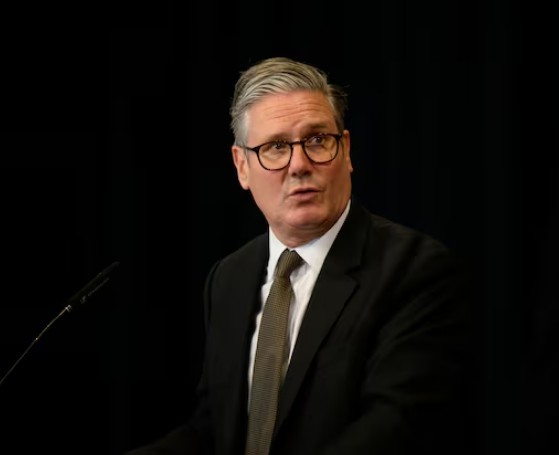
Prime Minister Starmer said the data showed that his government was “delivering”, and that “I know there’s more to do, we’re introducing a skills-based migration system that rewards contribution and ends our reliance on cheap overseas workers.”
Observers say policy changes from early 2024 under the former Conservative government are likely to have made an impact on the net migration figures.
The Labour government has retained the measures, and in some cases, have expanded on them.
They include most overseas students being restricted from bringing family members to the UK and care workers being restricted from bringing dependents with them.
After Brexit, there was a large increase in immigration. Conservative ministers relaxed salary thresholds and some other routes for health and social care workers to plug shortages in the workforce.
The current Labour government has recently announced further plans to reduce net migration even further, including migrants being required to speak English to A-level standard.
It has also announced another increase in the income threshold for a skilled worker visa to £41,700 ($A85,000).
Oxford University’s Migration Observatory said the latest data represented a decline of 82 per cent since the early 2023 peak and that the trend may have a negative effect on the UK’s economy.
“New estimates released today show that the total foreign-born population increased by 2.4 million since the last census and now makes up 19 per cent of the population (up from 16 per cent),” the Observatory said.
The decline in immigration since 2023 results primarily from lower non-EU migration for work (down 69 per cent since 2023) and family members of international students (down 87 per cent). Restrictions on both routes came in under the previous government. The current government added further restrictions, most notably to work visas and the partners and children of refugees, the Observatory said.
Observatory researcher Dr Ben Brindle said: “The sharp increase in net migration after the pandemic has pushed the foreign-born to its highest ever share of the UK population.
“Migration is down now, but the economic impacts depend more on who is – or is no longer – migrating than how many. Today’s data illustrate a challenge the government faces, namely that the categories of migration it would most like to reduce are the ones least amenable to policy.
“As a result, migration of groups that make positive or broadly neutral economic impacts – such as skilled workers and partners of students is down, while asylum-related migration remains high.
“Since refugees have lower employment rates and often need a lot of support from the state, this means that the composition of recent migration has probably become less favourable from an economic perspective.”
“Net migration may well have further to fall because visa grants have continued to decline since 2025. All of this said, the downward trend is likely to be temporary. That’s because lower immigration will eventually feed through into lower emigration,” Dr Brindle said.