 Loading tweets...


Vietnamese Museum opens in Sunshine
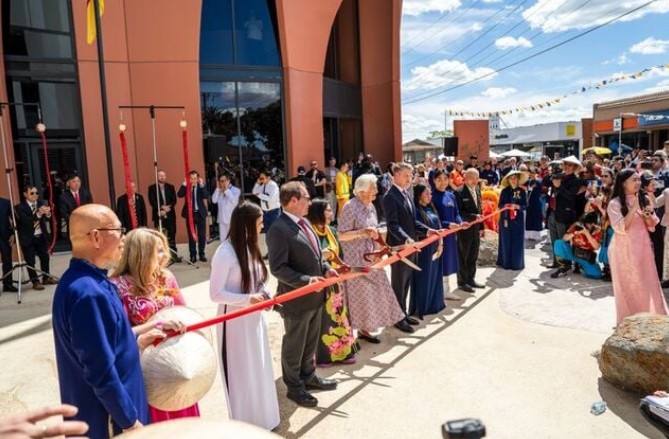
The Vietnamese Museum Australia (VMA) was officially unveiled at a ceremony in Sunshine, in Melbourne’s west this month.
Museum chief executive Tammy Nguyen was joined by Premier Ben Carroll, Fraser MP Daniel Mulino and Brimbank mayor Virginia Tachos for the event.
“Brimbank is proudly home to one of Australia’s largest Vietnamese communities, with people of Vietnamese heritage making up around 17 per cent of our population,” Cr Tachos said.
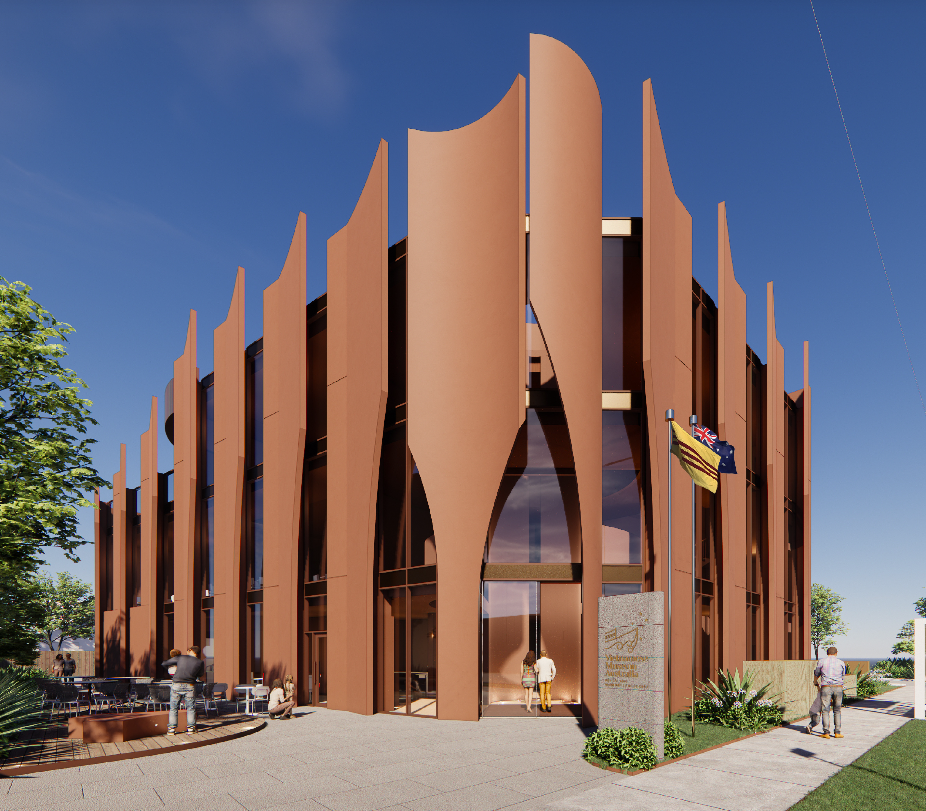 The VMA was jointly funded through $9.7 million from the federal government, through its Investing in Our Communities Program and $8.6 million from the state government along with community fundraising.
“There are more than 350,000 people of Vietnamese-origin living in Australia and everyone has their own unique story to tell,” Ms Nguyen said.
“This museum is a living monument to all those who courageously left their homeland behind – often as refugees on overcrowded and unseaworthy boats – seeking freedom and a better future,” she said.
Alongside the museum, the Wominjeka Plaza was also officially opened, a welcoming public space for everyone to enjoy, that honours the Traditional Owners and celebrates all refugee and multicultural communities in Brimbank.
The plaza serves as a forecourt to the museum, and a connection between RT Pollard Gardens and Durham Road, Sunshine.
The three-storey building is of architectural significance, as well as housing stories and artefacts integral to the Vietnamese community and their contribution to Australia.
The museum’s ground floor consists of a “lobby, social services, resource centre and café, there is a multi-purpose events space on the second floor, and the third floor includes a permanent and temporary exhibition space.
There is also a ‘Memorial Garden’ to commemorate those who “paid the ultimate sacrifice defending freedom for South Vietnam”.
The museum will also highlight the contributions of the Vietnamese community and emphasises the resilience of the people, who left Vietnam to escape communist oppression.
About 1.4 million Vietnamese refugees escaped their country after the fall of Saigon (now Ho Chi Minh City), as well as because of the aftermath of the Vietnam War.
Vietnamese refugees not only turned to Australia to find a home and build a new life, but also to countries such as Malaysia, Hong Kong, Thailand, Indonesia and the Philippines.
In addition, Vietnamese people who tried to escape had to face many misfortunes such as “violent storms, brutal pirates, hunger and dehydration,” as they travelled by boat, the museum website said.
The number of Vietnamese refugees’ lives lost adds up to 400,000 to 600,000, it says.
The website says that between 1975 and 1995, during the term of the Fraser government, Australia welcomed “more than 110,000 Vietnamese refugees”.
Victorian MP Trung Luu, a Vietnamese refugee himself, says that the Vietnamese museum had “been in the talks for 10 years”.
“It’s about showcasing the strength of the people who sacrificed themselves; whether it was in Vietnam or trying to escape, hundreds of thousands died at sea,” he said.
The museum aims to pass information about the Vietnamese community, much like other cultural museums in Melbourne, like the existing Italian, Hellenic, Jewish and Islamic museums.
Mr Luu said the museum will add to the diversity of the city.
“Information is key. You shouldn’t waive the bad things in history, you should have it there, so people understand. If you don’t learn from your mistake, you’ll repeat it,” he said.
“If you try to erase a part of history, the next generation will never know what happened,” Mr Luu said.