


 Loading tweets...


75 years of refugee protection marked
This year marks the 75th anniversary of the 1951 Convention relating to the Status of Refugees – the cornerstone of the international refugee protection regime.
For 75 years, the convention has helped save lives, protect rights and provide a framework through which millions of refugees have found safety, rebuilt their lives and contributed to the communities that welcomed them, according to the UN refugee agency UNHCR.
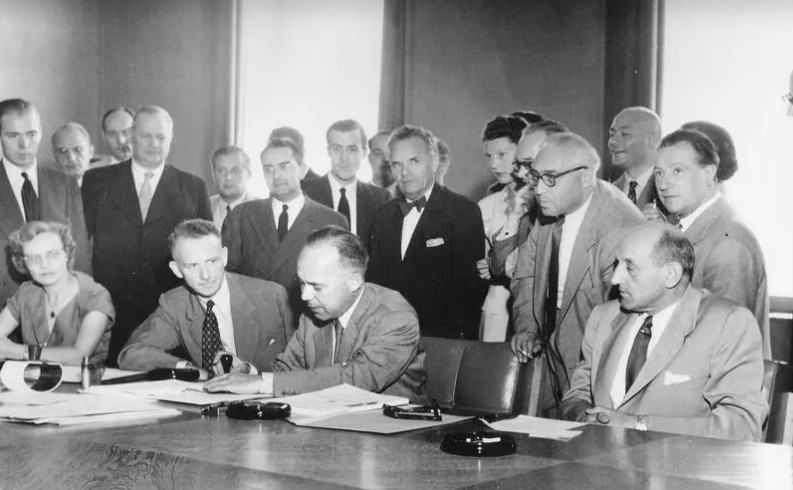 Established in 1950 to assist post-WWII European refugees with a temporary, three-year mandate, UNHCR has evolved into a permanent global organisation assisting over 120 million displaced and stateless people.
“This anniversary is a moment not only to look back, but to look forward – and to strengthen the shared commitment, action and solidarity with and for refugees to uphold protection and expand solutions in the years ahead,” UNHCR said in a statement.
And, as way of achieving this, UNHCR is engaging in a series of dialogues.
“Throughout 2026, a series of national, regional and global dialogues will ask a fundamental question: how can the international protection system respond more effectively to the realities of displacement today?” UNHCR said.
“At a time of record displacement, shrinking protection space and mounting pressure on asylum systems, the 1951 Convention remains the most practical and comprehensive framework for refugee protection – but its promise is too often experienced as fragmented,” the agency said.
“Refugees find safety without legal certainty, recognition without effective access to rights, inclusion without a credible path forward.
“These dialogues are designed to address that fragmentation – across the full continuum of protection, from access to asylum through to durable solutions.
“The dialogues are a shared process, not a single institutional exercise. They are designed to be co-owned at local and regional levels by the widest possible range of actors: States, refugees and stateless people, municipalities and local authorities, faith leaders and organisations, civil society and women’s organisations, refugee-led organizations, NGOs and INGOs, UN partners, development actors, academia and the private sector,” UNHCR said.
The agency said the dialogues will build organically on existing events and platforms at local, national and regional levels.
“They are not starting from scratch – they are connecting, deepening and giving direction to conversations already under way,” UNHCR said.
It said the discussions would be structured around ten actions that identify the core areas where stronger political commitment and practical cooperation are needed:
- Strengthening adherence and commitment to the international refugee protection framework
- Strengthening fair, efficient and credible asylum systems
- Addressing mixed and onward movements of refugees through route-based approaches and lawful policy responses
- Addressing security challenges in compliance with international protection standards
- Strengthening partnerships for protection with States and affected populations
- Expanding refugee access to labour, education, sponsorship and family reunification pathways, while preserving resettlement
- Strengthening inclusive national systems for refugees and fostering refugee self-reliance to advance durable solutions pathways
- Stepping up predictable and principled support for voluntary repatriation and
- Pursuing the full potential of local integration
- Promoting the meaningful participation of displaced and stateless people
Over the 75 years of the refugee convention’s existence, there have been some significant highlights and achievements.
When UNHCR was established, it was initially given a temporary three-year mandate to help resettle approximately 1.2 million Europeans still displaced after World War II, then conclude its operations.
But states quickly realised a three-year mandate was unrealistic, with crises forcing people to flee in other countries and for many years at times and at a larger scale.
The 1956 Hungarian Revolution marked one of UNHCR’s first major operations after World War II, when Soviet forces crushed the uprising and approximately 200,000 Hungarians fled to Austria and Yugoslavia.
This crisis demonstrated that forced displacement wasn’t just a post-war phenomenon: it was a worldwide challenge requiring a permanent solution.
After renewing its mandate every three years, it was finally made permanent in 1967 without time or geographical limitations.
Seventy-five years later, UNHCR continues its work in over 130 countries.
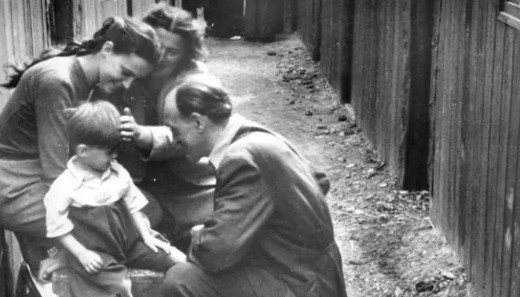
UNHCR is one of the few organisations to win the Nobel Peace Prize twice, recognising its lasting humanitarian impact.
The first award came in 1954 for its groundbreaking efforts supporting millions of European refugees after World War II.
The second, in 1981, recognized UNHCR’s global assistance to refugees in Asia and Africa during some of the world’s most complex humanitarian crises, including those driven by decolonization of Africa in the 1960s, people forced to flee during the war of independence in Bangladesh independence in 1971, and the large-scale displacement following the Vietnam war in the 1970s.
While “refugee” remains at the heart of its name, UNHCR’s work has expanded significantly over the decades.
As well as refugees, the organisation now also assists international borders, but also internally displaced people (IDPs) who remain within their own countries, stateless persons who lack citizenship anywhere, asylum-seekers awaiting decision on their status, and returnees trying to rebuild their lives.
See a message from UNHCR’s Barham Salih: https://www.facebook.com/UNHCR/videos/75-years-on-the-1951-refugee-convention-still-stands-strong-protection-responsib/952005487441760/