
 Loading tweets...


Afghan evacuees feel welcome and safe five years on – survey
Afghan families who arrived in Australia five years ago this month after being evacuated from Kabul as it fell to the Taliban are feeling welcome, safe, confident about their futures and part of Australian society, a new survey has found.
Among the things they value about life in Australia are security and safety, career and educational opportunities and health care. And almost 73 per cent have become citizens and 78 per cent say they now feel part of Australian society.
Their biggest challenges and issues are the rising cost of living and reuniting with family. But twenty-two per cent have, or plan, to start a business.
I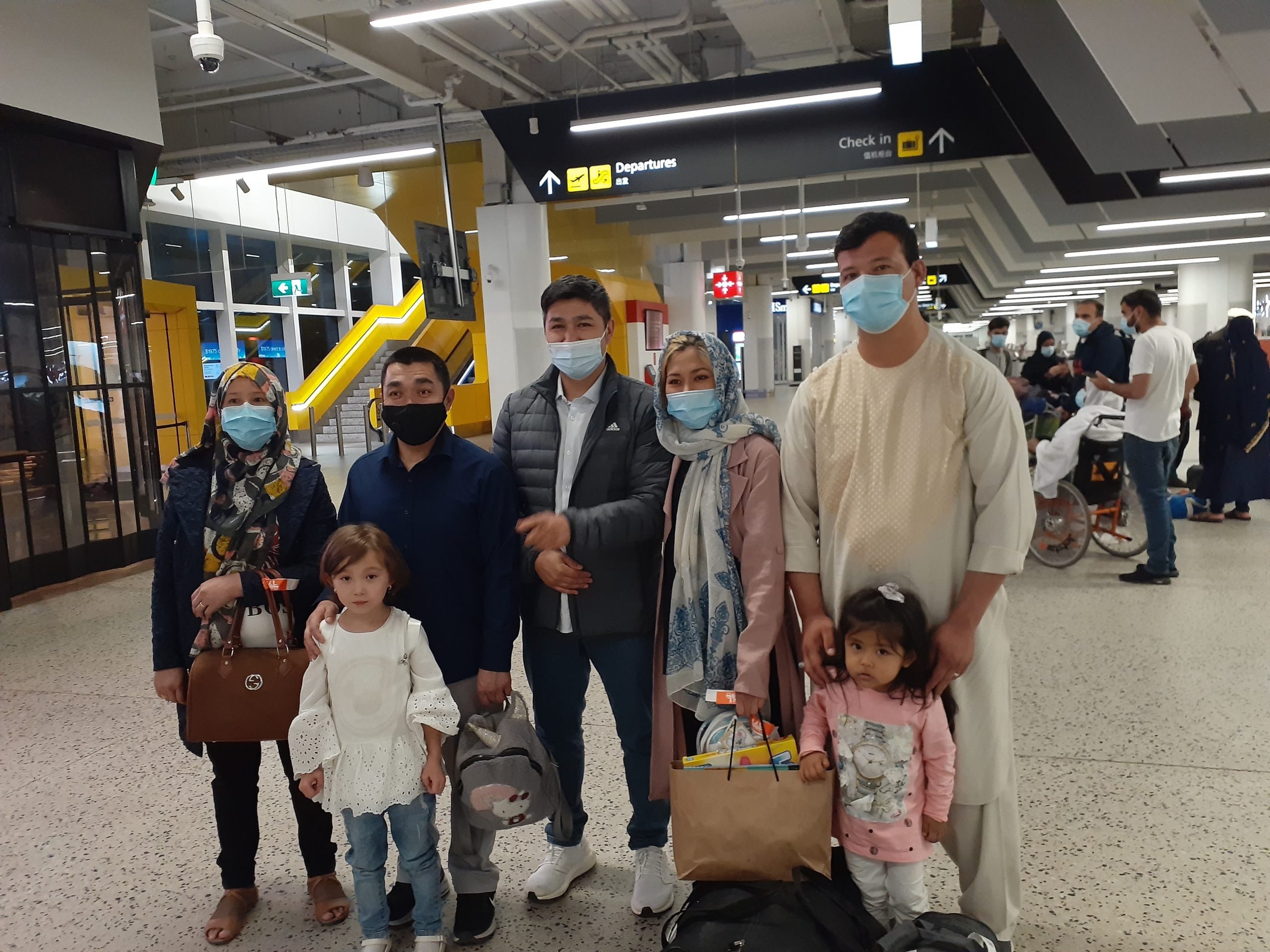 n August 2021 as the Taliban seized control of Afghanistan’s capital Kabul, thousands of ‘locally employed or engaged’ Afghans were airlifted out of the city by the Australian Government and allied countries.
Five years later, a survey commissioned by refugee and migrant settlement agency AMES Australia, has tracked how Afghan refugees in Melbourne, Sydney and Adelaide are faring in various aspects of their lives. It canvased 110 people among a cohort of 3000 who arrived in September and October 2021.
Asked whether they felt welcome in Australia, an overwhelming number (99 per cent) said they felt welcome or somewhat welcome and 78 per cent said they had ‘a strong sense of belonging’.
Ninety-five per cent said they found it easy to talk to their neighbours and 68 per cent said they felt ‘very safe’ in Australia, with another 30 per cent saying they felt ‘somewhat safe’.
Three quarters of respondents said they were ‘very optimistic’ about the future and another 20 per cent ‘somewhat optimistic’.
Eighty per cent of respondents said their children were doing ‘very well’ with another 18 per cent saying their children were doing ‘fairly well’.
Asked about their level of spoken English, 88 per cent of respondents said it was ‘good’ or ‘very good’.
The cohort was also asked about their employment outcomes. Ninety-one per cent of people eligible and looking for work had found a job. Almost 33 per cent of respondents said their jobs were commensurate with their skills and experience, 29 per cent said their jobs were ‘mostly’ commensurate and 38 per cent said their jobs were not commensurate with their skills.
Overwhelmingly, the survey found that the services and support the evacuees received were helpful (97 per cent).
The most important supports received were ‘on arrival support with accommodation and necessities’ cited by 27 per cent; ‘Centrelink benefits’, cited by 20 per cent; ‘employment services’ (18 per cent) and ‘English language lessons’ (15 per cent).
Asked about the challenges they faced, the respondents cited ‘cost of living’ (55 per cent), ‘reuniting with family’ (22 per cent) and finding fulfilling work (20 per cent).
Among the worst things cited about life in Australia were ‘being apart from family’ (62 per cent), ‘cultural differences’ (15 per cent), ‘language barrier’ (8 per cent) and ‘lack of work’ (8 per cent).
Twenty-two per cent of respondents reported being the victims of racism or discrimination.
Family reunion, getting a better job and starting a business were the main goals cited by survey respondents scoring 26 per cent, 23 per cent and 22 per cent, respectively.
More than a third of people (38 per cent) said life in Australia was as they had expected it to be, while 53 per cent said it was ‘mostly’ as expected.
Most unexpected about life in Australia among the Afghan arrivals were ‘cultural freedoms and permissiveness’ (21 per cent), ‘level of government assistance’ (20 per cent), ‘high cost of living’ (16 per cent), ‘free health care’ (17 per cent), ‘multiculturalism and diversity’ (15 per cent) and the ‘availability of work’ (10 per cent).
Eighty-one per cent of respondents were ‘very happy’ with their life in Australia and the rest were ‘somewhat happy’.
Asked what had been the most important factors in settling successfully in Australia, 32 per cent of respondents cited ‘finding a job’, 30 per cent said, ‘learning English’ and ten per cent said, ‘connecting with the broader community’.
AMES Australia CEO Melinda Collinson said the survey results showed the Afghan evacuees were grateful to be in Australia and intent on building new lives here.
“What comes through in survey is that the Afghans, many of whom were torn from their lives at short notice and in traumatic circumstances, are incredibly resilient and they are intent on rebuilding their lives and on becoming part of Australian society,” Ms Collinson said.
“We can also see that many are entrepreneurial and plan to start businesses,” she said.
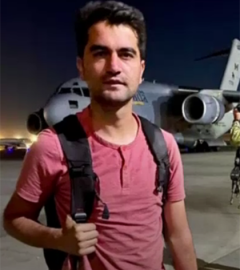
Khalid Amiri was a television presenter and journalist in Afghanistan who was able to escape Kabul on an evacuation flight.
Khalid, who recently completed a master’s degree in international relations at Melbourne University, said he felt welcome and a part of Australian society.
“The last five years, since the fall of Kabul to the Taliban and my resettlement in Australia, have been transformative. Starting a new life here has given me opportunities I could not have imagined back in Afghanistan. Completing my master’s degree in international relations at the University of Melbourne was not only a personal achievement but also a testament to the power of education and resilience,” he said.
“One of the most meaningful moments for me has been seeing my younger sister, Hussan Bano, attend school in Australia. Had she remained in Afghanistan, she would have been denied this basic right. Her education here symbolises the hope and future that every Afghan child deserves.
“In Australia, I have also been able to participate in panel discussions, share my story, and enjoy the freedom of speech – something that is silenced under the Taliban. Above all, I have devoted myself to advocating for refugees and for those left behind in Afghanistan, whose struggles remain close to my heart. The love and affection we have received in Australia since day one of our arrival till date has made us feel proud of living in a country that has given us a lot and proud to call it my new home,” Khalid said.
Hamidreza Arfany came with his mother and sisters on an evacuation flight in 2021. He is now 22 and studying pharmacy at RMIT.
Hamid says he and his family feel safe and welcome in Australia.
“My sisters are at school and my dad is working. I work, also selling rugs in Dandenong on weekends,” he said.
“We have everything we need in Dandenong. There are other members of our community living nearby, we can buy the food and other things we are familiar with – and the local council has programs that support us,” he said.
“We feel comfortable because there are many people from many places across the world. We are not different, in Dandenong being form somewhere else in normal,” Hamid said.
“We are very happy and confident about the future. I love Australia and I love that my sisters can go to school and study because in Afghanistan, they would not be able to,” Hamid said.