

 Loading tweets...


Challenges and opportunities await Iranian women footballers
Nine years ago Neda Zeyghami left Iran to begin a new life in Australia. She reflects on what awaits the six Iranian women soccer players who have been granted asylum in Australia.
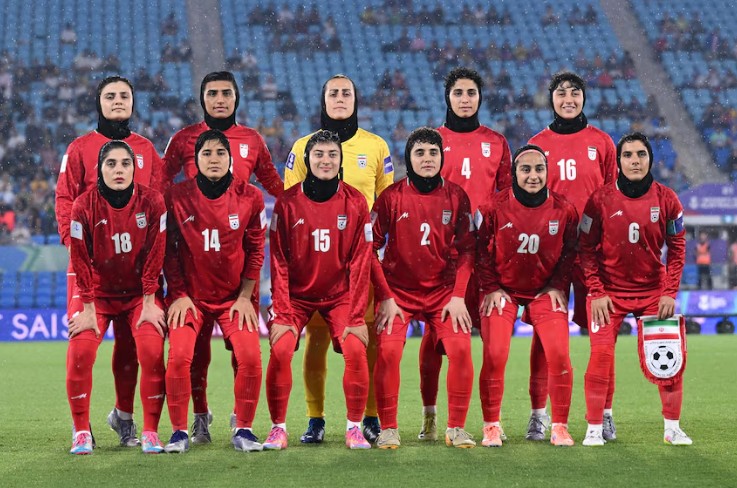 The Iranian women soccer players have chosen to start a life on the other side of the world – far from their home and their loved ones.
They have been granted temporary visas that provide a pathway to permanent residency. After four years, they will be able to apply for Australian citizenship.
More immediately they will be given the chance to choose where they live and be given access to settlement services which provide free English classes, as well as programs designed to help them gain employment and access education and training.
Undoubtedly there will be challenges ahead for them but also, importantly, there will be opportunities they could never dream of as women living in Iran under the current regime.
It will be challenging to learn English and to understand Australian culture and values. But everything takes time, and with persistence and hard work they will have the opportunity to flourish.
Nine years ago, I arrived in Australia with a 30-kilogram suitcase and a head full of uncertainty.
I carried clothes, documents, and a few small objects that felt too meaningful to leave behind. But I also carried something heavier — questions about who I would become in a new country, whether I would belong, and how much of myself I would need to change.
Melbourne slowly unfolded in front of me. Its unpredictable weather, its welcoming cafés, its easy-going people, and the quiet calm in its streets began to feel familiar. I could begin to call it home.
At first, I struggled with the Australian accent. I often missed the jokes — to be honest, I still miss most of them. Conversations moved quickly. The humour felt layered and cultural, and I was always half a second behind, trying to decode tone and meaning at the same time.
Even now, in everyday conversations, there’s a small voice in my head whispering, Did that sound awkward? Did I use the right word? If you’ve ever replayed a sentence in your mind hours later and thought, Why did I say it like that? — welcome to the club. You are not alone.
But what struck me most was something else entirely — the silence.
The absence of car horns.
It felt as if the city itself was saying: Slow down. You are not in danger. You are not behind. You are allowed to move at a human pace.
I had come from a place where the sound of car horns was almost the pulse of the city. Noise meant movement. Urgency meant importance. A silent street would have felt incomplete, almost suspicious. Honking was not just sound — it was pressure. It was competition. It was the constant reminder to hurry.
Yet here, that familiar soundtrack was missing. Cars waited. Drivers paused. No one leaned on the horn because someone hesitated for a second. There was patience in the traffic — and patience in the people.
And that patience carried a message.
It said you can learn without panic. You can make mistakes without being attacked. You can grow without being rushed.
It said that calm is not weakness. It is strength.
In that quiet, I began to understand something deeper: a society can shape not only how you behave, but how you breathe. When the environment is less aggressive, you do not need to defend yourself constantly. When there is less rush, you discover a steadier version of yourself.
The silence was not empty. It was supportive. It allowed me to meet a calmer version of who I could be.
I remember arriving ten minutes late to an important meeting. I rushed in, apologising repeatedly, still catching my breath. The woman I was meeting smiled gently and said, “In Melbourne, nothing is ever so late that it’s worth suffering for.”
That sentence stayed with me.
For someone who had grown up always running — always trying not to fall behind — those words felt revolutionary. They felt like permission. Permission to breathe. Permission to exist without constant urgency.
Over time, I realised that migration is not only about crossing borders. It is also about adjusting our internal pace.
I learned to drive with less fear and anxiety. I completed my studies with more calm, even while writing and speaking in a language I was still learning to command confidently. I slowly stopped measuring myself against invisible standards of perfection.
Time passed, and I began to understand that settlement is not only about employment, housing, or paperwork. It is also about unlearning urgency.
We all migrate with two suitcases.
One is physical. It carries clothes, documents, photographs, small objects that hold memory and comfort.
The other is mental.
We pack it long before we board the plane — through childhood, family systems, political realities, education, social norms, and survival strategies. It holds beliefs about authority, gender, success, conflict, safety, and self-worth. It carries fears we learned early, assumptions we never questioned, and habits shaped by environments that demanded resilience.
Many of those beliefs made sense where we came from. They helped us navigate instability. They helped us survive. They were not weaknesses — they were adaptations.
But survival strategies are not always the same as healthy community values.
Sometimes when we open our mental suitcase, we find something small and almost forgotten — like a single old sock. Faded. Slightly torn. No longer part of a pair.
We keep it not because it is useful, but because it has travelled with us. It survived with us. It feels familiar.
But a single worn sock cannot keep us warm. It only takes up space.
No one should be judged for having that sock in their suitcase. Many of us packed in a hurry. We packed while leaving instability, pressure, or fear behind. We did not always have the luxury of stopping to sort through what we were carrying.
The old sock is not shameful. It is understandable.
But in a place of peace, we finally have the time to ask: does this still serve me?
If we carry every belief forward without examining it, we risk recreating the very environment we once chose to leave.
This country offers something powerful: safety, stability, and space.
And safety creates responsibility.
When a country opens its doors to us — offering protection, fairness, education, and opportunity — respect becomes more than gratitude. It becomes participation. It becomes a willingness to grow within the values that shape this society.
Some behaviours we once considered normal may not serve us — or our new communities — here. The urgency. The mistrust. The rigid assumptions. The habits we never had time to question.
In a context of security, we now have the opportunity to look inside our mental suitcase and ask: what still belongs? What no longer does?
Becoming part of a new society does not mean erasing who we are or abandoning our roots. It means having the courage to examine them honestly. It means choosing growth over habit.
Migration is an act of courage. Fitting your life into a 30-kilogram suitcase requires strength.
But opening the mental suitcase — and deciding who you no longer need to be — requires even greater courage.
Settlement is not only about building a home in a new country.
It is about building a steadier, more conscious home within yourself.
And perhaps that is how we truly belong — not by carrying everything unchanged, but by having the humility to unpack.
I wish the Iranian soccer players all the best as they begin their settlement journeys in Australia because the greatest victory waiting for them in this country will not be scored on a football field, but in the freedom to live, grow, and become fully themselves.