
 Loading tweets...


Convergence of cultural events a signpost for cohesion – Opinion
Melinda Collinson, CEO AMES Australia | Opinion
This week marks the beginning of the Lunar New Year, Ramadan and Lent. The three cultural and faith events are governed by different lunar calendars, and it’s very rare for them to coincide.
As much of the world celebrates these major cultural and religious events, it’s a reminder that there are more things that unite us than divide us. The convergence is also emblematic of our shared humanity.
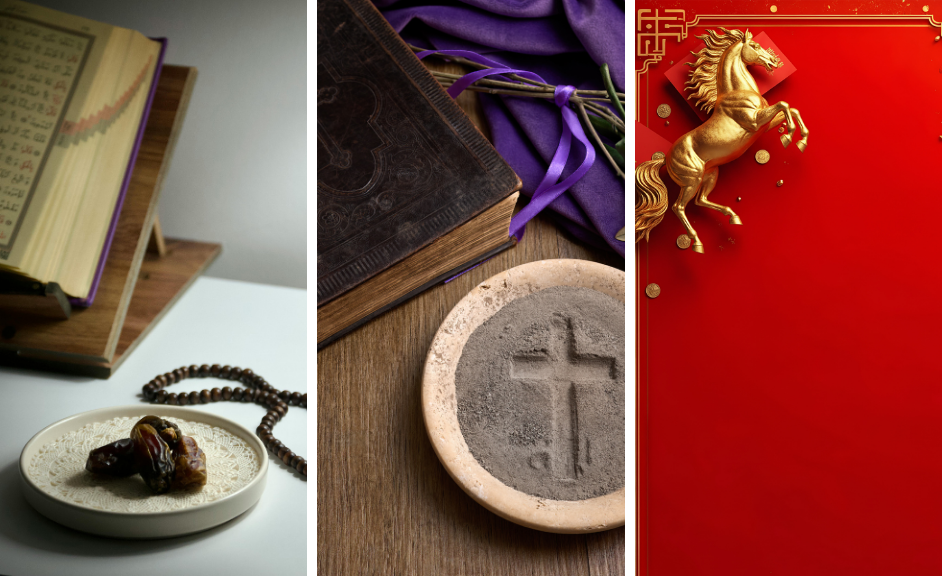 The three pillars of Lent are prayer, fasting and charity. Originally, one of the reasons to give up physical things like food was to save money to be able to give it to the poor.
Prayer, charity and fasting are also central to Ramadan and the Lunar New Year sees families donate cash to the needy.
Lent is the 40-day season in most Christian churches that leads up to Jesus’ death on Good Friday and resurrection at Easter.
The 40 days alludes to a period that Jesus fasted in the wilderness after his baptism, in preparation for his public ministry. For many Christians, the period is a season of reflection, self-denial and charity.
Ramadan begins this week with observant Muslims fasting during daylight hours.
Moderation and empathy are learned through fasting as well as conscientiousness that observers are fasting by choice, and that there are many people in the world who are fasting because they have no choice.
A feature of Ramadan is the Iftar dinners which break the fast after sunset and in Australia, welcome people from all faiths and communities.
Lunar New Year also begins this week. Sometimes referred to as the Chinese New Year, it’s a holiday throughout much of Asia. In China, it’s a weeks-long period in which many city workers return to the towns of their birth.
Across Australia Lunar New Year festivals are held and welcome people from all faiths and communities.
Other celebration rituals include hanging lucky scroll messages, eating long noodles and dumplings with symbolic meanings, and exchanging gifts.
The recent National Response to Islamophobia report by Aftab Malik calls for more education on ‘Muslim contributions to Australia, Western civilisation and the development of universal values’ and programs designed to better understand the links and commonalities between Judaism, Christianity and Islam.
It’s worth reiterating that Christianity, Islam, and Judaism are linked by shared traditions and a focus on charitable work.
The three share key traditions including similar stories of human creation, judgment, and life after death.
These traditions were on show at the recent Mosque Open Day, run by the Islamic Council of Victoria.
The day has become a feature of Victoria’s multifaith and multicultural calendar. It fosters dialogue, mutual respect, and cultural understanding reflecting the rich mosaic of our nation.
Similarly, many synagogues across the country welcome visitors of other faiths as individuals or groups and often host open days.
And the nation’s Christian cathedrals are open daily to visitors. They are also venues for community music concerts, talks and markets. In fact, Melbourne’s St Paul’s Cathedral is hosting a Lunar New Year market for its Asian parishioners and everyone else.
Most Australians have a favourite Chinese restaurant and Chinese neighbourhoods, such as the Chinatowns in most capital cities, enrich our cultural fabric – especially during Lunar New Year celebrations.
That Australia is a multicultural and multifaith nation is one of our strengths.
Just like the conjunction of three cultural celebrations, Australia is an experiment in cultural convergence; a nation that has welcomed people from different cultures while fostering exchanges of ideas.
Australia is the most successful multicultural nation in the world with a third of us born overseas and half of us with at least one parent born overseas.
But as divisive debates around migration reemerge, it has never been more important to show solidarity with our diverse communities and to bolster the high levels of social cohesion we enjoy in Australia.