


 Loading tweets...


Diversity celebrated on ANZAC Day
Cultural diversity is increasingly becoming a feature of Anzac Day commemorations.
The Karen refugee community at Nhill, in Victoria’s north-east, have been integral to the town’s Anzac Day commemoration for more thana decade.
Community Leader John Millington said members of the local Karen community helped to set up arrangements for the dawn service and annual gunfire breakfast.
“Our Karen community members are very committed to our Anzac Day activities. Theys ee it as way of contributing to the community that has welcomed them,” John said.
“They help set up for the dawn service and they helped to prepare breakfast for everyone,” he said.
“We had about 200 people attend the dawn service and about 500 at the later events,” Mr Millington said.
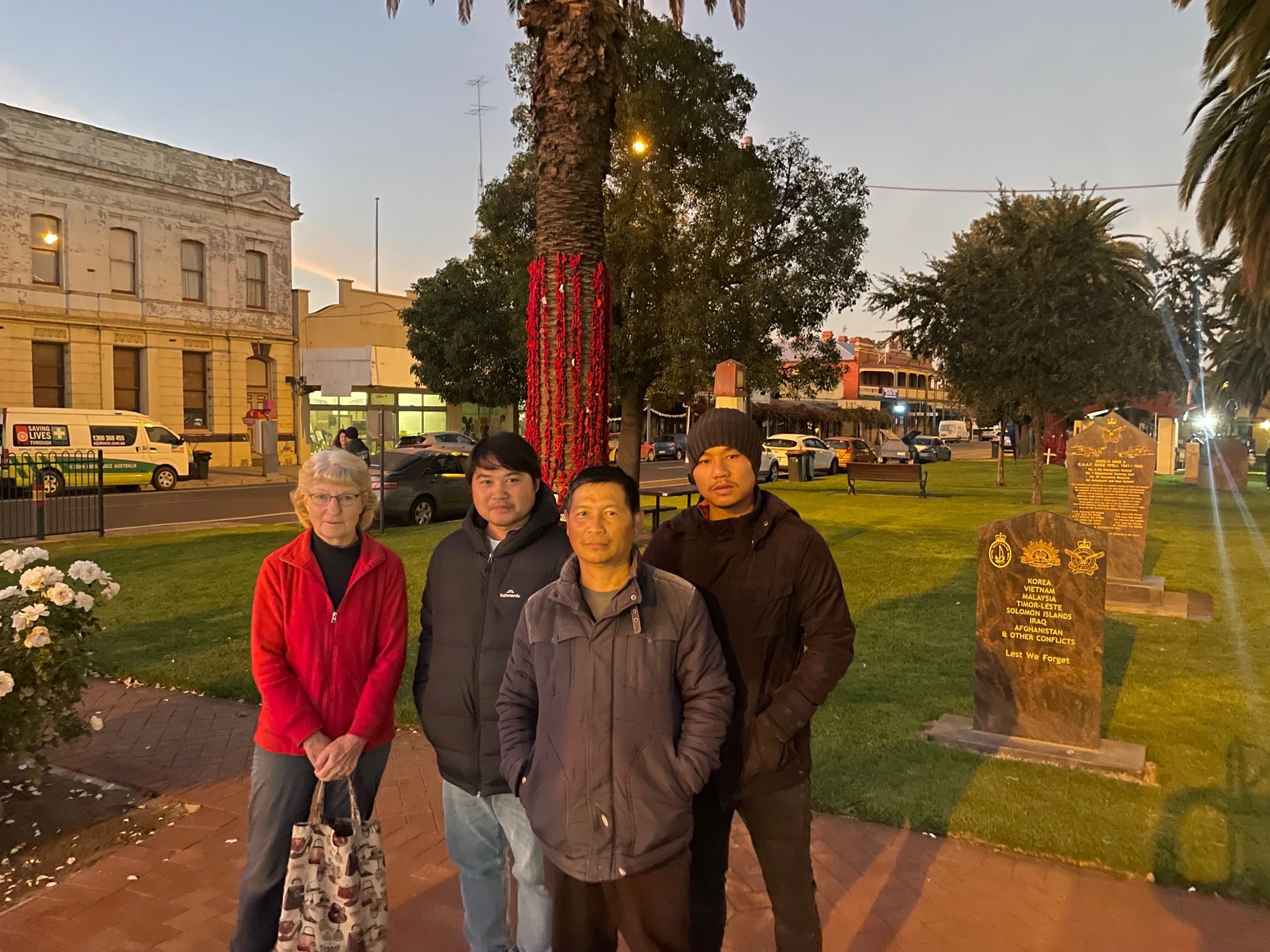 “It was wonderful to see all of our community, including the Karen, well represented. When we began the service and breakfast twenty years ago, we had about eight or ten people come along,” he said.
During WWII, the Karen people in Burma were loyal allies to the British, fighting against the Japanese occupation and the Burma Independence Army.
Many served as guerrillas in Force 136, protecting British officers, supplying intelligence, and inflicting heavy casualties on Japanese forces. This allegiance led to brutal reprisals by the Japanese.
In Melbourne this ANZAC Day, contingents from the Turkish, Hellenic and Vietnamese sub-branches of the RSL participated in the ANZAC Day march, as they have done for many years.
With more than half of Australia’s population now either born overseas or having at least one parent born overseas, there have been various other attempts to make ANZAC Day more inclusive of a culturally diverse community.
The day has become a time where the nation pays tribute to veterans from different wars and from culturally diverse backgrounds, with descendants of veterans from other wars marching in ANZAC parades around the country.
What they do share however is a recognition of the harsh realities of war, no matter where you and your ancestors come from.
For some in Australia’s Chinese community a traditional day in April each year called Qingmingjie, which means ‘clear and bright’ also serves to commemorates ancestors who served at war.
Chinese migrant Vivian Jiang said the day is spent visiting ancestral graves, preparing food and flowers to place in front of their gravestones and burning paper made to resemble money as an offering to the dead.
“ANZAC Day to me is very similar with the Qingmingjie,” Vivian said,
“I think it’s a great tradition and helps to educate people on the past and the cruelty war can bring,” she said.
“I buy a red flower from people on the street to show my respect and support,” she said.
Descendants of Chinese veterans who fought in World War II against the Japanese marched in Melbourne for the first time in 2016.
This year, the service of Sikh solders is also being recognised.
University of NSW historian Peter Stanley said it was understood about 20 Australians of Indian heritage served with the Anzacs in WWI, although none were on Gallipoli.
“There were about 15,000 Indians (serving with the Indian army) on Gallipoli. But no Australian Indians because they weren’t allowed to enlist at that point,” Prof S Stanley said.
He said technically it was impossible for Indians to serve in the Australian Imperial Force in the Great War, because the 1903 Defence Act explicitly forbade people of non-European background.
But the need for volunteers rose as the war went on and casualties mounted, allowing officers to enlist about a thousand Indigenous soldiers as well as Muslims, Sikhs and Hindus, Prof Stanley said.
“Certainly, there are eight men named Singh, which is the Sikh name recorded,” he said.
Melbourne Sikh community member Nehchal Singh has told how he discovered his great grandfather’s link to the Anzacs.
“I remember playing with old war medals at my grandmother’s house in India,” he said.
“But it was not until I moved to Melbourne decades later that I found out about their origin.
“It was unbelievable, I had goosebumps when I first found out,” Nehchal said.
The medals were awarded to his great-grandfather, Private Desanda Singh, for his service with the Australian Imperial Force during World War I.
“There was a whole large contingent of Indian soldiers who worked alongside the British troops, but they were part of the Indian contingent,” he said.
“But my great-grandfather was an ANZAC, so he was part of the Australian force.”
Private Singh joined the 3rd Light Horse Regiment towards the end of the war, when rules prohibiting Australians “not substantially of European background” from enlisting were being relaxed.
He was old for a soldier, aged 38, and working as a trader with a horse and cart in the South Australian town of Ceduna.
Sikh soldiers are now a common sight in the Australian military. They range from army reservists to senior officers.
Major Amrinder Singh Ghuman joined the army after leaving high school in 2010.
“We’re a minority community, but the thread of our narrative is etched into the fabric of this nation since World War I,” Major Singh said.
“Sikhism is my internal driver … it’s the battery from which I derive a lot of my power.”
Major Singh joined the army after leaving high school in 2010.
“We’re a minority community, but the thread of our narrative is etched into the fabric of this nation since World War I,” Major Singh said.
“Sikhism is my internal driver … it’s the battery from which I derive a lot of my power.”