 Loading tweets...


Finding the sweet spot – how a refugee rebuilt his life
Aghan refugee Hafiz Kamali has overcome being targeted by the Taliban, having little English language and almost no knowledge of commercial practice in Australia to start a business and rebuild his life in Australia.
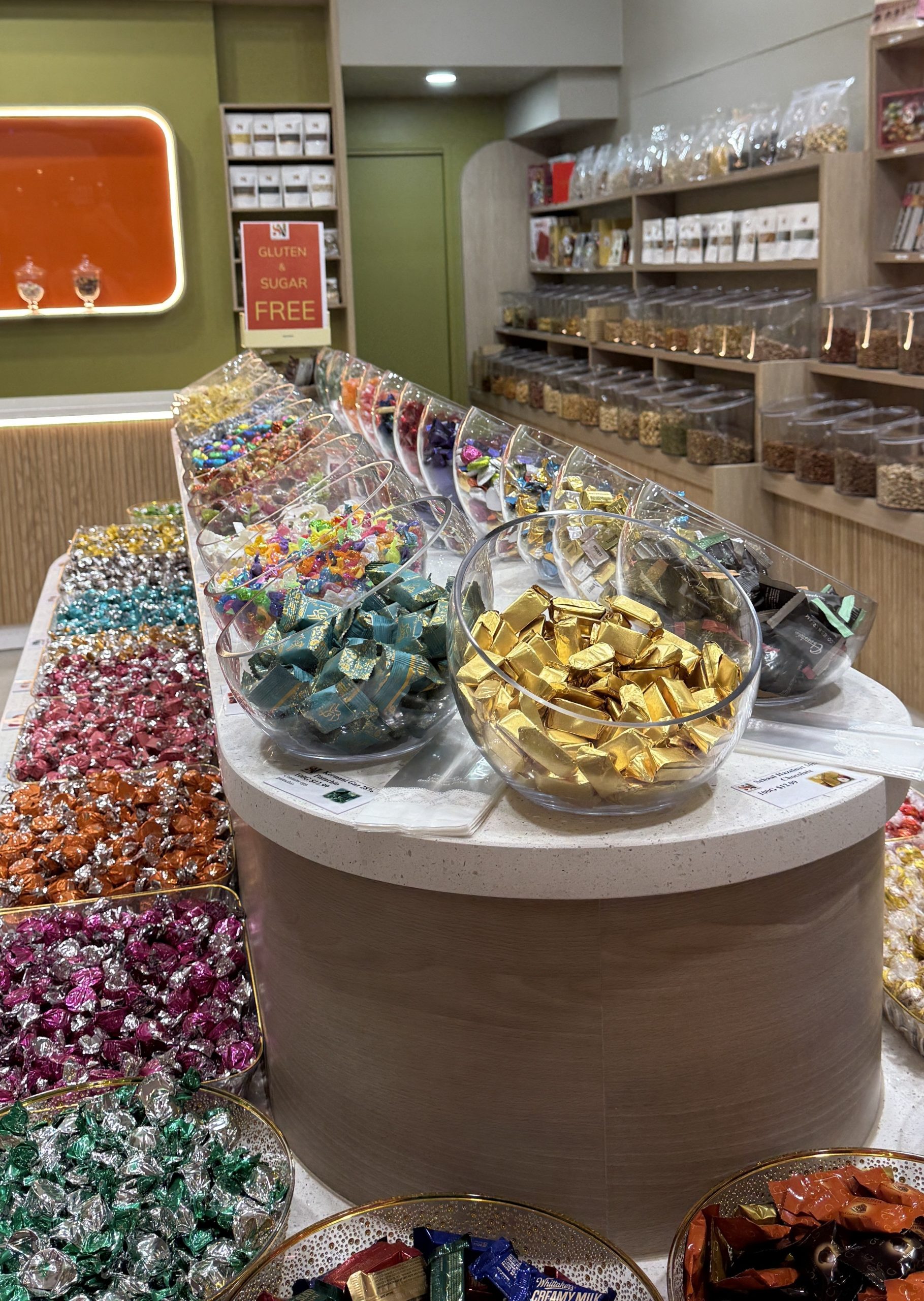
The 30-year-old recently opened the ‘Sweets and Nuts’ shop at Westfield Knox shopping centre, in Melbourne’s east, and is employing five people, including two recently arrived fellow Afghans.
He says he, like most Afghans, is a nut lover and his homeland grows some of the best in the world.
“Nuts are a big thing in Afghanistan, and we have some of the best nuts in the world. They are a passion of mine and we believe deeply that they are healthy. People in Afghanistan use them as medicine,” Hafiz says.
As he speaks, he shows us the ‘Samangan’ almonds from the north of Afghanistan, which are harvested from the wild and have saffron-like flavour.
He also hands us some ‘Logari’ almonds for the east of the country. These come with flaky shells and have a slaty unctuous taste.
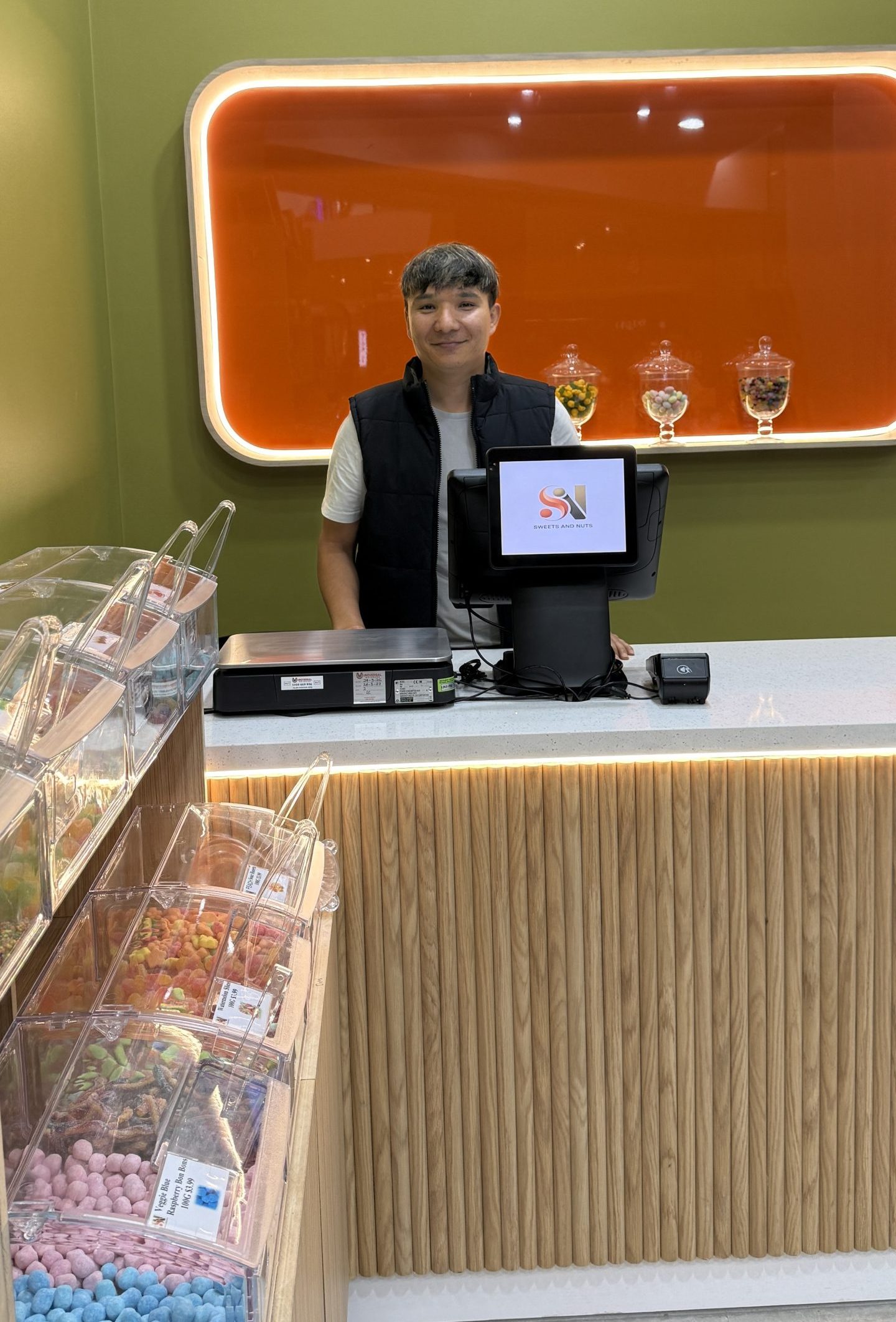 Hafiz also sells walnuts and pistachios from the west of Afghanistan.
“Our nuts are pure, natural products and we are passionate about their quality, “ he said.
Hafiz opened his business two months ago with a business partner after working in warehouses for most of time he has been in Australia.
As well as running business, Hafiz is a referee in Victoria’s state soccer league. He was a professional player in his home province of Herat.
But he almost didn’t make it here.
“Life in Afghanistan was good for me until the Taliban returned in 2021. I had a small business, buying and selling cell phones, and I was at university studying German language and literature,” Hafiz said.
“But the Taliban came back, and I had to leave because it was not safe for me,” he said.
“Also, I couldn’t stay and watch a situation emerge where the Taliban were attacking people’s dignity. That was a red line I couldn’t live with.
“I also didn’t agree with the Taliban preventing women from accessing education.”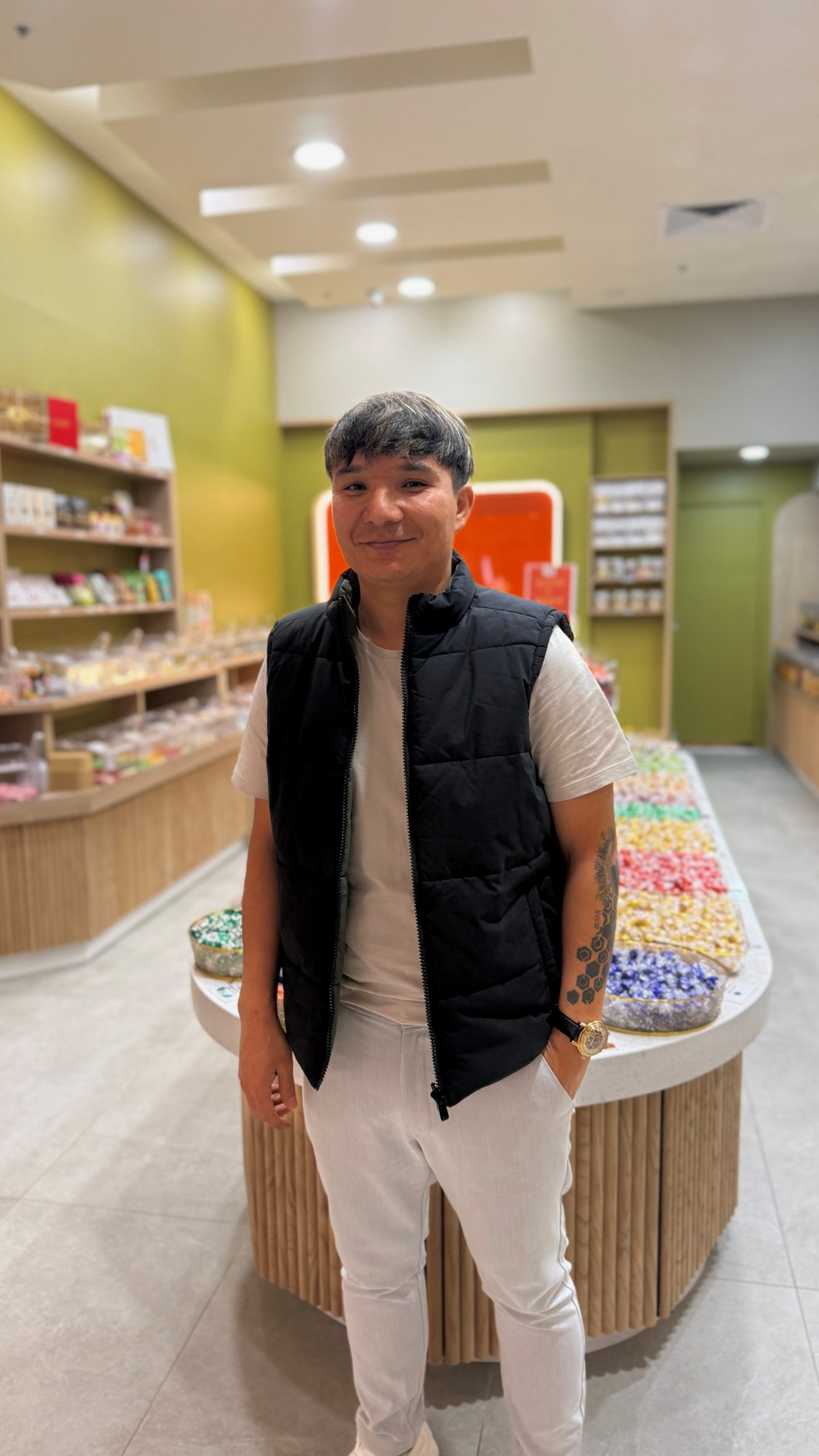
Hafiz was part of the airlift carried out by coalition nations in August 2021, in which more than 120,000 Afghans with connections to western countries were evacuated from Kabul airport.
Hafiz had a visa to come to Australia, but actually getting on a plane proved extremely difficult. It took several attempts to reach safety.
“Before the Taliban actually took control of Kabul, I had a ticket to go to Pakistan. But when I came to get on the flight, the Talban had taken control and I couldn’t get into the airport,” he said.
“I saw people being shot in the eyes and the stomach and legs, so I backed out and I took a taxi home.
“I had spoken with the Australian embassy, and they told me ‘We can’t help you get inside the airport, but if you get in, we can help you’. They gave me the name of a gate to go to on the northern side of the airport.
“It was about 4pm when I went there and tried to get inside and after a couple of hours, I got close to the gate.
“There was a big crowd, and I remember there was a mother and daughter who had UK visas. The girl was about 8 or 10 and she was saying, ‘mum, they will kill me, let’s go home’.
“I took the girl on my shoulders so she could breathe. The crowd was dense and she was finding hard to get oxygen.
“I spent 12 hours trying to get into the airport and at about 5am I was still not in. It was crowded and people were being shot at. Also, I had lost my baggage and my passport in the crush, so I went back home feeling a bit panicked,” Hafiz said.
He phoned the embassy again and explained what had happened.
“They asked me if I had any other ID documents and I told them I had a picture of my passport,” Hafiz said.
“The embassy said again that if I could get inside the airport, they could help me, so I went back to the gate they had told me about and I joined a group of about 15 others with Australian visas.”
About to give up hope of getting, Hafiz and his group were ushered towards a gate manned by some US soldiers.
They were eventually contacted by some Australian soldiers.
“They brought a car and took us to their camp inside the airport. We were there five or six days,” Hafiz said.
“We had no proper food or water. The Australian army gave us some of theirs, but it wasn’t much.
“Our clothes had been ripped to shreds by the barbed wire on the airport fences and we were dirty, but we had no clothes to change into.
“I remember one thing that helped me a lot at that time. I knew that Kabul was sunny and hot during the day and freezing cold at night.
“I found some cardboard and used it as a blanket and mattress. That meant I slept a little when the others didn’t. They said it was too cold.
“Finally, we got on a military plane and made a five-hour flight to Dubai. From there, we came to Australia,” Hafiz said.
On arrival, Hafiz became a client of refugee settlement agency AMES Australia.
Hafiz’ mother and sister remained behind in Herat, along with his father and brother, when Hafiz made his bid for freedom and safety.
“My sister couldn’t study, and my mother couldn’t go the mosque or go shopping. They were in good health but had no proper life,” he said.
Hafiz’ family have since moved to Pakistan and he has applied for family reunification visas to be able to bring them to Australia.
Hafiz says his journey in rebuilding his life in Australia has been a long and arduous one.
“In my first year here I was depressed. I missed my family and I’m a social person but I couldn’t speak with anyone. I was crying a lot,” he said.
“I thought about going back to Afghanistan, but my mum told me not to because it would not be safe.
“I told myself I must rebuild my life. I must try.
“I asked myself; ‘if you back to Afghanistan and someone asks you what you did in Australia, how will you answer?’.
“I thought would I say ‘I did nothing’ or would I try to do something to improve my life. At this point AMES helped me a lot. They connected me with people I could talk to and that helped me out of depression.
“I’m still on that journey. I have started business, I bought home in Doveton and I married a wonderful woman, but I had respect in Afghanistan and I need to rebuild that here.”
Hafiz says his mother and sister remain among his biggest concerns.
“My greatest hope and achievement over the next five years is to again be in my mum’s arms,” he said.
Sweets and Nuts is in the Level 1 Food Court, Westfield Knox, 425 Burwood Hwy, Wantirna South.