



 Loading tweets...


Global refugee crisis deepening
Displacement crises across the globe are growing as international aid dries up and more nations are closing their borders to refugees and people seeking asylum.
A disturbing litany of reports from across the world show access for the displaced to food, education, safety and security, and healthcare is plummeting.
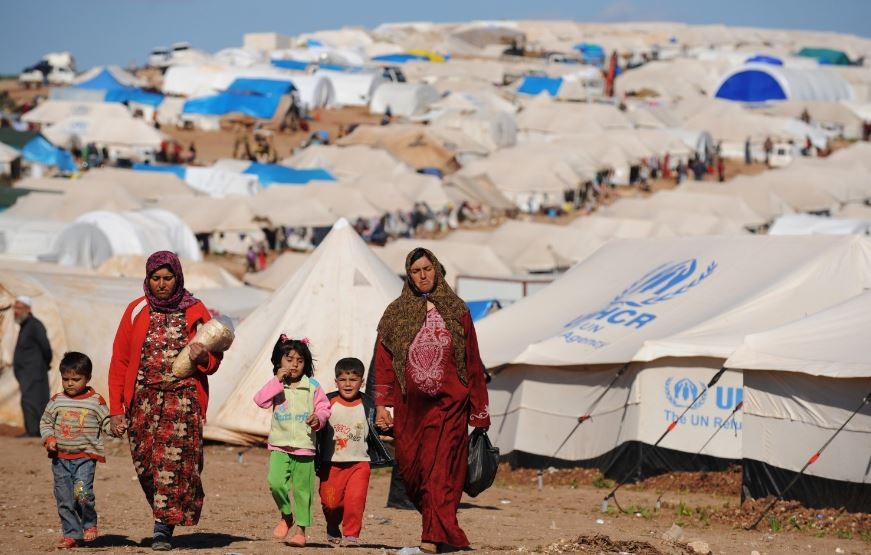 Around 118 million people are currently displaced due to a record number of conflicts across the globe.
At the same time record levels of hunger are worsening. About 266 million people across 47 countries and territories are in need of urgent assistance, more than double the number a decade ago.
A report from the Food and Agriculture Organisation and the World food program (WFP) estimates that around 35.5 million children are acutely malnourished across 23 nutrition crisis countries.
In Malawi, 60,000 people housed in the Dzaleka refugee camp are the frontline casualties of the WFP funding crisis.
At the start of September, camp residents received just $US8 per person to last them the entire month, a sum that barely covers a week’s needs.
Around $US28 is what is needed to provide each refugee with a food basket that meets the daily minimum of 2,100 calories.
But the price of maize, a local staple, has doubled and yet the WFP has rarely met that calorie target, with cash payments fluctuating month to month as the agency struggles with a long-standing cash crunch.
WFP recently offered refugees an alternative: It would target the most vulnerable – people with disabilities, orphans, and older refugees – but would cut everyone else.
In Gaza, famine was declared a year ago by the Food and Agriculture Organisation.
The FAO has reported that 59 per cent of the population, or 1.32 million people, continue to face ‘crisis’ levels of hunger.
Conditions are projected to worsen towards d December 2026, with more than 1.4 million people, or 67 per cent, expected to face ‘crisis’ conditions or worse, including 212,000 people in what is termed ‘emergency’ conditions.
In Africa’s Sahal region, the number of displaced people has more than doubled since 2020.
UNHCR has reported that more than four million people have been displaced in Burkina Faso, Mali and Niger. The number includes 818,000 refugees and asylum seekers.
The numbers are more than double what they were six years ago and result from a series of coups and political upheaval.
Mali, particularly, is facing mounting humanitarian pressure, with hundreds of thousands of people seeking safety inside its borders. Currently, the country is hosting 322,584 refugees and asylum seekers, alongside 414,524 internally displaced people.
And almost 91,000 people have returned to Mali, while more than 343,000 Malians are refugees in other countries.
In Somalia, the UN has warned 874,000 people are at risk of displacement through flooding.
Kenya currently hosts 879,452 refugees and asylum seekers, with Somalis and South Sudanese making up the largest share of the displaced population, according to the latest statistics published by the UNHCR.
The data shows that the population comprised 644,468 refugees (73 per cent) and 234,984 asylum seekers (27 per cent).
Nearly six million refugee children were out of school worldwide in 2025, the UN Refugee Agency UNHCR has warned, as deepening funding cuts threaten to shut millions more out of classrooms and reverse years of progress in refugee education.
UNHCR’s latest annual education report, ‘Pathways to the Future: Education, Opportunity and Self-Reliance’, estimates that 5.8 million, or 44 per cent of the world’s 13.1 million school-aged refugee children, were out of school last year.
The transition to secondary education remains one of the biggest challenges for refugee learners. While 65 per cent of refugee children of primary-school age were enrolled in primary education in 2025, only 32 percent were enrolled in secondary education.
For refugee girls, the transition to secondary school is close to breaking point. While girls and boys attend primary school at broadly similar rates, the gap widens sharply in secondary education, as poverty, protection risks, early marriage and other pressures push increasing numbers of adolescent girls out of school.
Declining humanitarian assistance along the Thai-Myanmar border is forcing an increasing number of refugee teenagers to drop out of school and enter the workforce to support their families, according to parents and education officials.
Household financial hardship has intensified across the border since The Border Consortium (TBC), the primary non-governmental organisation coordinating refugee assistance in the area, halted food aid.
The loss of direct support has compelled many young refugees to abandon their education in search of manual labour outside the camps, NGOs report.
These crises come amid what has been termed a ‘polycrisis’ – ongoing tensions in two key agricultural trade routes, the Black Sea and the Strait of Hormuz and a Super El Niño that could disrupt crop production and increase disaster risks.